


- 14 Mar 2002
- 21,056
- 18,911
The breakout series Shōgun has renewed interest in the clashing swords and political manoeuvring of Japan's feudal era – and the city of Kanazawa is an excellent place to learn more.
The BBC on the City of Kanazawa:

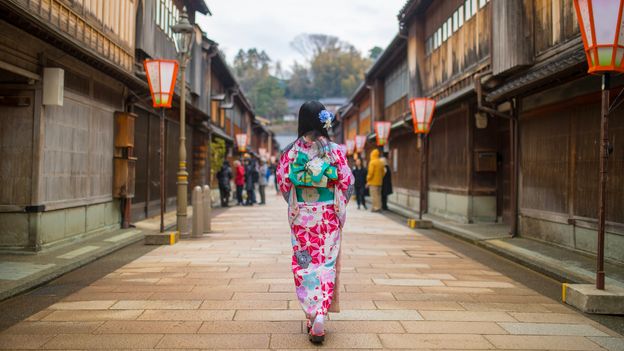
Kanazawa offers an ideal opportunity for those seeking to delve deeper into this historical period. Even long after the end of Japan's feudal era, a palpable sense of power and prosperity lingers in Nagamachi, a low-slung neighbourhood nestled at the base of Kanazawa Castle.
Nagamachi, once the residential district of Kaga Domain's samurai, lies near the castle in Kanazawa's historic downtown. Its narrow streets exude an old-world charm, flanked by traditional houses known as bukeyashiki. These bukeyashiki were once the abodes of high-ranking samurai retainers belonging to the Maeda family, a formidable clan that governed the Kaga domain from 1583 until the shōgunate's abolition during the early Meiji era (1868–1912).
During the Edo period (1603–1868), Kanazawa served as the political and economic hub of the Kaga Domain. The Maeda clan, renowned as one of Japan's most powerful families, held sway over the city. In Nagamachi, samurai resided close to the centre of power, diligently fulfilling their duties to protect their daimyo lord. These samurai houses, known as bukeyashiki, line the narrow cobblestone streets. Their distinctive feature is the earthen enclosure walls—colored in a warm yellow ocher—referred to as tsuchi kabe. Some of these walls have stood for over a century, protected from winter frost by straw mats called komokake.
Although many of Kanazawa's samurai houses were dismantled in the late 19th century, a few have survived and are now safeguarded as the city's historical heritage. Visitors to Nagamachi can explore several bukeyashiki, which have been transformed into museums that vividly depict the daily lives of feudal-era warriors. Among them, the Nomura House stands out. Constructed in the late 16th century, it once belonged to Denbei Nobusada Nomura, a loyal retainer of Lord Toshiie Maeda. The Nomura-ke residence boasts elegant features such as a raised-floor room (Jodan-no-ma), cypress wood carpentry, wooden ranma panels with intricate patterns, and delicate paintings on sliding doors. The Japanese garden, adorned with stone lanterns and a soothing waterfall, completes the picturesque scene. In Nagamachi, time seems to pause, allowing visitors to step back into the world of samurai, honour, and tradition—a captivating glimpse into Japan's rich feudal past.
 www.bbc.co.uk
The BBC on the City of Kanazawa:
Kanazawa offers an ideal opportunity for those seeking to delve deeper into this historical period. Even long after the end of Japan's feudal era, a palpable sense of power and prosperity lingers in Nagamachi, a low-slung neighbourhood nestled at the base of Kanazawa Castle.
Nagamachi, once the residential district of Kaga Domain's samurai, lies near the castle in Kanazawa's historic downtown. Its narrow streets exude an old-world charm, flanked by traditional houses known as bukeyashiki. These bukeyashiki were once the abodes of high-ranking samurai retainers belonging to the Maeda family, a formidable clan that governed the Kaga domain from 1583 until the shōgunate's abolition during the early Meiji era (1868–1912).
During the Edo period (1603–1868), Kanazawa served as the political and economic hub of the Kaga Domain. The Maeda clan, renowned as one of Japan's most powerful families, held sway over the city. In Nagamachi, samurai resided close to the centre of power, diligently fulfilling their duties to protect their daimyo lord. These samurai houses, known as bukeyashiki, line the narrow cobblestone streets. Their distinctive feature is the earthen enclosure walls—colored in a warm yellow ocher—referred to as tsuchi kabe. Some of these walls have stood for over a century, protected from winter frost by straw mats called komokake.
Although many of Kanazawa's samurai houses were dismantled in the late 19th century, a few have survived and are now safeguarded as the city's historical heritage. Visitors to Nagamachi can explore several bukeyashiki, which have been transformed into museums that vividly depict the daily lives of feudal-era warriors. Among them, the Nomura House stands out. Constructed in the late 16th century, it once belonged to Denbei Nobusada Nomura, a loyal retainer of Lord Toshiie Maeda. The Nomura-ke residence boasts elegant features such as a raised-floor room (Jodan-no-ma), cypress wood carpentry, wooden ranma panels with intricate patterns, and delicate paintings on sliding doors. The Japanese garden, adorned with stone lanterns and a soothing waterfall, completes the picturesque scene. In Nagamachi, time seems to pause, allowing visitors to step back into the world of samurai, honour, and tradition—a captivating glimpse into Japan's rich feudal past.
The true story of Japan's samurai city that chose art over war
The breakout series Shōgun has renewed interest in the clashing swords and political maneuvering of Japan's feudal era – and the city of Kanazawa is an excellent place to learn more.
www.bbc.co.uk
Travel Kanazawa Travel Guide
Kanazawa (金沢) is the capital of Ishikawa Prefecture and the political, economic, and cultural centre of the Hokuriku Region. Kanazawa developed in the 15th century as a de facto autonomous temple town of the Ikkō sect. In 1580, the Ikkō movement was destroyed by Sakuma Morimasa, who built...


