News Thomas Lockley and the case of Yasuke

thomas

Unswerving cyclist
Admin
Joined
14 Mar 2002
Messages
21,047
Reaction score
18,898
Social media are boiling over the case of Thomas Lockley, an associate professor at Nihon University and co-author of "Yasuke: The Black Samurai ". Detractors claim that the story of Yasuke, sometimes referred to as the "first black samurai" or a "retainer" or "sword bearer" of Oda Nobunaga , was primarily made up by Lockley himself and not based on historical facts.

The book is available on Amazon, with an average rating of four stars, though most Japanese reviews are annihilating. I contemplated acquiring it a few years ago, but it appeared historically dodgy.

The remarkable life of history's first foreign-born samurai and his astonishing journey from Northeast Africa to the heights of Japanese society. The man who came to be known as Yasuke arrived in Japan in the 16th century as an indentured mercenary, arriving upon one of the Portuguese ships carrying a new language, a new religion and an introduction to the slave trade. Curiously tall, bald, massively built and black-skinned, he was known as a steadfast bodyguard of immense strength and stature and swiftly captured the interest, and thence the trust, of the most powerful family in Japan. Two years later, he vanished. Yasuke is the story of a legend that still captures the imagination of people across the world. It brings to life a little-known side of Japan - a gripping narrative about an extraordinary figure in a fascinating time and place.


Last Thursday, Variety magazine revealed that choreographer JoAnn M. Hunter has been hired to direct the upcoming musical "Yasuke: The Black Samurai," which is (was?) expected to open in 2026.

Following this announcement, Mr Lockley faced mounting criticism and reportedly deleted his Facebook page on Friday.

The most significant backlash on social media has been against his claim that several feudal lords in Japan were happy to make use of enslaved Black people. There have been close to 200,000 posts on the subject. "The rumour that black slaves were popular among Japanese daimyo needs to be properly refuted and stamped out. Otherwise, it could cause big problems later," tweeted one user. There have also been allegations that Lockley edited Yasuke's (and his own) Wikipedia page under the handle Tottoritom as early as 2015.

Source: Anger Over Professor's Claim of 'Black Slaves' in Japan

Meanwhile, Mr Lockley's resume has been removed from the Nihon University staff list, and his NHK television program has also been delisted.


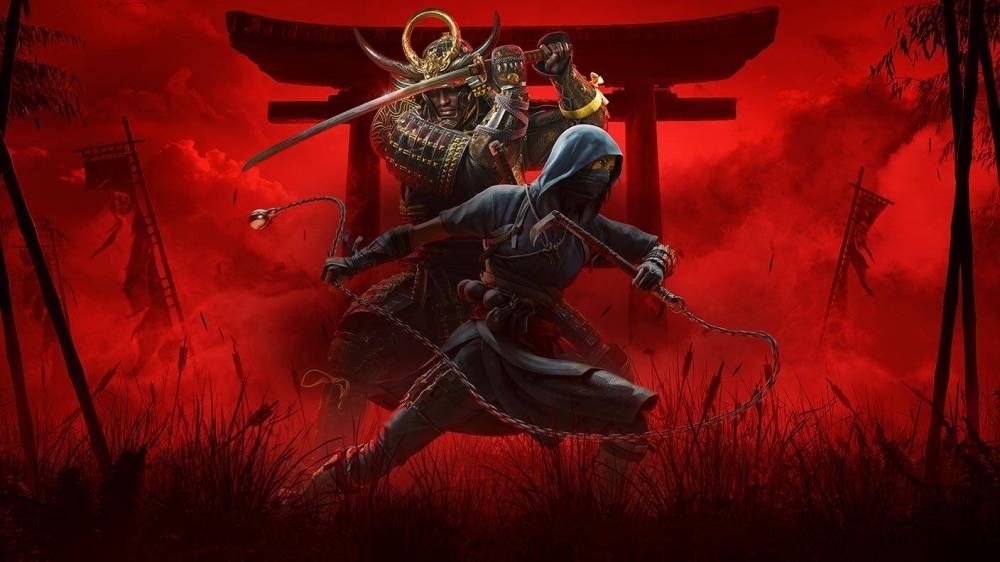
Yasuke had already been subject to controversy earlier this year when it was revealed that he would be a protagonist in Ubisoft's game "Assassin's Creed Shadows," a title to be released in November 2024 that received flak for its portrayal of feudal Japan and the historical figure of Yasuke. Ubisoft has defended the game, but the controversies continue. Recently, an alleged group of Japanese gamers petitioned to cancel the title, deeming it offensive. Conservative politicians echoed the complaints and expressed concern about how the game represents the culture and history of Japan.


So, is this just a storm in an academic teacup, cultural appropriation, or a scandal of political proportions? Who knows? I am glad I didn't buy the book and wonder what will happen to Mr Lockley.
 
Social media are boiling over the case of Thomas Lockley, an associate professor at Nihon University and co-author of "Yasuke: The Black Samurai". Detractors claim that the story of Yasuke, sometimes referred to as the "first black samurai" or a "retainer" or "sword bearer" of Oda Nobunaga, was primarily made up by Lockley himself and not based on historical facts.
Is the book supposedly nonfiction?
 
Accusations with no solid evidence. If it's true this is escalating to "Diplomatic Incident", how come I can't even find the news about it in known Japanese medias either its right wing or left wing such as NHK, Nikkei, Yomiuri, Sankei and Asahi. And those Japanese media have dual language options too. 😂😂😂

And I assume you didn't read this article way back in 2021? An article wrote by Daimon Watanabe, look up his credentials and position he held (JAPANESE Language).


Kinda funny when NHK itself aired the documentary "Black Samurai - Yasuke, the African Samurai Who Served Nobunaga" but NOBODY get triggered for "Historical Innacuracies"? 🤣🤣🤣


And btw, Lockley still listed as Associate Professor, lecturer, his Field of studies and entire bibliography such as papers and his work is still intact if you looked at Nihon university OFFICIAL WEBSITE (in both JAPANESE and ENGLISH language).

And here I thought, based upon the circulation in the internet, Lockley was fired from Nihon university?


Thomas Lockley is an Associate Professor at Nihon University, where he researches and teaches themes related to the international history of Japan, especially those stories that have slipped between the cracks of recorded history. He has published numerous papers, contributed to Ministry of Education (MEXT) approved textbooks, and written several books.
 
Thank you for your elucidations. I am glad that Mr Lockley's career is not at stake.

From what I understand, the main accusations are based on the fact that the author (novelist?) turned a subject with very few primary sources into a 400-page compendium, claiming it's a historical work.

What seems to have enraged some Japanese figures is that Yasuke was described as a "samurai" (whatever that meant in the late Sengoku period ), a topic subject to discussion even among Japanese academia.

Jeffrey Hall quoted historian Hirayama Yu, who opined that Yasuke was, in fact, a samurai.


The Yahoo article by Watanabe Daimon is just a rehash of the known trivia on Wikipedia. And it's not unlikely you will see some Japanese media pick up the story of Yasuke; after all, we're in the midst of silly season. :LOL:
 
Both a white and the black have a crush on a samurai too much.
"Yasuke" was a ninja next time!
It's the romantic notions we give samurai (or any warrior class, really) that makes people forget what it was all about, not just Yasuke. It's the same with the knights of Europe; everyone and their uncle put on these rose tinted glasses everytime we talk about them. Let's completely forget the Crusades and how more than a million people died because som religious plonkers in Europe wanted to make sure the world would be dominantly Christian.
 
If Nobunaga had survived the Honnoji Incident, Yasuke might have become a samurai.
It is unlikely that any Japanese or Jesuits at the time recognized Yasuke as a samurai.
The news after it was delivered to the Society of Jesus after Yasuke was arrested by Honnoji Incident by an enemy is unknown.
Mitsuhide of insurgents was defeated by the Battle of Yamazaki 11 days after Honnoji Incident.
Properly speaking, "Yasuke" should return to the Odas afterwards, but remains missing.
There was none of the people who minded him.

I seem to be able to make an interesting novel when I imagine it saying "Yasuke was a spy of the Society of Jesus".
 
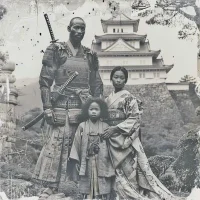
bs.jpg
Google gives this AI image.
 
Ubisoft released a statement on "Assassin's Creed Shadows." The ruckus will undoubtedly boost sales.

Creative Liberties and Historical Inspirations: While we strive for authenticity in everything that we do, Assassin's Creed games are works of fiction inspired by real historical events and figures. From its inception, the series has taken creative license and incorporated fantasy elements to craft engaging and immersive experiences. The representation of Yasuke in our game is an illustration of this. His unique and mysterious life made him an ideal candidate to tell an Assassin's Creed story with the setting of Feudal Japan as a backdrop. While Yasuke is depicted as a samurai in Assassin's Creed Shadows, we acknowledge that this is a matter of debate and discussion. We have woven this carefully into our narrative and with our other lead character, the Japanese shinobi Naoe, who is equally important in the game, our dual protagonists provide players with different gameplay styles.

 
I don't really have time to game but I see no problem with Ubisoft, a game is typically a fantasy not claiming to be history so no issue. Much like Shogun (which influenced me decades ago) has inspiration from historical people the book and miniseries were fiction and they even changed the names which is even better in that case. The issue is a guy writing a book claiming to be history but is poorly supported possibly as an attempt to boost his career over scholarship. Novel or game? Go for it. History please be careful.
 
I don't really have time to game but I see no problem with Ubisoft, a game is typically a fantasy not claiming to be history so no issue. Much like Shogun (which influenced me decades ago) has inspiration from historical people the book and miniseries were fiction and they even changed the names which is even better in that case. The issue is a guy writing a book claiming to be history but is poorly supported possibly as an attempt to boost his career over scholarship. Novel or game? Go for it. History please be careful.
I'd agree that anything would be fair to invent/use/borrow/butcher(?) in games. And the evolution and various retellings of Shogun are good to point out.

But, after looking thru the author's CV and extensive record of publications (links above), I think this book is/was neither important nor necessary as a career boost.

In the university world where publications are assessed and points given, books count less than a single author research paper (in a reputable journal, after the vetting process). And in sciences, it's the lead author of a paper that gets majority (if not total) credit. In terms of points, books are perhaps on par with a conference presentation--a good paper in a good journal might get 2 or 3 points, while a book or presentation might get 1. So in terms of 'bang for buck' a uni prof wanting to accumulate points for promotion should focus on the number of research papers that will be accepted into the best journals possible.

That this book was published, and it took a while for the controversy and challenges to come up, justifies the fact that promotion committees give low points to books, which don't get any of the vetting done for papers before acceptance for publication.
 
Publishing a book gives a professor another income stream from royalties and also gives them more general credibility on their subject with the public. Many professors also list their own books as required texts in the classes they teach at university. Getting into the public consciousness with books gets them invited to give talks to the public more another income stream which if popular enough can lead to appearances in TV etc. Something different and cool like a dark skinned samurai would get him a lot of attention.
 
Last edited:
Yeah I was thinking the same thing. Books may not give them much credit in the higher education community. But it may give them some credit in their finances. Especially if they can publish something that gains some popularity with the public or leads to a screenplay.
 
If anyone thinks a professor makes more than trivial money/income/royalties off a book they've written, if that--I've got a bridge I'll sell ya...

Google will return a lot hits about what authors of academic books typically make, and it isn't much. Lockley could use his book as a text, but in any history class he might get for that--and it would be a niche one and not a broad survey of some period--he might get a few students a year. How many other professors around the world will be choosing it as a text? This book is not on par with a freshman calculus or basic psych text that might be used in big classes in lots of schools.

Lockely's book is published by Hanover Square Press (Harper Collins), and that means he might make about $.10 on the dollar. So if it's a $20 book, he'll make $2, and if it sells 500 copies, he'll have 'made' $1000. He'd have to sell a bit more than that number before even needing to declare that gigantic extra revenue stream on his taxes. (¥200,000 is the threshold for that.)

And note that on his publications list (links above) all five of the books he has listed there (including this one), are indicated as 査読無し (not peer reviewed). So while the general public can be bamboozled ("Oh, wow, he wrote.. a book! He must be smart."), rest assured that books like this don't add anything to a person's resumé, or to their future job-hunting prospects, or credibility among peers.
 
You forgot to mention that he co-authored the Yasuke book. So that means he'll get double the royalties. ;)
 
The book would then be a springboard to a route of talks to the public which are paid for then to other projects on the screen etc. Not sure what is so hard to understand.


Many academics do it with (as far as I know) not stretching the truth at all. For a historian my favourite is Natalie Haynes who publishes books, does talks and does a comedy show about ancient greek history. Not wealthy but it gives a boost and she was a professional comedian as well so that may be part of it. Scientists do it like Brian Greene who has popular books and talks and appears on TV a lot, Sean Carroll is another. They even make a little from youtube in addition to speaking and other appearances as well as popular books.
When you come up with a new cool "history" people in the west will like (a dark skinned foreign samurai) I could see demand ramp up for that which would get him more and more attention rather than sticking very strictly. to the best evidence available. This is exactly the kind of thesis the public (outside Japan) would be interested in. We were interested in William Adams as well though as far as I know there were no historians exaggerating things it came to the public from a work of fiction. He would not necessarily become wealthy but something attention getting like that could give him a more comfortable income. This is not nearly as bad as some like Charles Hapgood or something who go farther into fiction or what some scientists do in the name of anti-aging to get more money coming in but sometimes get let go like Dipak D. Das or more recently David Sinclair. History (even cool exciting history) cannot bring in as much money as anti-aging of course.
 
Last edited:
"Yasuke" has made it into the Japanese mainstream media: JT took up the story of a Japanese petition signed by nearly 100,000 signatures to exclude the black samurai from Ubisoft's "Assassin's Creed Shadows" to be released in November.

Assassin's Creed Shadows

Image credit: Ubisoft

Its author accused Ubisoft of having made factual errors and "a serious insult to Japanese culture and history that can be understood as racism" against Asians. While the petition did not dispute the existence of Yasuke, it claimed that he had never received the samurai title. It was signed by some 95,000 people as of Tuesday.


More "bitter debate" to boost sales?

The latest Assassin's Creed installment, Shadows, set in 16th-century Japan, has been praised for its historical accuracy but has also sparked controversy over artistic liberties—particularly the inclusion of Yasuke, a black samurai, as a playable protagonist. While historians acknowledge Yasuke's historical existence, debate persists over whether he truly held samurai status. A Japanese petition protesting his depiction gathered over 100,000 signatures, citing concerns about historical accuracy and cultural respect. Critics argue the controversy has been amplified by online culture wars, with some researchers suggesting astroturfing by politically motivated groups. Ubisoft maintains that Yasuke's inclusion is not meant to push an external agenda. The depiction of Japan's history remains sensitive, with some also criticising in-game actions, such as temple damage, as disrespectful. Despite Ubisoft's past hesitance, the success of games like Ghost of Tsushima has likely contributed to the setting choice, reflecting Western fascination with Japan while also raising concerns about cultural representation.

Source: Historic fantasy 'Assassin's Creed' sparks bitter battles
 
More "bitter debate" to boost sales?

This decision never sat right with me, it always felt like pandering to woke America - and I consider myself pretty woke. Something I've always loved in the AC series is that they were inherently true to history - albeit splashed with artistic liberties when needed - so making Yasuke, whose role in Japanese history is dubious at best, the main male playable character just feels wrong. If there was a native Japanese male PC and we unlock Yasuke later on as an alternative, I would perhaps have been less annoyed by it. But there isn't, the only other option is a native Japanese female ninja which, as far as I recall, there weren't that many of either. Ninja, not kunoichi - kunoichi were, and please feel free to correct me if I remember incorrectly, more ladies of the court eavesdropping and gathering information than actual ninja.

Then there is the fact that the Assassin's Creed genre is all about stealth and hiding in plain sight. I ask you this: how would a black man, standing over 6 feet tall, be able to do any sort of stealth in feudal Japan? That's right, he wouldn't!
In fact, a Jesuit priest wrote in a latter back in 1581 that
..buildings in Sakai were damaged by the sheer number of onlookers climbing them to catch a glimpse of Yasuke. Furthermore, in Miyako, the crowd's jostling caused people to be crushed to death and nearly destroyed a brand-new Jesuit church.

I hold the greatest love for the Assassin's Creed franchise and have played most of the games in it. And yes, I've had grievances with other games in the franchise but this one literally made me sigh and roll my eyes. I get it, we're trying to be inclusive but please, for all that is holy in gaming, don't stuff it down people's throats! That never did anything good, just look at Dragon Age: Veilguard! It's a great game but people hate it because they are force-fed wokeness and not everyone is as willing to chomp down and get on with it as I am.
.. sorry, end of rant xD
 
Back
Top Bottom