


- 14 Mar 2002
- 21,050
- 18,903
A bizarre case: this morning, a 300-year-old Binzuru statue was stolen from Zenkoji temple in Nagano City. Binzuru represents one of Buddha's disciples and is one of Japan's most venerated Arhats. It is usually depicted as a sitting Buddhist monk and said to have healing power. The statue was retrieved by the police later today. The motive for the theft is unknown.
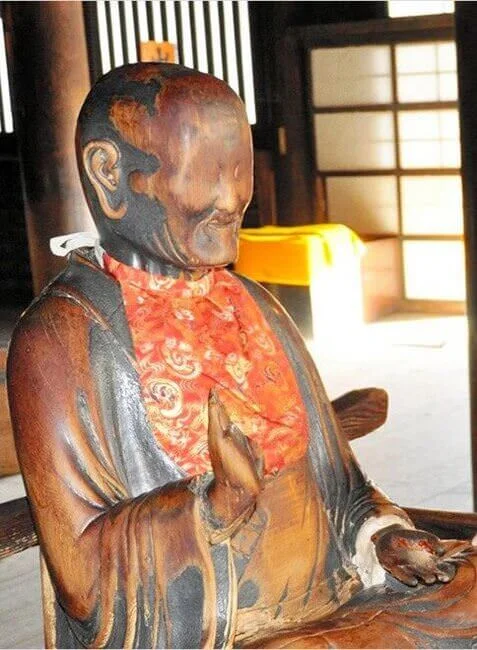
Worshippers believe that the statue can help cure their diseases if they rub it on the same parts as their affected areas. The statue's eyes and nose, among other parts, have become worn thin as the faithful stroked them over generations.
From Wikipedia:
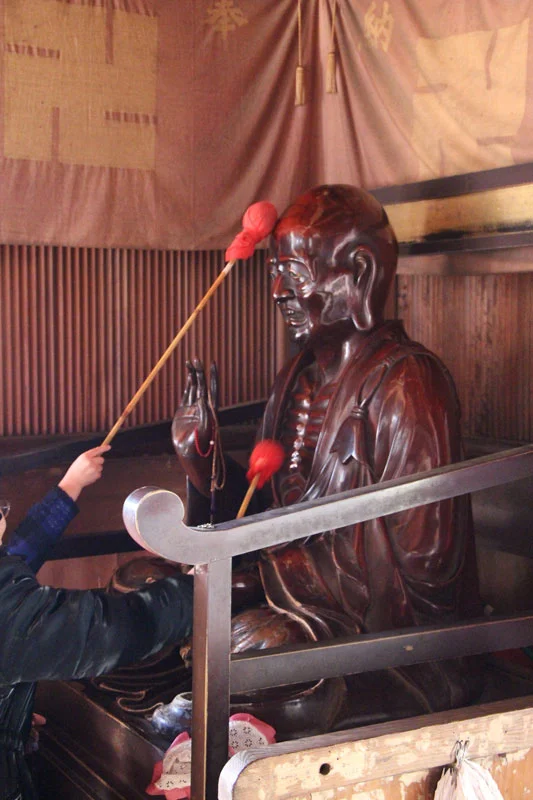
Some other Binzuru statues:
At Engyoji, Himeji:
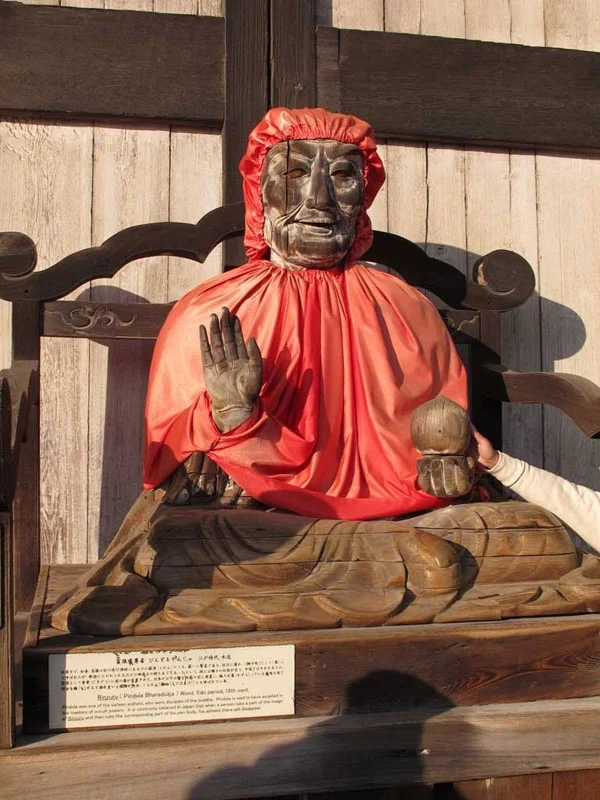
At Todaiji, Nara:
A man was arrested for stealing a sacred statue at the Zenkoji temple here, which has been revered for more than 300 years and earned a three-star recommendation from the Michelin Guide. A thief was caught on a security camera taking the wooden seated statue of Binzuru, a disciple of Buddha, in a bag on the morning of April 5, a source said. The suspect was arrested in Matsumoto, also in Nagano Prefecture, before noon, and the statue was recovered, police said.
Worshippers believe that the statue can help cure their diseases if they rub it on the same parts as their affected areas. The statue's eyes and nose, among other parts, have become worn thin as the faithful stroked them over generations.
From Wikipedia:
In Japan, Pindola is called Binzuru (賓頭盧, びんずる), a short form of Bindora Baradaja (賓度羅跋囉惰闍, びんどら ばらだじゃ), and is arguably the most popular of all the Arhats. The monastery refectory near Tōdai-ji Temple at Nara has a giant wooden statue of Binzuru, depicting him seated in the lotus position. His figures are usually well-worn since the faithful practice rubbing a part of the effigy corresponding to the sick parts of their bodies, as he is reputed to have the gift of healing. Nagano, whose Zenkoji temple also hosts a well-worn Binzuru statue, stages a yearly Binzuru festival. He is also frequently offered red and white bibs and children's caps to watch over the health of babies, so his statue is often decked in rags. He is represented in the painting as an older man seated on a rock, holding in his hand a sort of sceptre (a Japanese shaku) or a sutra box and a feather fan. All the other Arahants are usually worshipped in Japan in his person.
Some other Binzuru statues:
At Engyoji, Himeji:
At Todaiji, Nara:


