


- 14 Mar 2002
- 21,053
- 18,908
With this clock, you'll never be late again—in all eternity if you have half a billion yen at your disposal.
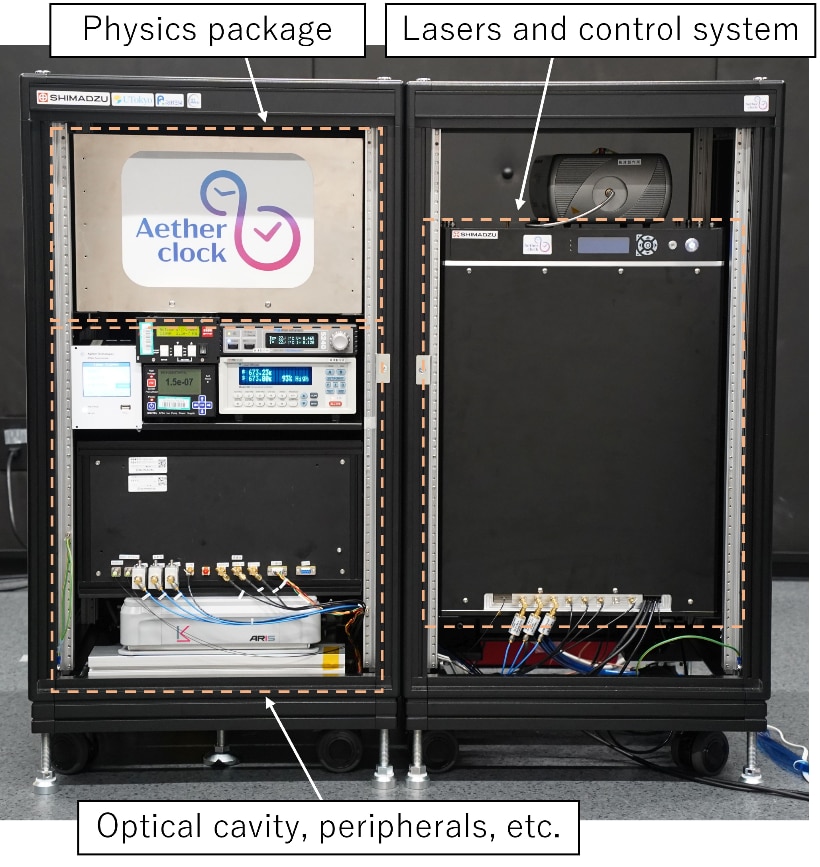
Japanese precision equipment manufacturer Shimadzu Corp. announced Wednesday that it has started selling an optical lattice clock with an accuracy deviation of less than one second over 10 billion years, making it the most precise timepiece available. The clock is 114 centimetres wide, 109.3 centimetres high, and 65 centimetres deep. The Kyoto -based company aims to sell 10 units over the next three years, with a suggested retail price of 500 million yen ($3.3 million) per unit.

 english.kyodonews.net


Japanese precision equipment manufacturer Shimadzu Corp. announced Wednesday that it has started selling an optical lattice clock with an accuracy deviation of less than one second over 10 billion years, making it the most precise timepiece available. The clock is 114 centimetres wide, 109.3 centimetres high, and 65 centimetres deep. The Kyoto -based company aims to sell 10 units over the next three years, with a suggested retail price of 500 million yen ($3.3 million) per unit.
The company started taking orders for the high-precision clock in November 2024 after developing a transportable model in collaboration with researchers from institutions including the University of Tokyo. Its miniaturisation allows the product to be used outdoors, and it could find practical applications in areas such as monitoring movements of the Earth's crust related to plate tectonics, volcanic activity and other phenomena, Shimadzu said. Invented in 2001 by Hidetoshi Katori, a professor at the University of Tokyo's Graduate School of Engineering, an optical lattice clock has a timekeeping uncertainty hundreds of times smaller than caesium atomic clocks that currently define the second. The firm said that an optical lattice clock is a candidate for redefining the second, a process scheduled for 2030 by an international organisation.
Japan's Shimadzu launches world's 1st commercial optical lattice clock
Japanese precision equipment maker Shimadzu Corp. says that it has begun selling an optical lattice clock with a deviation of less than one second over 10 billion years, making it the most accurate on the market.
Successful Development of the World’s First Compact and Robust High-Precision Optical Lattice Clock with a 250-liter Volume — Toward Real-World Applications of Optical Lattice Clocks —
Successful Development of the World’s First Compact and Robust High-Precision Optical Lattice Clock with a 250-liter Volume — Toward Real-World Applications of Optical Lattice Clocks —
www.shimadzu.com
Link:
Shimadzu Corporation
Manufacturer of precision instruments, measuring instruments and medical equipment based in Kyoto.
- JREF
- Views: 458
- Category: Manufacturing



![-]5pace.pirat3]+](/data/avatars/s/10/10061.jpg?1412559883)


