


Here's a good link. Enjoy.
Quick and Dirty Guide to Wa and Ga
~~~~~~~~~~~~~~~~~~~~~~~~~~~~~~~~~~~~~~~~~~~~~~~~~~~~~~
Quick and Dirty Guide to Wa and Ga
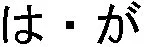
Last revised Aug 30, 2000. (Thanks much to Bart-sensei for constructive observations in sci.lang.japan)
Note: This documents requires a Nihongo-capable web browser to display Japanese correctly.
Introduction
Apart from specific patterns for the use of GA presented in the ad hoc section, the difference between those two particules boils down to whether both parties involved in the conversation consider the topic as mutually known. It is known either if it has already been discussed in the past, or is an abstract topic (in which case, it is known "culturally").
The word that marks the topic has to be recognized mutually by both parties as a known concept; Otherwise, if a concept that is purely unknown by the other party is introduced for the first time, it must be marked with GA. This aspect of mutual knowledge is truely important, since it determines whether the speaker uses WA or GA to introduce it.
It helps to think of WA/GA as close to the dichotomy between definite/indefinite articles in English, although you should not rely on this to build Japanese sentences. Were it that easy, there wouldn't be whole books written on the subject... and no threads in ngs
WA
Mutually-known concept
If a concept is already known by both parties the first time it is brought up in the conversation, introduce it with WA. A concept is known if it has already been discussed in previous conversations, or if it is abstract (and, hence, known although it hasn't been introduced in a particular conversation already). The closest equivalent that you can use in English would be "As for <mutually-known concept>, <new piece of infos>."
For example, 男はつらいよ: Here, we're refering to "man" in the abstract, instead of one particular person, so WA is used. Other such examples thrown in for good measure: "人生は一度しかない", "水と安全はただ", "月はウサギ", "春は曙" [from Makura-no-soushi, Seishou-nagon].
Once this topic as been introduced, refrain your urge to utter it in every single sentence to match the SVO pattern that you're used to in English, and just leave it to be understood from the context. A usual example of this error is the "Watashi wa,... . Watashi wa, ..." that foreigners often use with wild abandon. Native speakers do not speak that way.
For instance, if it is obvious that YOU are the one who bought a car, just say "この間、車買った." If, on the other hand, it is someone else who did buy the car and there is no way the listener would know that, it is obviously required that you say so: "この間、香ちゃん(が)車買った". Although the topic would probably be introduced with GA because it's a statement out of the blue, GA is one of those particles that are often left out in colloquial Japanese as long as this does not introduce any ambiguity.
Contrast
Besides its role as topic-marker for a mutually-known concept, WA is used to indicate a contrast between different topics. A classic example of the use of WA to indicate contrast is when used with the negative form, e.g. テレビが好きではない. Another example: 僕は、行かなかった (as opposed to someone who did go.)
GA
New topic
A brand new concept, ie. not known by the other party, must be introduced with GA the first time it occurs in the conversation. From then on, the concept will be introduced by WA if need be; If, however, leaving it out altogether does not introduce any ambiguity as to what the topic is, you should just leave it out entirely.
Subject in a predicate
Bart-sensei defines the use of GA as subject-marker in a predicate with "non-deletable non-topic noun in 'subject' position." A predicate is either a stand-alone block of information out of the blue, or additional information about a topic introduced by WA (either explicitely if the topic hasn't been introduced yet, or implicitly if the topic can be understood from the context.) In other words,
[<mutually-known topic> WA,] <subject GA>
Set patterns
Finally, GA is used in a few patterns:
Quick and Dirty Guide to Wa and Ga
~~~~~~~~~~~~~~~~~~~~~~~~~~~~~~~~~~~~~~~~~~~~~~~~~~~~~~
Quick and Dirty Guide to Wa and Ga
Last revised Aug 30, 2000. (Thanks much to Bart-sensei for constructive observations in sci.lang.japan)
Note: This documents requires a Nihongo-capable web browser to display Japanese correctly.
Introduction
Apart from specific patterns for the use of GA presented in the ad hoc section, the difference between those two particules boils down to whether both parties involved in the conversation consider the topic as mutually known. It is known either if it has already been discussed in the past, or is an abstract topic (in which case, it is known "culturally").
The word that marks the topic has to be recognized mutually by both parties as a known concept; Otherwise, if a concept that is purely unknown by the other party is introduced for the first time, it must be marked with GA. This aspect of mutual knowledge is truely important, since it determines whether the speaker uses WA or GA to introduce it.
It helps to think of WA/GA as close to the dichotomy between definite/indefinite articles in English, although you should not rely on this to build Japanese sentences. Were it that easy, there wouldn't be whole books written on the subject... and no threads in ngs
WA
Mutually-known concept
If a concept is already known by both parties the first time it is brought up in the conversation, introduce it with WA. A concept is known if it has already been discussed in previous conversations, or if it is abstract (and, hence, known although it hasn't been introduced in a particular conversation already). The closest equivalent that you can use in English would be "As for <mutually-known concept>, <new piece of infos>."
For example, 男はつらいよ: Here, we're refering to "man" in the abstract, instead of one particular person, so WA is used. Other such examples thrown in for good measure: "人生は一度しかない", "水と安全はただ", "月はウサギ", "春は曙" [from Makura-no-soushi, Seishou-nagon].
Once this topic as been introduced, refrain your urge to utter it in every single sentence to match the SVO pattern that you're used to in English, and just leave it to be understood from the context. A usual example of this error is the "Watashi wa,... . Watashi wa, ..." that foreigners often use with wild abandon. Native speakers do not speak that way.
For instance, if it is obvious that YOU are the one who bought a car, just say "この間、車買った." If, on the other hand, it is someone else who did buy the car and there is no way the listener would know that, it is obviously required that you say so: "この間、香ちゃん(が)車買った". Although the topic would probably be introduced with GA because it's a statement out of the blue, GA is one of those particles that are often left out in colloquial Japanese as long as this does not introduce any ambiguity.
Contrast
Besides its role as topic-marker for a mutually-known concept, WA is used to indicate a contrast between different topics. A classic example of the use of WA to indicate contrast is when used with the negative form, e.g. テレビが好きではない. Another example: 僕は、行かなかった (as opposed to someone who did go.)
GA
New topic
A brand new concept, ie. not known by the other party, must be introduced with GA the first time it occurs in the conversation. From then on, the concept will be introduced by WA if need be; If, however, leaving it out altogether does not introduce any ambiguity as to what the topic is, you should just leave it out entirely.
Subject in a predicate
Bart-sensei defines the use of GA as subject-marker in a predicate with "non-deletable non-topic noun in 'subject' position." A predicate is either a stand-alone block of information out of the blue, or additional information about a topic introduced by WA (either explicitely if the topic hasn't been introduced yet, or implicitly if the topic can be understood from the context.) In other words,
[<mutually-known topic> WA,] <subject GA>
Set patterns
Finally, GA is used in a few patterns:
- To indicate a question-word, or the subject in the answer to a question. For instance, 誰がそれやった?あいつがやった. Question-words are だれ、なに、いつ、どこ、どちら・どれ.
- To show the subject of a potential verb. For instance, 日本語がわかる or 子供で手が離せない.
- With verbs that naturally express capacity: 要る, 分かる, 見える, 聞こえる. "怪しい物音が聞こえたよ."
- To indicate a subject in a relative proposition: "お母さんが持っている車は新車だ." (You can replace this が by の to put the emphasis on the noun this relative proposition modifies, ie. 車.)
- With a verb in the form ...たい. "コーヒーが飲みたい." (More specific than "コーヒーを飲みたい=I would like some coffee (but it could be something else)", whereas this sentence above means "I want some coffee, nothing else will do, and that's the end of it".)
- In a comparative pattern ("...より...が" pattern) "欧米人は、日本料理より中華料理(のほう)がおいしいそうだ."


