Pitch Accent Pattern Revelation

トレバー

後輩
Joined
30 Mar 2024
Messages
245
Reaction score
328
I thought about this recently, but in regards to pitch accent, and how the pitch accent of a sentence is different from the pitch accent of a word in isolation, could one say that it's best to think of it in the following way:

When two Heiban words meet it becomes a Heiban phrase, and when you have Heiban mixed with Atamadaka, Nakadaka, and Odaka, you follow each different accent pattern? Wouldn't this result in choppy sounding Japanese? Is it better to learn your vocabulary and memorize the pitch accent pattern of every word, and then wing your sentences? Try to sound like natives? Haha, help I'm drowning.
 
I've never given any thought to pitch accents. So I may not sound like a native but I don't have any problem holding a conversation. I think you'll learn the correct pronunciation for frequently used words naturally. And if you don't, you may not sound like a native but so what?
 
I've never given any thought to pitch accents. So I may not sound like a native but I don't have any problem holding a conversation. I think you'll learn the correct pronunciation for frequently used words naturally. And if you don't, you may not sound like a native but so what?
You're absolutely right. You rock.
 
Would you say Happy New Year as

うれしい新年!

Because that's what I've been saying to people… haha.
 
Not really.

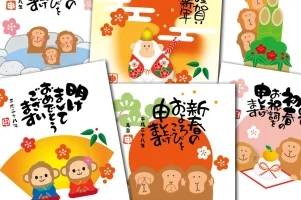
Phrases related to the New Year:

よいお年をお迎えください!
Yoi otoshi-o omukae kudasai.
Happy New Year! [Used before the New Year]

よいお年を!
Yoi otoshi-o
A shorter version of the phrase above.

明けましておめでとうございます!
Akemashite omedetō gozaimasu!
Happy New Year! [Used on and after 1 January]

謹賀新年!Kinga shinnen!
[Happy New Year]

今年もよろしくお願いします!
Kotoshi mo yoroshiku onegaishimasu.
Thank you in advance for all your support this year.

昨年は大変お世話になりました。今年もどうぞ宜しくお願いいたします。
Sakunen wa taihen osewa ni narimashita. Kotoshi mo douzo yoroshiku onegaiitashimasu.
Thank you for your support this past year. And for your continuing support this year.
[Used by employees or business partners during year-end parties]


Does anybody have any good rule of thumb for phrases and intuitively knowing the pitch of a phrase? I listen to a lot of Japanese. I feel like the more I listen, the more I will read sentences more naturally. I feel like phrases are king when it comes to learning Japanese. Although, many people study one word at a time. What do you guys think? Sometimes, I feel like we make learning a language harder than it has to be, haha. Out of effort to understand of course.
 
Back
Top Bottom