


- 14 Mar 2002
- 21,054
- 18,910
A Japanese research team from the Jikei University School of Medicine in Tokyo has revealed that viral infections during infancy might serve as a trigger for depression later in life. While inherited genes have long been considered potential causes of depression, the team's findings, published in a U.S. science journal in February, highlight the role of SITH1 proteins produced by the human herpes virus type 6 (HHV6) in the development of this mental health condition. HHV6, responsible for exanthema subitum (a fever lasting about three days), infects nearly everyone during infancy, and the latent virus persists throughout life.
When individuals with the virus experience fatigue, HHV6 becomes detectable in saliva, spreading to the brain and leading to reinfection, producing SITH1 proteins. The team's experiments with mice further unveiled a part of the mechanism underlying depression. Interestingly, the study suggests that the virus transmitted from mothers to infants may contribute to depression susceptibility rather than the mother's genes. Professor Kazuhiro Kondo, a research team member, emphasizes the importance of uncovering this mechanism to find potential solutions.
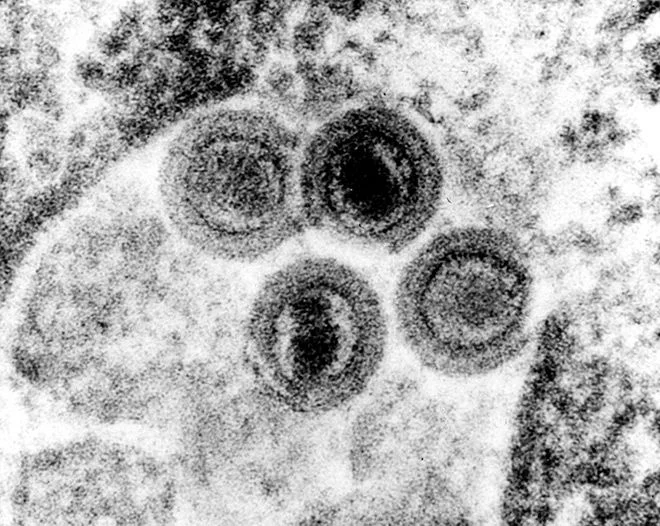
Human herpes virus type 6 (HHV6)
 www.ncbi.nlm.nih.gov
When individuals with the virus experience fatigue, HHV6 becomes detectable in saliva, spreading to the brain and leading to reinfection, producing SITH1 proteins. The team's experiments with mice further unveiled a part of the mechanism underlying depression. Interestingly, the study suggests that the virus transmitted from mothers to infants may contribute to depression susceptibility rather than the mother's genes. Professor Kazuhiro Kondo, a research team member, emphasizes the importance of uncovering this mechanism to find potential solutions.
Human herpes virus type 6 (HHV6)
When a person with the virus feels run down, HHV6 becomes present in saliva. The virus spreads from the mouth to the nose and then to the brain, causing reinfection and producing SITH1 proteins. Those who have SITH1 proteins are more prone to developing depression than those who don't, the research team members said. The team also determined through experiments involving mice that reinfection brain cells, uncovering a part of the mechanism of how depression develops. For the latest study, the team conducted a detailed examination of the genes of the virus that produces SITH1 and found that it can be classified into two types: one that can produce this protein with ease and another that does so with difficulty. The researchers found that 68 percent of 28 patients with depression were infected with a type that can easily produce SITH1. However, 29 percent of 35 healthy people were infected with the same type of the virus.
Human Herpesvirus 6B Greatly Increases Risk of Depression by Activating Hypothalamic-Pituitary -Adrenal Axis during Latent Phase of Infection - PMC
Little is known about the effect of latent-phase herpesviruses on their host. Human herpesvirus 6B (HHV-6B) is one of the most ubiquitous herpesviruses, and olfactory astrocytes are one of the most important sites of its latency. Here, we identified ...
www.ncbi.nlm.nih.gov


