


Hachiko
後輩
- 17 Jan 2004
- 1,433
- 10
Has anyone heard of Lafcadsio Hearn? I haven't heard of him that well, but I suppose his books and literature are worth a read...
Japan Times
Japan Times
Japan Times
In the West, Lafcadio Hearn is largely unknown outside of small circles of Japanophiles and aficionados of Gaelic writers.
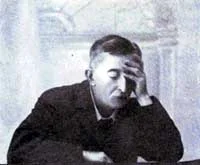
Lafcadio Hearn toward the end of his life (Photos courtesy of Yokohama Archives of History)
Ironically, though Hearn wrote in English, he is best known among the Japanese -- a people not renowned for regularly reading that language.
Most foreign residents with an interest in Japan besides partying or lining their pockets will likely have become aware of Hearn shortly after arriving here -- probably forming a picture of an early visitor who described a Japan that no longer exists.
Japan Times
In the century that has passed since the death of Lafcadio Hearn on Sept. 26, 1904, the Japanese people have studiously formulated and maintained a myth -- and they have done it with all the tools and vigor of nostalgia at their disposal.
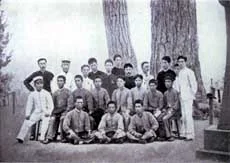
Hearn (standing, eighth from left) with Sentaro Nishida (standing, fifth from left) (Photo courtesy of Yokohama Archives of History)
According to this myth, Hearn, orphan of Europe, grubber in subcultures from Cincinnati and New Orleans to Martinique, transformed himself after arriving in their country in 1890 into the defending champion of Japanese culture. No other foreigner, so this popular myth goes, has been as privy to Japanese secrets, or as devoted to their imaginative recreation; no foreigner then or since has loved Japan as deeply.
Japan Times
Apropos Hearn's "Glimpses of Unfamiliar Japan," Basil Hall Chamberlain, the Meiji Era Japanologist, wrote: "Never perhaps was scientific accuracy of detail married to such tender and exquisite brilliancy of style."
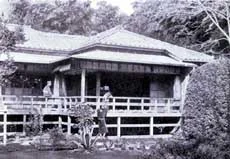
Hearn's Tokyo house in Nishi-Okubo, now in Shinjuku Ward (Photos courtesy of Yokohama Archives of History)
High praise indeed, since accuracy and style are normally seen as incompatible; science embracing a clinical prose as objective as a lens, while style is the expression of the individual artist. But just how accurate was Hearn's writing?
Seeking an answer, I retraced part of Hearn's trip to Kamakura, as described in "Glimpses."
His rickshaw clattered to Engakuji on a spring day in 1890. Hearn was surprised by the temple's mammoth, two-storied gate. He noted the open-work of pillars and crossbeams, and the bird nests packing the eaves. He captured the gate's essence in observing the maze of beams inviting expectation of carvings of fanciful creatures, although "the majesty of the edifice could not have been strengthened by any such carving."
Japan Times