


- 14 Mar 2002
- 21,050
- 18,903
East Japan Railway Co. said on Tuesday that it plans to abolish its magnetic stripe tickets and replace them with QR code tickets from next spring.
The move will end roughly four decades of magnetic ticket use on the company's conventional rail lines. However, limited express services and Shinkansen bullet trains are not included in the change for now.JR East said removing the magnetic layer from tickets would help reduce recycling and maintenance costs associated with the current system. Under the new system, passengers will pass through ticket gates by scanning QR codes at dedicated readers.

 mainichi.jp
According to JR East and the other major railway operators that are replacing magnetic tickets, more than 90% of passengers already use IC cards such as Suica (Suica) and PASMO (PASMO) or ticketless services, while magnetic paper tickets account for only about 5-10% of journeys.
More than 90% of JR East passengers already use IC cards and ticketless systems such as Suica and PASMO. In comparison, traditional magnetic paper tickets now account for only 5- 10% of journeys. Many of the remaining paper-ticket users are not regular commuters. Most daily commuters already rely on Suica, PASMO, Mobile Suica, or commuter passes (定期券 teiki-ken) linked to IC cards. Paper tickets are more commonly used by tourists, occasional travellers, people making infrequent local trips, and passengers who still prefer buying tickets from machines.
JR East says the main reason for phasing out magnetic tickets is not usage, but cost. The old ticket-reading systems inside gates and ticket machines have become expensive and difficult to maintain, while serving only a small minority of passengers. When QR-code tickets replace magnetic tickets in spring 2027, the change will mainly affect the last small group of passengers still using paper tickets instead of IC cards.
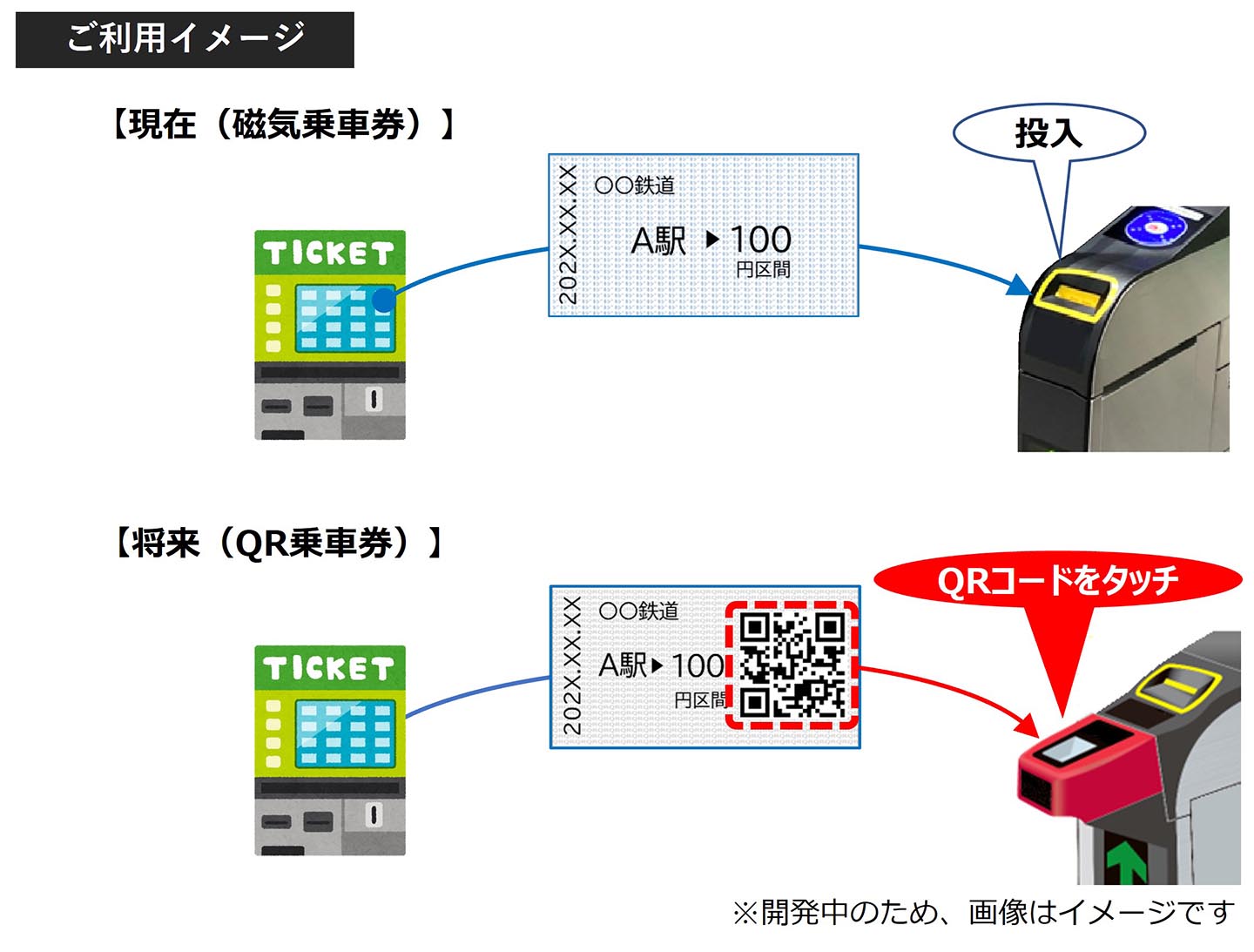
The move will end roughly four decades of magnetic ticket use on the company's conventional rail lines. However, limited express services and Shinkansen bullet trains are not included in the change for now.JR East said removing the magnetic layer from tickets would help reduce recycling and maintenance costs associated with the current system. Under the new system, passengers will pass through ticket gates by scanning QR codes at dedicated readers.
JR East to replace magnetic train tickets with QR code ones next spring - The Mainichi
TOKYO (Kyodo) -- East Japan Railway Co. said Tuesday it will abolish its existing magnetic train tickets and replace them with QR-coded tickets next s
According to JR East and the other major railway operators that are replacing magnetic tickets, more than 90% of passengers already use IC cards such as Suica (Suica) and PASMO (PASMO) or ticketless services, while magnetic paper tickets account for only about 5-10% of journeys.
More than 90% of JR East passengers already use IC cards and ticketless systems such as Suica and PASMO. In comparison, traditional magnetic paper tickets now account for only 5- 10% of journeys. Many of the remaining paper-ticket users are not regular commuters. Most daily commuters already rely on Suica, PASMO, Mobile Suica, or commuter passes (定期券 teiki-ken) linked to IC cards. Paper tickets are more commonly used by tourists, occasional travellers, people making infrequent local trips, and passengers who still prefer buying tickets from machines.
JR East says the main reason for phasing out magnetic tickets is not usage, but cost. The old ticket-reading systems inside gates and ticket machines have become expensive and difficult to maintain, while serving only a small minority of passengers. When QR-code tickets replace magnetic tickets in spring 2027, the change will mainly affect the last small group of passengers still using paper tickets instead of IC cards.
JR東など首都圏鉄道8社、磁気乗車券を廃止へ 26年度以降QR乗車券に
JR東日本や京成、京急、西武、東武などの鉄道事業者8社は、磁気乗車券からQRコードを使用した乗車券への置き換えを2026年度末以降に順次実施すると発表した。
www.watch.impress.co.jp


