


- 15 Mar 2002
- 22,919
- 472
Salmon and trout roe are called ikura (イクラ). They are usually cured with soy sauce and salt; sugar or mirin is sometimes used for curing. Many species may be used. Chum salmon (Oncorhynchus keta) are commonly used as their roe tastes excellent, and the fish is more prolific than other species.
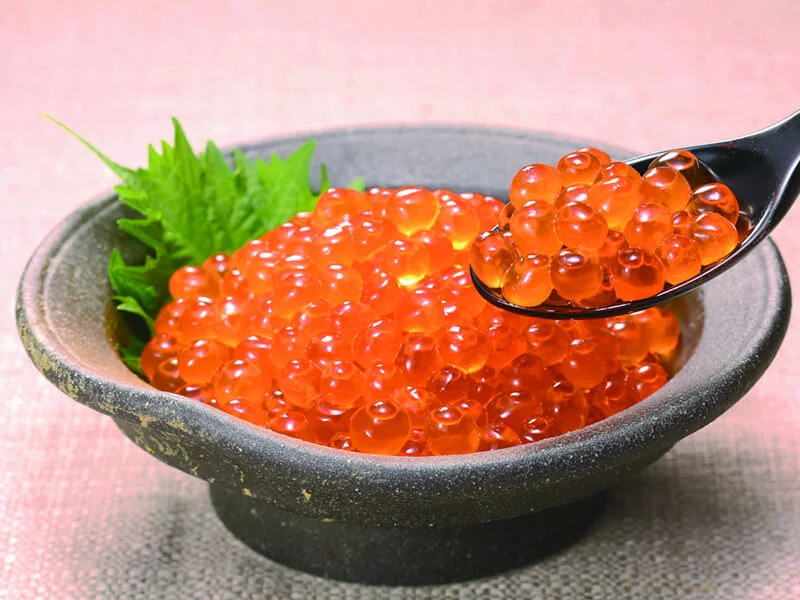
Ikura is also known as "red caviar." It is distinct from black caviar and made from sturgeon roe. Red caviar is part of Russian and Japanese cuisine. In Japan, salmon caviar is known as ikura (イクラ), which derives from the Russian word ikra (икра), which means caviar or fish roe in general. In Japanese cuisine, it is usually marinated in salt or soy sauce and sake. The seasoning used varies from household to household. Many families pickle red caviar using only soy sauce, but some use dashi instead of sake or mirin. Russians enjoy red caviar appetizers (zakuski) on buttered bread or a blini (Slavic crêpes). Caviar on a blini may be paired with sliced salmon and champagne, especially on Russian New Year's Eve.
Kana: イクラ
Romaji: ikura
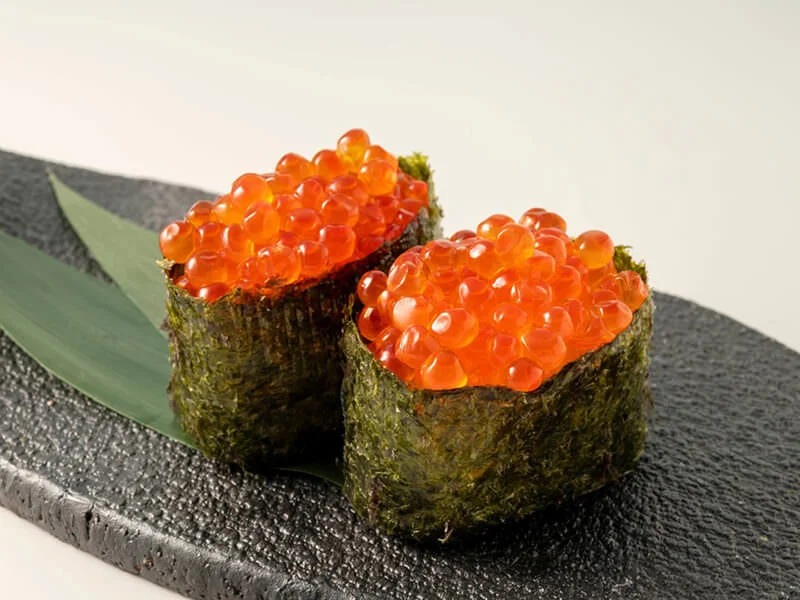
Ikura is also known as "red caviar." It is distinct from black caviar and made from sturgeon roe. Red caviar is part of Russian and Japanese cuisine. In Japan, salmon caviar is known as ikura (イクラ), which derives from the Russian word ikra (икра), which means caviar or fish roe in general. In Japanese cuisine, it is usually marinated in salt or soy sauce and sake. The seasoning used varies from household to household. Many families pickle red caviar using only soy sauce, but some use dashi instead of sake or mirin. Russians enjoy red caviar appetizers (zakuski) on buttered bread or a blini (Slavic crêpes). Caviar on a blini may be paired with sliced salmon and champagne, especially on Russian New Year's Eve.
Kana: イクラ
Romaji: ikura