


- 14 Mar 2002
- 21,051
- 18,903
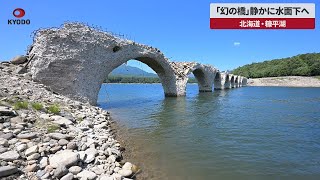
After the end of World War II, it was decided to construct the Nukabira dam, which prompted JNR in 1955 to build another line to replace the older one. That marked the end of the structure's role as a railway bridge. The bridge has been left to weather the elements since then. It begins to submerge around May, when water levels in the lake start to rise. It emerges over frozen water in January when water levels start dropping, a cycle that has been repeated for over 60 years. The bridge decays at a much faster rate than others because water seeps deep inside its concrete structure in winter, freezes and expands, causing multiple cracks.
Because of this, "one year's worth of degradation for Taushubetsu is comparable to 50 years for normal bridges," according to one estimate. In September 2003, the top of Taushubetsu's fifth pier, located at the south end, toppled during the Tokachi-Oki earthquake, and the upper part of the fourth column broke off in April 2017. In April this year, the upper section of the third pier, along with the section damaged in the Tokachi-Oki earthquake, sustained further damage.
Mitsuru Kawada, head of the Higashi-Taisetsu Nature Guide Centre, stated that the bridge's deterioration has accelerated rapidly in recent years. "A series of collapses occurred this year, although only one case was confirmed over several years before that," said Kawada, 60. He noted that the pace of damage is especially noticeable after the bridge is completely submerged in water during a winter like this year.
Because of this, "one year's worth of degradation for Taushubetsu is comparable to 50 years for normal bridges," according to one estimate. In September 2003, the top of Taushubetsu's fifth pier, located at the south end, toppled during the Tokachi-Oki earthquake, and the upper part of the fourth column broke off in April 2017. In April this year, the upper section of the third pier, along with the section damaged in the Tokachi-Oki earthquake, sustained further damage.
Mitsuru Kawada, head of the Higashi-Taisetsu Nature Guide Centre, stated that the bridge's deterioration has accelerated rapidly in recent years. "A series of collapses occurred this year, although only one case was confirmed over several years before that," said Kawada, 60. He noted that the pace of damage is especially noticeable after the bridge is completely submerged in water during a winter like this year.
Tourists Flock to See Hokkaido's Sinking Phantom Bridge
The Taushubetsu River Bridge, an old arch bridge from the former National Railway Shihoro Line in Kamishihoro, Hokkaido, has once again begun to sink beneath the waters of Lake Nukabira this year.
newsonjapan.com


