


- 14 Mar 2002
- 21,051
- 18,903
Volunteers in Fukui helped drain the castle moat. Before the work could begin, more than 1,700 animals had to be caught from the moat on 8 August and relocated to other bodies of water. Among them were carp, tench, catfish, crayfish, and other native species.
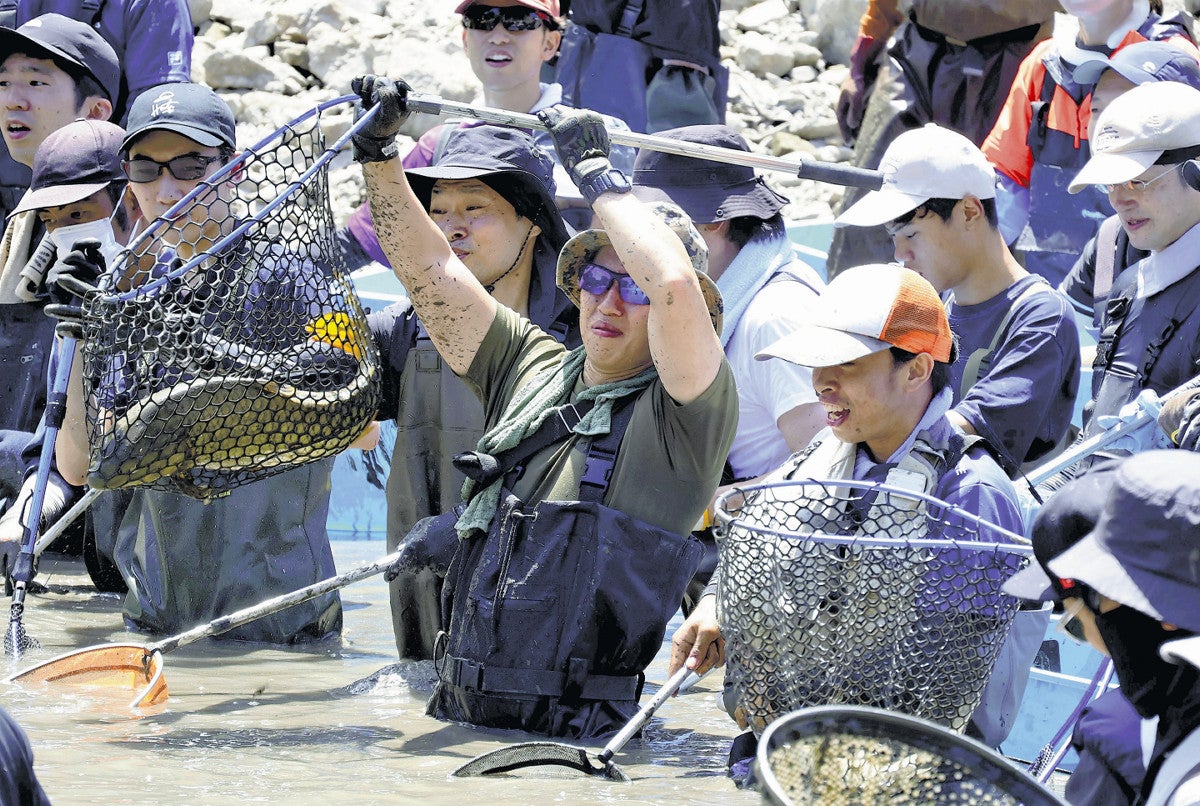
In the south-west corner of the former Fukui Castle (福井城址) grounds in central Fukui City, restoration work is underway on the Kon-yagura turret (坤櫓), which had stood there until the early Meiji period , and on the earthen wall on the western side of the inner bailey. The project aims for completion in the 2029 fiscal year. To allow heavy machinery to enter, it was decided that part of the water from the castle moat would be drained, and on the 8th, a programme was carried out to capture and relocate the living creatures inhabiting the moat.
The Kon-yagura was rebuilt after being destroyed in the great fire of 1669. Until it was dismantled under the Castle Abolition Order in the early Meiji period, it had for around two centuries been regarded as a symbol of Fukui Castle. Since fiscal year 2023, Fukui Prefecture has been running a project for its reconstruction. It will be restored with the same three-storey structure and 16-metre height as in the Edo period , and is expected to become a new landmark of the prefecture, presenting itself as the first sight for visitors arriving at Fukui Station. However, the living creatures inhabiting the moat had to be moved to a different section. To achieve this, around 80 volunteers from inside and outside the prefecture joined the production team of the TV Tokyo variety show Kinkyū SOS! Ike no Mizu Zenbu Nuku Daisakusen ("Emergency SOS! Operation Drain the Pond") in carrying out the capture work.
The section drained covered about 7,000 square metres, stretching from Gohonjo Bridge to Gorōka Bridge. Although there had been two previous occasions when water was drained, Tsuyoshi Tanabe of the Prefectural Transport and Urban Development Division stated that this was "the first time the work has been conducted on such a large scale." The moat, which usually has a depth of about two metres, was lowered to a level between waist and chest height. Volunteers and programme participants then formed a line from Gorōka Bridge towards Gohonjo Bridge, driving fish forward and catching them one after another with nets. A total of 1,740 individuals of 17 species, including carp, crucian carp, catfish and freshwater prawns, were relocated to other sections, while 336 invasive bluegill were exterminated.
The moat will remain drained until the restoration of the Kon-yagura is completed. By the end of the year, work will proceed in parallel with an archaeological survey of buried cultural properties, including the installation of a temporary system to circulate the water of the moat. In addition, fragments believed to be of high historical value, such as pieces of roof tiles bearing the family crest of the Yūki clan (結城), the first lords of Fukui Domain, were also collected.
Translated from here:
 www.yomiuri.co.jp
In the south-west corner of the former Fukui Castle (福井城址) grounds in central Fukui City, restoration work is underway on the Kon-yagura turret (坤櫓), which had stood there until the early Meiji period , and on the earthen wall on the western side of the inner bailey. The project aims for completion in the 2029 fiscal year. To allow heavy machinery to enter, it was decided that part of the water from the castle moat would be drained, and on the 8th, a programme was carried out to capture and relocate the living creatures inhabiting the moat.
The Kon-yagura was rebuilt after being destroyed in the great fire of 1669. Until it was dismantled under the Castle Abolition Order in the early Meiji period, it had for around two centuries been regarded as a symbol of Fukui Castle. Since fiscal year 2023, Fukui Prefecture has been running a project for its reconstruction. It will be restored with the same three-storey structure and 16-metre height as in the Edo period , and is expected to become a new landmark of the prefecture, presenting itself as the first sight for visitors arriving at Fukui Station. However, the living creatures inhabiting the moat had to be moved to a different section. To achieve this, around 80 volunteers from inside and outside the prefecture joined the production team of the TV Tokyo variety show Kinkyū SOS! Ike no Mizu Zenbu Nuku Daisakusen ("Emergency SOS! Operation Drain the Pond") in carrying out the capture work.
The section drained covered about 7,000 square metres, stretching from Gohonjo Bridge to Gorōka Bridge. Although there had been two previous occasions when water was drained, Tsuyoshi Tanabe of the Prefectural Transport and Urban Development Division stated that this was "the first time the work has been conducted on such a large scale." The moat, which usually has a depth of about two metres, was lowered to a level between waist and chest height. Volunteers and programme participants then formed a line from Gorōka Bridge towards Gohonjo Bridge, driving fish forward and catching them one after another with nets. A total of 1,740 individuals of 17 species, including carp, crucian carp, catfish and freshwater prawns, were relocated to other sections, while 336 invasive bluegill were exterminated.
The moat will remain drained until the restoration of the Kon-yagura is completed. By the end of the year, work will proceed in parallel with an archaeological survey of buried cultural properties, including the installation of a temporary system to circulate the water of the moat. In addition, fragments believed to be of high historical value, such as pieces of roof tiles bearing the family crest of the Yūki clan (結城), the first lords of Fukui Domain, were also collected.
Translated from here:
追い込んだ魚を網で捕らえる参加者ら(福井市で) : 福井城址の堀の水抜き、あのテレビ番組などの協力で生き物捕獲し大移動…櫓・土塀の復元工事で:写真
【読売新聞】 福井市中心部の福井 城址 ( じょうし ) の南西角に明治初期まであった 坤櫓 ( ひつじさるやぐら ) と、本丸西側の土塀の復元工事が、2029年度の完成を目指して進められている。重機が入れるようにするため、堀の水の


