

A REVIEW
Japanese Whisky: The Ultimate Guide to the World's Most Desirable Spirit with Tasting Notes from Japan's Leading Whisky Blogger
Author: Brian Ashcraft
Publisher: Tuttle Publishing
Format: Hard cover
Pages: 144

The reviewer:
For people reading this review, I should tell you from the onset, that I am a novice, and just began my journey into whiskies 4 years ago beginning with mostly Scottish single malts. Recently, I have turned towards Japanese whiskies. However, let me be clear: I am not an expert on whisky by any standard.
So, why are you writing this review?
Firstly, as a matter of necessity: No-one else volunteered to take this on review for the site, so I tried to recruit my whiskey guru, and when he declined, I "raised my hand". Secondly, I think that many of the readers of a whisky book on this site will be in a similar position as myself, fairly new to Japanese whiskies, so my comments may be of some help. True aficionados, I suspect, will look for information from their favorite sources. In either case, I hope my comments are of use.
DISLAIMER:I received a complimentary copy of the book from this site, Japan Reference, that was provided by the publisher, Tuttle Publishing. The opinions expressed represent my own opinions.
Overview:
Brian Ashcraft is a long-term resident of Japan and has written several books on Japan. Ashcraft breaks his books into two main sections: Japanese Whisky Comes of Age, which covers the history and development of Japanese whisky, and Japanese Leading Distilleries and Whiskies, which covers exactly that. Either of these two sections could be a stand-alone book.
Part One: Japanese Whisky Comes of Age starts with a long history and overview of the development of Japanese whisky. For some, there may be too much detail. I think where this book succeeds is that the reader can easily skip or skim the sections that are not of particular interest immediately and only read about what interests you. Ashcroft has broken it down into clear subsections which self-explanatory titles. For readers with little knowledge of Japan, he offers an easy to follow narrative with beautiful, clear pictures that are appropriately placed to make it easy for the reader to understand. This is particularly helpful for readers that are unacquainted with Japan. The strength of this section comes in that it is accessible, but also provides enough detail to satisfy the reader that is more acquainted with Japan. Throughout the book he provides the Japanese Kanji characters for key terms, how Japanese culture, and whisky history in has impacted Japanese whisky, including the spelling of "whisky", rather than "whiskey". The section on Japanese whisky casks is an interesting example of why Japanese whisky has a unique taste.
Part Two: Japanese Leading Distilleries and Whiskies begins with a map of Japan with the major distilleries marked and placed! Ashcraft focusses on the six leading producers and their distilleries. He provides a brief overview and identifies what has made them stand out. From the point of view of "getting a feeling" for how these producers view themselves and are perceived, it is an interesting read. However, the beauty of Part Two lies in the tasting notes. Yuji Kawasaki, a well-known whisky blogger/reviewer, has provided tasting notes for whiskies from the major producers: Suntory (29 whiskies), Eigashima Shuzo (12 whiskies), Nikka (28 whiskies), Hombo Shuzo (13 whiskies), Kirin (8 whiskies), and Venture (15 whiskies). Kawasaki gives a brief description followed by a score (/100) which will be invaluable for a newcomer to Japanese whisky.
The book itself
It is printed in a high-quality gloss paper that makes the many beautiful and informative photos stand out (Kudos to photographer Idzuhiko Ueda).
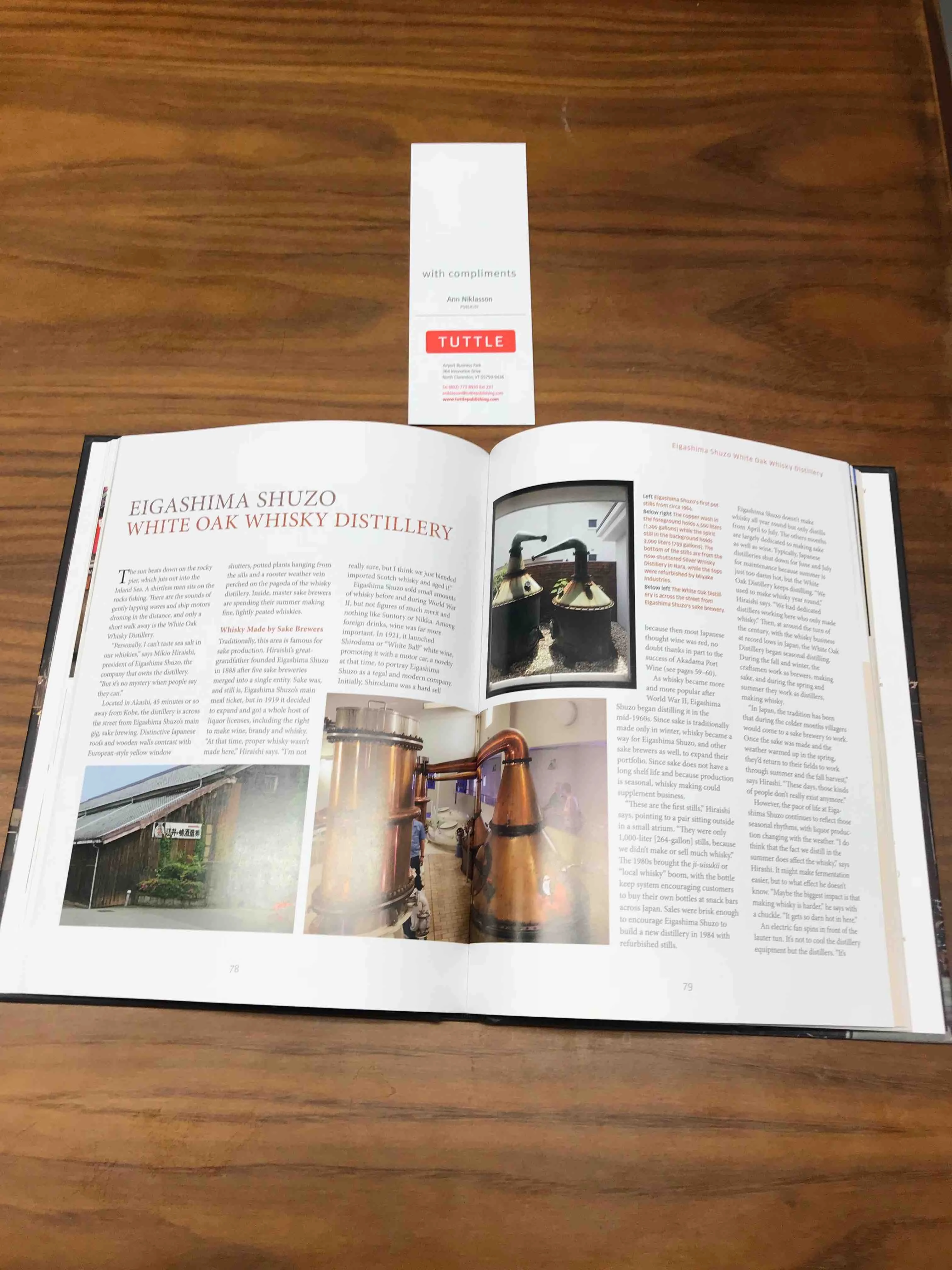
The text used is an easy to read serif font (though perhaps a touch small for "older eyes" such as myself). The text is left-aligned, rather than justified, making it very reader friendly. The cover is attractive and will sit nicely on any coffee table but…
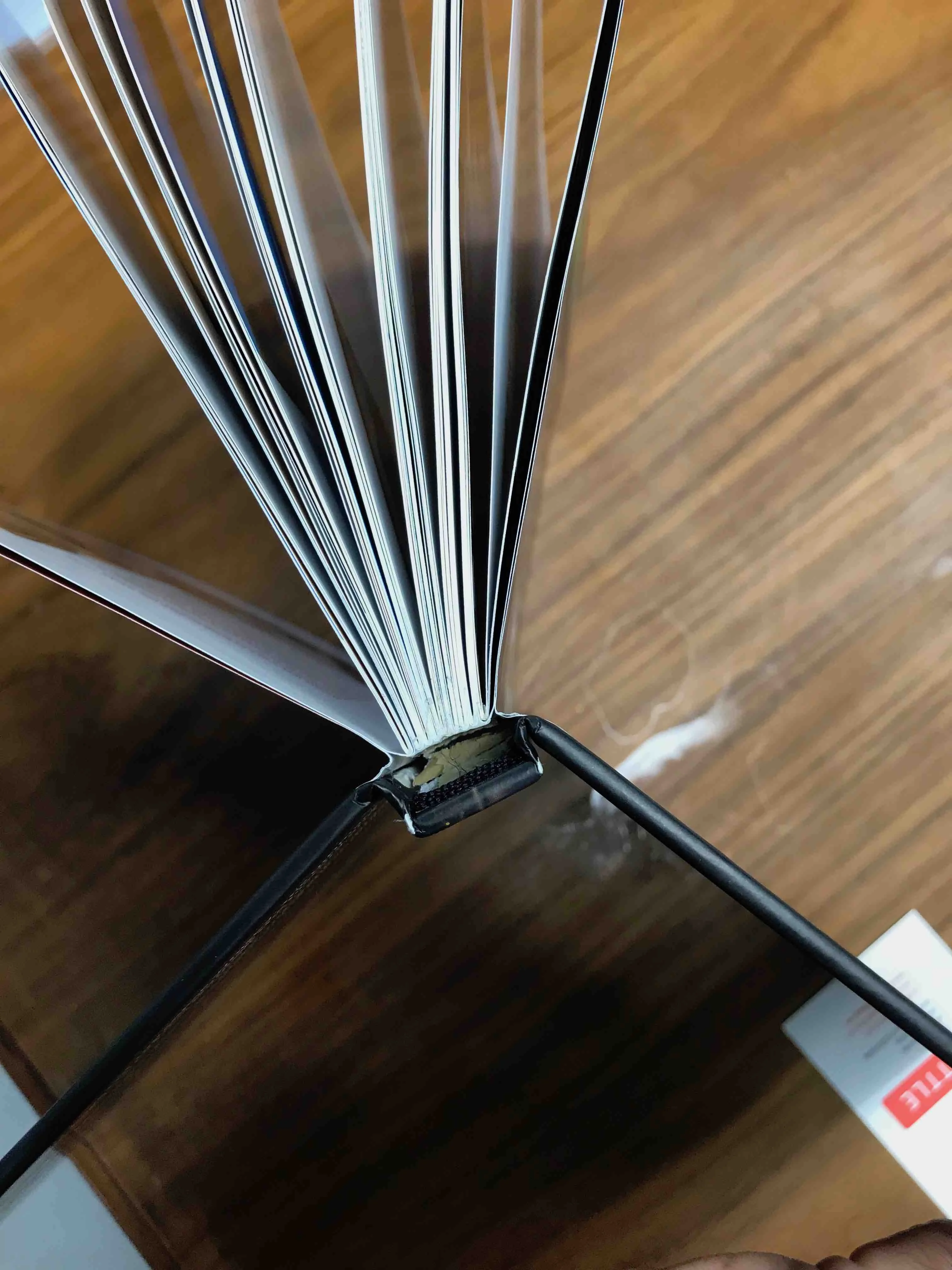
I am sure that this will be a "go to" book for whisky lovers, which leads to my two complaints about the book: 1) There is no index, which is a as not as bad as it may seem because the chapters are very logical in progression and it is easy to find what you are looking for, if you have read through the entire book, and 2) While the book is hard cover, the spine and the binding quality leave much to be desired. After one reading, the spine has already begun to separate from the paper (poor gluing). Before I received it was probably dropped, resulting in a tear in the bottom corner of the cover, so it is likely to rest on a shelf rather than be proudly on display on the coffee table. It is a shame that such an attractive looking and interesting book was not produced at higher quality.

Final word:
Readers will not be disappointed by this book, in fact they will be elated. In spite of the disappointing quality of the cover and binding, it is worth buying. Some may opt for kindle, so they can look at it while at the bar, which cannot be argued with, but because of the beautiful photos, I would choose the book, and handle it carefully. I strongly recommend Japanese Whisky: The Ultimate Guide to the World's Most Desirable Spiritfor readers interested in Japanese whisky and in exploring the unique tastes that Japanese whisky has to offer.
Tomoni
Reviewer
Japanese Whisky: The Ultimate Guide to the World's Most Desirable Spirit with Tasting Notes from Japan's Leading Whisky Blogger
Author: Brian Ashcraft
Publisher: Tuttle Publishing
Format: Hard cover
Pages: 144
The reviewer:
For people reading this review, I should tell you from the onset, that I am a novice, and just began my journey into whiskies 4 years ago beginning with mostly Scottish single malts. Recently, I have turned towards Japanese whiskies. However, let me be clear: I am not an expert on whisky by any standard.
So, why are you writing this review?
Firstly, as a matter of necessity: No-one else volunteered to take this on review for the site, so I tried to recruit my whiskey guru, and when he declined, I "raised my hand". Secondly, I think that many of the readers of a whisky book on this site will be in a similar position as myself, fairly new to Japanese whiskies, so my comments may be of some help. True aficionados, I suspect, will look for information from their favorite sources. In either case, I hope my comments are of use.
DISLAIMER:I received a complimentary copy of the book from this site, Japan Reference, that was provided by the publisher, Tuttle Publishing. The opinions expressed represent my own opinions.
Overview:
Brian Ashcraft is a long-term resident of Japan and has written several books on Japan. Ashcraft breaks his books into two main sections: Japanese Whisky Comes of Age, which covers the history and development of Japanese whisky, and Japanese Leading Distilleries and Whiskies, which covers exactly that. Either of these two sections could be a stand-alone book.
Part One: Japanese Whisky Comes of Age starts with a long history and overview of the development of Japanese whisky. For some, there may be too much detail. I think where this book succeeds is that the reader can easily skip or skim the sections that are not of particular interest immediately and only read about what interests you. Ashcroft has broken it down into clear subsections which self-explanatory titles. For readers with little knowledge of Japan, he offers an easy to follow narrative with beautiful, clear pictures that are appropriately placed to make it easy for the reader to understand. This is particularly helpful for readers that are unacquainted with Japan. The strength of this section comes in that it is accessible, but also provides enough detail to satisfy the reader that is more acquainted with Japan. Throughout the book he provides the Japanese Kanji characters for key terms, how Japanese culture, and whisky history in has impacted Japanese whisky, including the spelling of "whisky", rather than "whiskey". The section on Japanese whisky casks is an interesting example of why Japanese whisky has a unique taste.
Part Two: Japanese Leading Distilleries and Whiskies begins with a map of Japan with the major distilleries marked and placed! Ashcraft focusses on the six leading producers and their distilleries. He provides a brief overview and identifies what has made them stand out. From the point of view of "getting a feeling" for how these producers view themselves and are perceived, it is an interesting read. However, the beauty of Part Two lies in the tasting notes. Yuji Kawasaki, a well-known whisky blogger/reviewer, has provided tasting notes for whiskies from the major producers: Suntory (29 whiskies), Eigashima Shuzo (12 whiskies), Nikka (28 whiskies), Hombo Shuzo (13 whiskies), Kirin (8 whiskies), and Venture (15 whiskies). Kawasaki gives a brief description followed by a score (/100) which will be invaluable for a newcomer to Japanese whisky.
The book itself
It is printed in a high-quality gloss paper that makes the many beautiful and informative photos stand out (Kudos to photographer Idzuhiko Ueda).
The text used is an easy to read serif font (though perhaps a touch small for "older eyes" such as myself). The text is left-aligned, rather than justified, making it very reader friendly. The cover is attractive and will sit nicely on any coffee table but…
I am sure that this will be a "go to" book for whisky lovers, which leads to my two complaints about the book: 1) There is no index, which is a as not as bad as it may seem because the chapters are very logical in progression and it is easy to find what you are looking for, if you have read through the entire book, and 2) While the book is hard cover, the spine and the binding quality leave much to be desired. After one reading, the spine has already begun to separate from the paper (poor gluing). Before I received it was probably dropped, resulting in a tear in the bottom corner of the cover, so it is likely to rest on a shelf rather than be proudly on display on the coffee table. It is a shame that such an attractive looking and interesting book was not produced at higher quality.
Final word:
Readers will not be disappointed by this book, in fact they will be elated. In spite of the disappointing quality of the cover and binding, it is worth buying. Some may opt for kindle, so they can look at it while at the bar, which cannot be argued with, but because of the beautiful photos, I would choose the book, and handle it carefully. I strongly recommend Japanese Whisky: The Ultimate Guide to the World's Most Desirable Spiritfor readers interested in Japanese whisky and in exploring the unique tastes that Japanese whisky has to offer.
Tomoni
Reviewer
