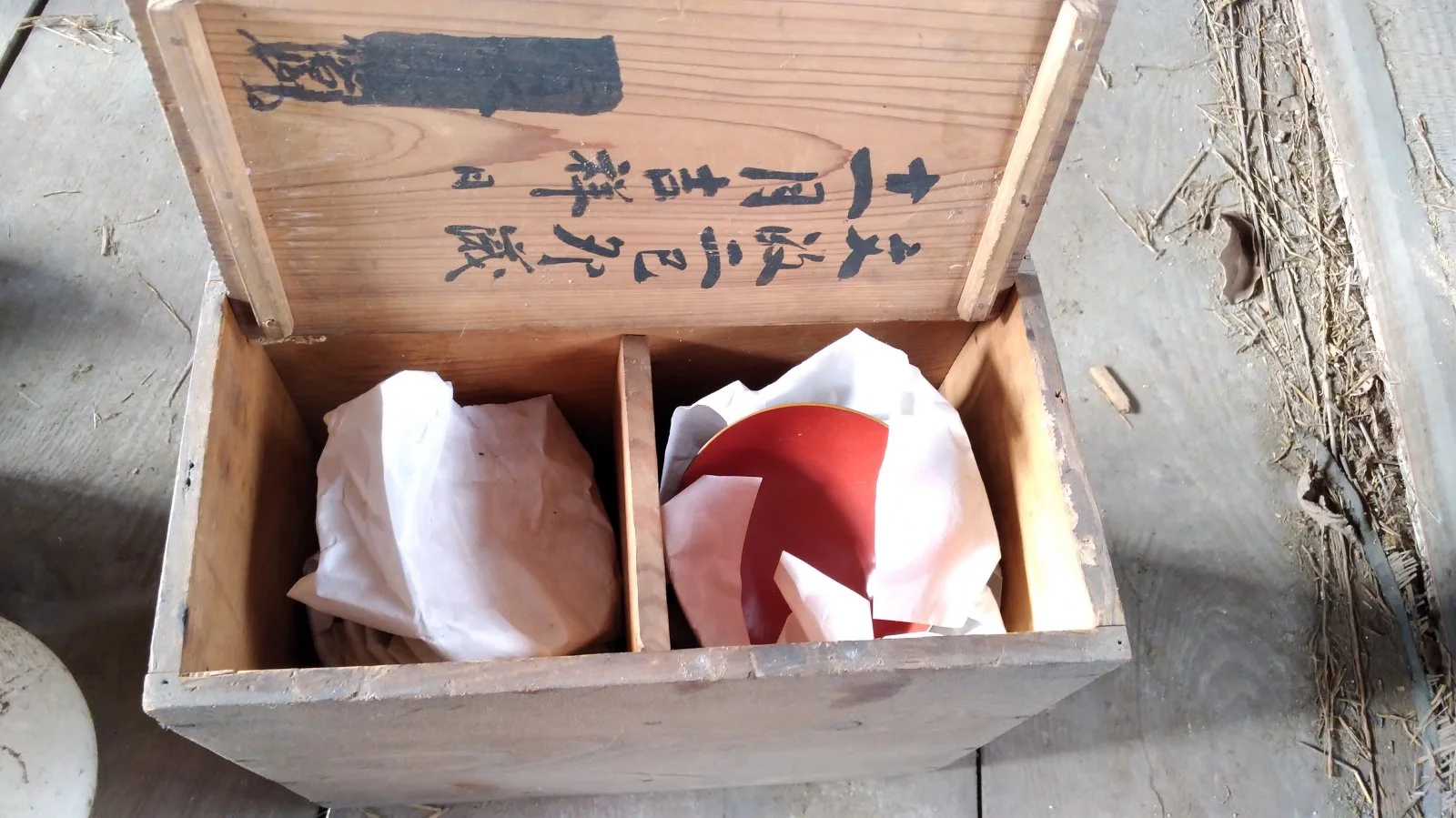
Thanks. There's quite a lot of stuff 100-150 years old in our old house but this is older than most. It's frustrating some of the text is blacked out. Guess we'll never know.
On a philosophical note our outhouse is full of very old photo albums too. People dressed in their best kimono or celebrating some long past event. Nobody in the house knows who they are any more. One day we'll all be dust, forgotten and non-existant. It spurs me at least to try to make the most of life for the short moment we pass through this world. Lucky for you if you have a belief in an afterlife or reincarnation ...
Going from the fact that it says 吉祥日 (A lucky day), we may confer that the objects might've been used in some kind of ceremony that requires it being a lucky day, like perhaps a marriage. Unfortunately I'm not an expert on the matter so I couldn't tell which possibilities there are in this case...
吉祥日 is just a kind of title to refer to "a day", just like 11月吉日 for a date used in a business letter. It doesn't mean a real lucky day. (That's why I put "lucky" in parenthesis in my post above.)
See the explanation of NEW124 在郷童教訓書 in the page linked below. 安政二卯歳孟春吉祥日 indicates the publish date of a book for moral education in Edo period .
This site uses cookies to help personalise content, tailor your experience and to keep you logged in if you register.
By continuing to use this site, you are consenting to our use of cookies.