Defence New design for next-gen GCAP fighter unveiled

thomas

Unswerving cyclist
Admin
Joined
14 Mar 2002
Messages
21,049
Reaction score
18,902
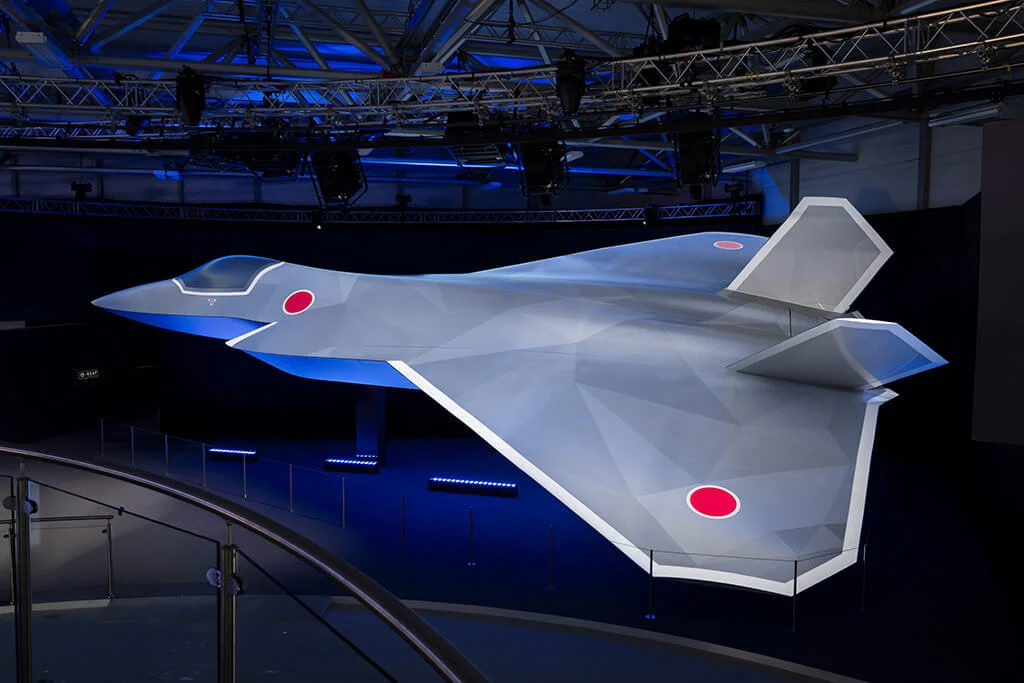
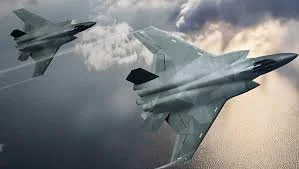
On the first day of the Farnborough Air Show, BAE Systems (UK), Leonardo (Italy), and Mitsubishi Heavy Industries (Japan) showcased the updated design, which boasts a larger wingspan to enhance aerodynamics, according to BAE Systems. This trilateral initiative, known as the Global Combat Air Programme (GCAP), incorporates technology from the UK's Tempest program, which aims to fly a prototype by 2027 and eventually replace the Royal Air Force's Eurofighter Typhoon. GCAP is part of the UK's Future Combat Air System, a "family of systems" that includes drones and sixth-generation fighters.

GCAP

Latest concept of the GCAP at Farnborough

The old wing design:
GCAP


But the unveiling comes amid uncertainty about the future of the multi-billion dollar program—and indeed, of Western sixth-gen combat jets in general. A U.K. official recently declined to commit to the program as the new government goes through its "strategic defence review" and mulls a shift in focus to preparing for a near-term war in Europe against Russia. On the American side of the Atlantic, U.S. Air Force officials have openly questioned the financial feasibility of its sixth-generation fighter jet, called NGAD.


Germany is likely weighing possible participation in the joint next-generation fighter jet programme led by Japan, Britain and Italy, as its existing cooperation with France and Spain appears to be encountering friction. In 2017, Berlin and Paris agreed to pursue a jointly developed future fighter aircraft, a framework that Spain later joined. Progress, however, has reportedly been uneven, with defence contractors in Germany and France clashing over leadership roles and, according to a German newspaper, eroding confidence.

GCAP

It was against this backdrop that German Chancellor Friedrich Merz explored the prospect of Germany entering the Japan-Britain-Italy initiative — formally known as the Global Air Combat Program (GACP) — during a visit to Italy last month. An Italian newspaper subsequently reported that Prime Minister Giorgia Meloni indicated a willingness to consider such a move. A representative of Japan's Defence Ministry Acquisition, Technology and Logistics Agency declined to comment on whether Berlin had made any formal approach to participate, citing sensitivities in relations with the countries involved. The official added that the programme itself had been conceived with cooperation among allies and like-minded partners in mind.

 
GCAP
Canada plans on joining the GCAP as an observer, giving it access to a next-generation fighter jet project led by Japan, Britain and Italy, according to officials. The observer role would allow Canada to receive certain confidential information related to the project. At this stage, it is not expected to participate in development, though it is reportedly considering a future purchase.

The arrangement is a pathway that lets a country assess deeper involvement later, ranging from procurement to manufacturing to potentially even participation in development, depending on how things evolve. The three partner countries are planning a defence ministers' meeting in Britain as early as July, where Canada's participation is expected to be formally announced. A decision on whether Canada will actually buy the aircraft is likely to come later.

Japan, eager to deploy the new fighter by 2035, has been reluctant to add more full partners to the development team over fears of delays. It does, however, have high hopes for expanding its sales market. Interest in GCAP is growing, a Defense Ministry official said, noting that the three founding members have been in contact with Singapore, Australia, India and Saudi Arabia. European nations like Germany, Sweden and Poland have also reportedly expressed interest. [...] Meanwhile, concrete discussions with allies have not progressed for the F-47 fighter, announced by the U.S. Trump administration.

 
While France and Germany terminated their next-gen fighter project, Canada joined the GCAP program.

GCAP

In June, the GCAP International Government Agency, made up of the GCAP Agency and a steering committee, awarded a second contract worth 4.6 billion pounds (US$6.15 billion) to Edgewing. The joint venture between BAE Systems, Leonardo and Mitsubishi Heavy Industries is responsible for developing the new fighter aircraft. The funding will run through December 2027. It will cover the completion of the programme's concept and assessment phase as well as further joint development work. After Canada was announced as an observer, Leonardo's new chief executive, Lorenzo Mariani, was asked about reports that Germany could also join GCAP. He described Germany as a strong industrial partner and said it was financially the strongest country in Europe. He also noted that German industry already had a long history of working with companies in Italy and the UK. At the same time, Mariani acknowledged that bringing Germany in as a full partner would affect the programme's timetable. The three existing partners are still negotiating how work will be divided and where the aircraft will be assembled. For that reason, he did not believe offering Germany observer status would be a practical option.

Paywall alert:
 
Back
Top Bottom