


- 14 Mar 2002
- 21,050
- 18,903
The village of Nishimeya has taken a different tack, turning the meat of Asian black bears caught near the Shirakami-Sanchi mountains—recognised as a World Natural Heritage site—into a local speciality. Under the name "Shirakami Gibier," the project has drawn notice online, not just for using bears that would otherwise be culled but also for openly highlighting how good the meat can taste.
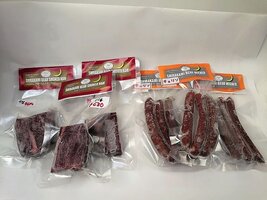
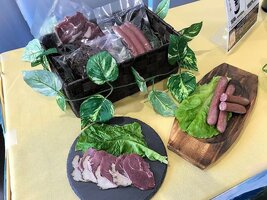
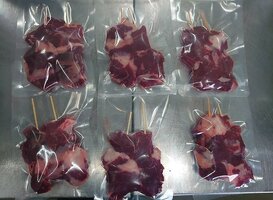
All photos by Shirakami Public Corp. via Asahi.
To support the effort, the village set up its own processing facility in November 2020, dedicated solely to handling wild bear meat. Kakuta Katsuhiko, who heads the semi-public Shirakami Public Corp., explained that untreated bear meat can be tough and gamey, but that letting it rest in the facility's ageing room for at least three days removes the odour and makes it more manageable and flavourful. He said more people now recognise "Shirakami Gibier" as a Nishimeya speciality, suggesting that the idea is gaining broader acceptance. The products are no longer limited to the village. When the company ran a food stall at a roadside rest area in Yokohama, elsewhere in Aomori Prefecture, in late October, and served bear meat dishes, the online response again helped spread the word.
Shirakami Bear Smoked Ham is priced at 650 yen ($4.25) per 100 grams, including tax. A pack of Shirakami Bear Wiener contains three sausages and is on sale for 1,000 yen. Both products need to be kept frozen. The skewered dish is available at a restaurant in the Tsugaru Shirakami roadside rest area for 500 yen per skewer.

All photos by Shirakami Public Corp. via Asahi.
To support the effort, the village set up its own processing facility in November 2020, dedicated solely to handling wild bear meat. Kakuta Katsuhiko, who heads the semi-public Shirakami Public Corp., explained that untreated bear meat can be tough and gamey, but that letting it rest in the facility's ageing room for at least three days removes the odour and makes it more manageable and flavourful. He said more people now recognise "Shirakami Gibier" as a Nishimeya speciality, suggesting that the idea is gaining broader acceptance. The products are no longer limited to the village. When the company ran a food stall at a roadside rest area in Yokohama, elsewhere in Aomori Prefecture, in late October, and served bear meat dishes, the online response again helped spread the word.
Two products recently added to the regular lineup are Shirakami Bear Smoked Ham and Shirakami Bear Wiener (chorizo flavour). They are available frozen and packaged at stores at the Tsugaru Shirakami roadside rest area and the Buna-no-sato Shirakami-kan hot spring inn, which the public corporation operates. The meat used for Shirakami Gibier comes from Asian black bears caught in traps set in apple orchards and vegetable fields in the village to prevent crop damage by animals and birds. More than 40 bears have been captured between June and late October this year, up sharply from the seven during the same period last year, when there was a bountiful harvest of acorns and other nuts in the mountains.
Shirakami Bear Smoked Ham is priced at 650 yen ($4.25) per 100 grams, including tax. A pack of Shirakami Bear Wiener contains three sausages and is on sale for 1,000 yen. Both products need to be kept frozen. The skewered dish is available at a restaurant in the Tsugaru Shirakami roadside rest area for 500 yen per skewer.
Link:
Rest stop Tsugaru Shirakami / Beech Nishimeya
Rest stop Tsugaru Shirakami / Beech Nishimeya
www.tsugaru-shirakami.com


