


- 14 Mar 2002
- 21,050
- 18,903
Itoigawa in Niigata, renowned for its jade stones, plans to request that people refrain from collecting valuable jade rocks from riverbeds and instead limit their gathering to the seashore to help conserve resources. Although the measure will not be legally binding, it will be introduced as a "manners" guideline, encouraging public cooperation rather than enforcing a formal ordinance. The decision follows ongoing discussions among government officials and river management authorities on addressing the continuous removal of jade from riverbeds. The proposal will be reviewed and finalized this spring during a meeting of the Itoigawa Geopark council, which includes representatives from municipal, prefectural, and national governments, as well as regional economic organizations. The city will ultimately decide on its implementation.
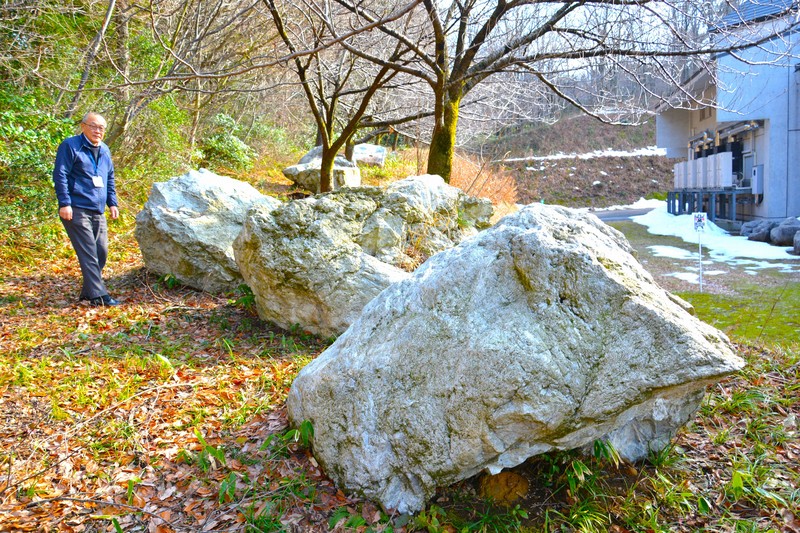
Jade boulders near the Fossa Magna Museum in Itoigawa (photo credit: Nakatsugawa Hajime via Mainichi)
At the same time, if the city were to ban taking stones even from seashores, it could end the culture of jade-picking that has continued since the Jomon period (c. 14,000-300 BC). Since waves and other natural activities erode the stones, eventually turning them into sand or mud with no value, the city decided that it would fit with the preservation of resources to limit collection to what could fit in the palm of one's hand.

 mainichi.jp
More on Japan's Jade Coat by Atlas Obscura:

 www.atlasobscura.com
Jade boulders near the Fossa Magna Museum in Itoigawa (photo credit: Nakatsugawa Hajime via Mainichi)
The area around Itoigawa is home to the most abundant jade in the country. The Kotakigawa Jade Gorge and Omigawa Jade Gorge sites within the city are nationally designated natural monuments and the unpermitted removal of jade is banned. Elsewhere, the parties that manage the rivers and seashores have tolerated taking small amounts of the gemstones. According to the Niigata Prefectural Government, outside the jade gorges, removal of soil and stones containing jade requires legal permission based on laws on rivers and seashores. However, the laws also hold that if the amount taken from rivers or shores is very small and collection is only temporary, permission could be deemed unnecessary within the scope of free use. The term "very small" is not concretely defined but is explained as an amount suitable to take as a keepsake for a trip.
At the same time, if the city were to ban taking stones even from seashores, it could end the culture of jade-picking that has continued since the Jomon period (c. 14,000-300 BC). Since waves and other natural activities erode the stones, eventually turning them into sand or mud with no value, the city decided that it would fit with the preservation of resources to limit collection to what could fit in the palm of one's hand.
Stones unturned: Japan city to ask visitors to stop taking jade rocks from rivers - The Mainichi
ITOIGAWA, Niigata -- This central Japan city famed for its jade stones is set to ask people to refrain from taking the prized mineral formations from
More on Japan's Jade Coat by Atlas Obscura:
The Jade Coast in Itoigawa
You can still find treasures on the pebbly beaches of one of the world's oldest jade-producing areas.


