The tragedy of JAL 123

thomas

Unswerving cyclist
Admin
Joined
14 Mar 2002
Messages
21,050
Reaction score
18,903
It is the 17th anniversary of the largest single air disaster in history: Flight JAL 123. The accident is still shrouded in mystery, especially the rescue missions launched too late. Only four of the passengers survived. Sakamoto Kyu ("Sukiyaki") was among the 520 victims.

=> http://www.japantoday.com/e/?content=news&cat=1&id=226205

Related links:

History & background info

=> http://www.airsafetyonline.com/indepth/ayers/123.shtml

=> http://kenji.fureai.or.jp/data/jal123/ (in Japanese)

It covers the route of JAL123 in detail and the transcript from the voice recorders.

=> http://dnausers.d-n-a.net/dnetGOjg/120885.htm

Voice recorder transcriptions and routes in English; the tragic last moments in the cockpit during the final minute before the impact.
 

Attachments

Last edited:
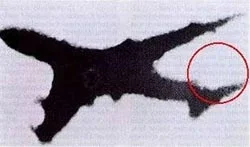
Here's another technical description of what happened

https://asn.flightsafety.org/database/1985/850812-1.htm

The aircraft is in flight below. Note the missing vertical stabilizer ("tail fin").
 

Attachments

  • jal123.webp
    jal123.webp
    7.4 KB · Views: 300
Uhm, this is not the right time for these kind of stories.
I have to fly 12 hours to Thailand in a few weeks... 😲
 
I think that is no longer the worst airline disaster in history...if you know what I'm hinting at.
 
@ twisted all will be well with your flight, fingers and all else crossed, and you will be fine!🙂

I read the transcript from that flight, scary, I dont fly often, and I dont wish too!! 😲
 
According to statistics flying is still the safest transportation, Peter.

Flight JAL123 was an extreme case of negligence in aircraft maintenance. What's tragic about the rescue mission is that U.S. forces had offered their help and had already been airborne when they were called back because the Japanese government refused their assistance. Probably more people would have survived with their help. The four survivors (all of them in the tail section) were found 15 hours after the cash.
 
Probably the Americans got called back because they hadn't gone through the right channels.

Same senerio during the Hashin Earthquake.

@stats
I've heard the same thing. You drive because the risk is low. You fly because the distance is far. You all die because you're in a plane. You just kill the other person when you drink and drive. statistics for you.
 
Safety

Flying is the SAFEST form of transportation there is. The level of attention to procedure and detail and time spent thinking of every possible scenario is amazing. Though we are all human. The statistic is that if you flew on an airline everey day you would be gauranteed dead after 26,000 years or a 1 in 10 million chance. An car is 1 in 14,000.
 
Last edited:
20 years

NHK News
Relatives of Victims Visit JAL Crash Site​

Relatives of the victims of Japan's worst air accident are visiting the crash site on the 20th anniversary of the disaster.

On August 12, 1985, a Japan Airlines Boeing 747 crashed in mountains near Ueno Village, northwest of Tokyo, killing 520 people.

On Friday, people are climbing the mountains to visit the crash site, 1,600 meters above sea-level. Along the way, the visitors left the victim's favorite things and offerings of flowers, and prayed for them.

To accommodate aging family members, Ueno Village started a service last year to transport relatives two-thirds of the way up mountain roads usually used for construction. The families trek the remaining 800 meters to the site.

In late afternoon, relatives and local residents are to hold a memorial service at the foot of the mountains. They will light 520 candles, one for each victim, and offer silent prayers at 6:56 p.m., the time of the crash.
Flash Movie
 
Last edited:
It seems like yesterday. I remember the reports on the disaster. It was so sad to hear about passengers, knowing they were about to die, leaving messages for family members.
 
I was in Nagoya when it crashed. I will never forget the mood, the news, the panic in the announcers' voices. It was twenty years ago, and I still recall the heaviness in the air so very well--even the baseball games (Koushiin) were dampened by that sad, sad event. Flying is still safer than driving, and I have enjoyed it in the past when I flew a light plane a little.
 
A sad day indeed :(

I just wish that the authorities would no longer be so slow when it comes to get all possible aid to victims of these kinds of accidents but, alas, I fear little has been learned in that regard :unsure:

But at least the technical aspects were noted and measures were taken note and are now mostly avoided...

Regards,
Keoland
 
There's a special running on television right now, for anyone who wishes to catch it.
 
Hi everybody!

I am an airline pilot. I feel fully confident and safe flying in airliners.

There was an airliner crash in Canada last week (the Air France Airbus). Everybody survived. That crash was compared to a smiliar crash 20 years earlier, where a lot of people died. (I am talking about a similar crash in Canada, not the JAL crash.) The regulatory agencies have come a long way to make travel safe. The non-deaths last week testify to that.
 
I'm pretty scared of flying, even though I've flown several times. I know I shouldn't be, though. I think the lack of control makes me scared. I feel like in a car, you can have some kind of control. In a plane, it's completely out of your hands...unless you're Buntaro... ;-)

Anyway, I saw something about this on NHK last night. I saw the memorial they have at the foot of the mountain, and a mother, whose 29 year old son died. She was making the trek up the mountain with another man. I didn't realize until later that this was the plane that Kyu Sakamoto died on. I knew he died on a JAL flight, but didn't realize it was this one. So sad...so many people died... :(
 
I'm sorry for reviving a thread from yesteryear, which started on the day commemorating the 17th anniversary of the crash. Yesterday was the 39th anniversary.


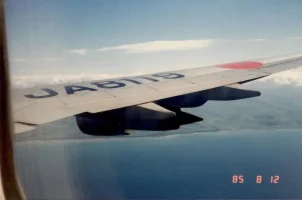
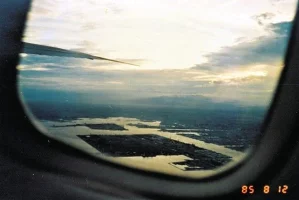
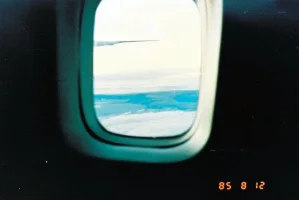
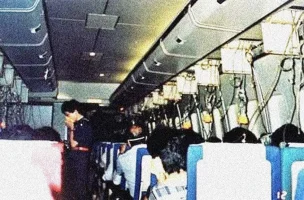
I never knew that some photos taken by passengers on JAL123 survived. Here's more:


Attachments

  • jal123-01.webp
    jal123-01.webp
    30.5 KB · Views: 94
  • jal123-02.webp
    jal123-02.webp
    37.6 KB · Views: 107
  • jal123-03.webp
    jal123-03.webp
    24.2 KB · Views: 95
  • jal123-04.webp
    jal123-04.webp
    441.6 KB · Views: 99
The Wikipedia article on the event makes for an intense read. The passengers had over 30 minutes of terror with the plane rolling back and forth and bucking up and down. Amazingly not only did some of the photos survive, four survivors did too.

And more would have survived had the U.S. teams already dispatched from Yokota been given the OK to assist. Listening to the CVR attached to the first post is heart-wrenching.
 
Today saw the 40th anniversary of the JAL123 crash. And while the official Japanese government investigation determined that the accident was most likely due to faulty repairs carried out by Boeing, in recent years, a controversial theory suggesting that the Japanese government and the Japanese Self-Defence Forces were involved in the crash has gained increased attention. Books promoting this idea, dismissed by critics as conspiracy theories, have become bestsellers, and numerous online videos on the subject have attracted many views.

For Okabe Toshiya, a former JSDF officer who participated in the search-and-rescue operation the day after the JAL plane crash, this growing speculation has become impossible to overlook. Although rumours about SDF involvement had circulated for decades, he had paid little attention to them until recently.

Yet, rather than using definitive language to describe the cause of the crash, the panel said the Boeing's faulty fixes were the "estimated" cause — opening the door to controversial theories about the "real" cause of the crash. A window-seat picture taken by one of the victims showed a small black speck in the air. The photograph, which came from a recovered camera film, was theorized as being a flying object, possibly a missile or unmanned aerial vehicle that mistakenly hit the tail fin of the JAL plane. In the 1990s, one theory was that the SDF's Matsuyuki destroyer was in Sagami Bay for a trial run and may have fired a missile that mistakenly hit the JAL plane. Those who believe in the SDF's involvement point to multiple eyewitness accounts on the day of the crash, which they say the government investigation panel didn't look into.

Aoyama Toko, a former JAL employee and author of several books on the crash and the possible involvement of the SDF, presents accounts from witnesses who reported seeing a red flying object near the jumbo jet's flight path, as well as another witness who claimed to have seen an orange oval-shaped object attached to the aircraft. She also includes testimonies from people who said they observed Phantom or F-4 fighter jets flying close to the jumbo jet shortly before the crash.

Additionally, a firefighter present at the crash site told Aoyama that they detected the unusual smell of gasoline and tar, which was strange since jumbo jets typically use kerosene-based fuel. Aoyama suggests that gel fuel, known to produce such odours and used in flamethrowers, might explain this. She further speculates that the JSDF could have used this gel fuel to burn evidence indicating the jumbo jet was struck by a missile.

One reason such theories are gaining followers is a lack of trust among some bereaved families who say the investigation panel left too many loose ends untied in the 1980s. Parts of the JAL airplane's wreckage, such as the vertical stabilizer, sank into Sagami Bay off Kanagawa Prefecture, but the investigation committee didn't recover them. In 2015, TV Asahi conducted a search in Sagami Bay and discovered what appeared to be wreckage of the jumbo jet, but even that failed to move the government to recover the sunken aircraft from the sea. A group headed by a bereaved family member was founded in 2020 calling for the wreckage to be salvaged.

 
Back
Top Bottom