


- 14 Mar 2002
- 21,050
- 18,904
Thanks to the famous "Demon Slayer: Kimetsu no Yaiba" (鬼滅の刃) manga series, swordsmiths across Japan see themselves confronted with a growing public interest in their trade.

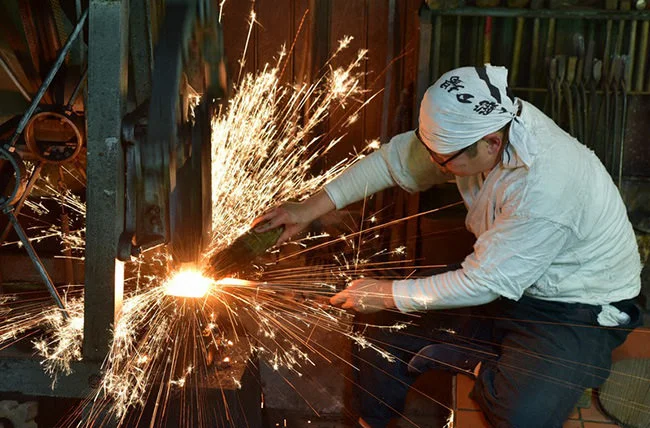
While many workshops do not accept visitors so that the smiths can concentrate on their work, the swordsmith Kikyo explains each step of the process, such as telling the audience, "Do you see how the colour of the fire is changing?" Partially due to the impact of the popular manga and anime series Demon Slayer, the workshop is getting a lot of visits from young women and foreign tourists. Kikyo told the Mainichi, "I want people to know that even in this age of artificial intelligence and other technological advances, we still use the same techniques used in the old days."

 mainichi.jp
Once made to be weapons, Japanese swords are now mostly created as works of art, their beautiful curve and blade patterns unchanged for more than a millennium. The Mainichi Shimbun visited the Kikyo Hayamitsu Japanese Sword Smithy where visitors can get a close look at the skills of a craftsman carrying on the ancient tradition. The workshop is in a corner of the "Rakan no Sato" camping and community activity center in Aioi, Hyogo Prefecture, nestled in a landscape of wheat fields, rice paddies and private homes. Swordsmith Hayamitsu Kikyo, 50, showed visitors the "folding and forging" process, in which impurities are removed from the steel.
While many workshops do not accept visitors so that the smiths can concentrate on their work, the swordsmith Kikyo explains each step of the process, such as telling the audience, "Do you see how the colour of the fire is changing?" Partially due to the impact of the popular manga and anime series Demon Slayer, the workshop is getting a lot of visits from young women and foreign tourists. Kikyo told the Mainichi, "I want people to know that even in this age of artificial intelligence and other technological advances, we still use the same techniques used in the old days."
The charm of making Japanese swords is, according to Kikyo, "You can never be 100% satisfied with your work. That's why it's so rewarding." About a year after becoming independent, he experimented with various sizes of pine charcoal bricks and original forging methods but could not produce a satisfactory piece. He remade the failed works into small swords and repeatedly added blade patterns. He proudly said, "That period was not a waste." Kikyo says that in the end, a katana's style is determined by the personality of the swordsmith. One may find Japanese swords more attractive by watching the actual making of the blades and exposing themselves to the thoughts folded into the works by their makers.
'Demon Slayer' boom brings young women, foreigners to Japanese sword workshop - The Mainichi
AIOI, Hyogo -- A swordsmith in this western Japan city is welcoming many young women and foreign tourists and teaching them about the ancient craft of


