


- 14 Mar 2002
- 21,053
- 18,908
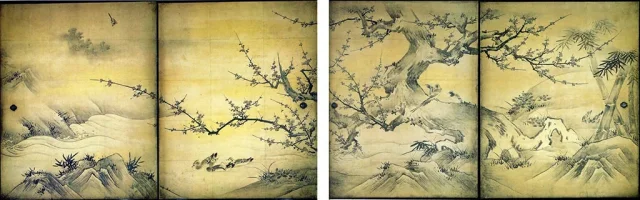
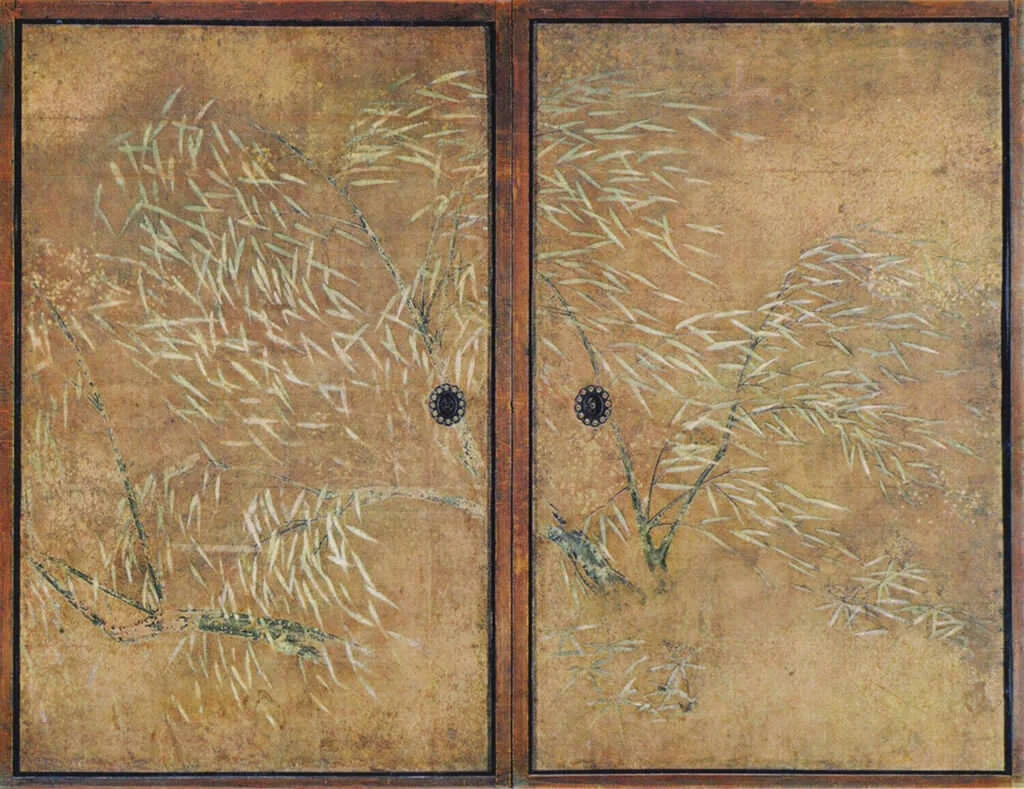
Forty-six paintings by 16th-century artists Kanō Eitoku (狩野永徳, 1543-1590) and his father Shoei (1519–92), all designated national treasures, have returned to Jukoin temple in Kyoto for the first time in five years. The paintings drawn on sliding doors and wall panels are open to the public in the temple's main hall through 26 March.

Kanō Eitoku (狩野 永徳) was a Japanese painter who lived during the Azuchi–Momoyama period and one of the most prominent patriarchs of the Kanō school.

 kyotoshunju.com
[The paintings] are usually entrusted to the care of the Kyoto National Museum while replicas are on display at Jukoin, a sub-temple of Daitokuji in Kita Ward. "I had thought the replicas were also good, but the originals look completely different once they are put back in place," chief priest Kodo Onozawa said. "I feel 400 years of history." The main parts of the paintings were created by Eitoku, the fourth-generation head of the Kano school of painting, in his early years. Shoei was the school's third-generation head. "Birds and Flowers," a set of 16 paintings drawn on sliding doors in the central part of the main hall that features large plum and pine trees, is regarded as Eitoku's representative work. The paintings are back in their original setting for the first time since March 2017. Jukoin, built in 1566 by warlord Miyoshi Yoshitsugu, is the family temple of Sen no Rikyu, a celebrated master of the tea ceremony. The temple, which is usually closed to the public, serves as the grave site for the successive heads of three primary tea schools.
Kanō Eitoku (狩野 永徳) was a Japanese painter who lived during the Azuchi–Momoyama period and one of the most prominent patriarchs of the Kanō school.
Links:
大徳寺 聚光院【天才絵師・狩野永徳の国宝襖絵を持つ、千利休の菩提寺 2022年9月3日~2023年3月26日】
国宝里帰り 特別公開 2022年9月3日~2023年3月26日 ※事前予約可、当日枠もございます。 ※当サイトで拝観ご予約を承っております。 生誕500年を迎える茶聖・千利休の菩提寺にして、日本絵画の最高峰・狩野永徳の障 […]


