


- 14 Mar 2002
- 21,050
- 18,904
A fossil discovered around thirty years ago in Akan (present-day Kushiro, Hokkaidō ) has finally been identified. According to recent reports from the Okayama University of Science, it belongs to the marine mammal Neoparadoxia, a species previously known only from finds in the United States.
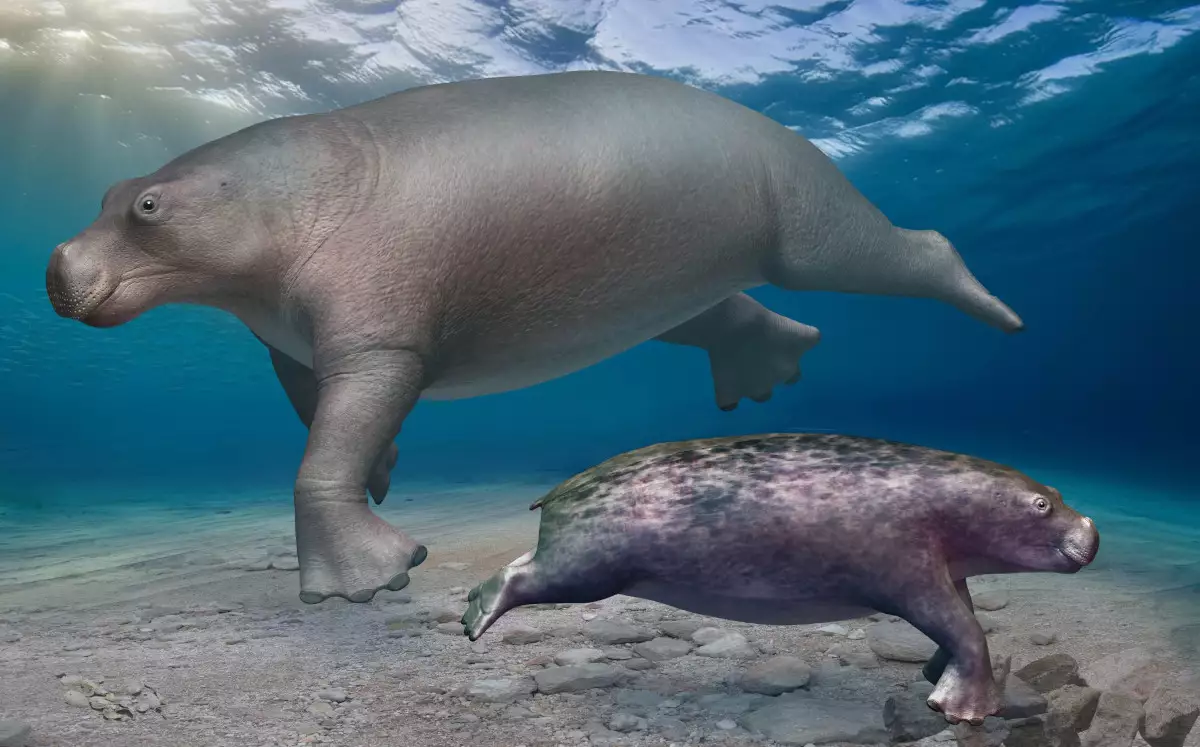
The research team from the university conducted a detailed re-examination of the fossil in collaboration with the Animal Fossil Museum (Ashoro, Hokkaidō). Neoparadoxia was a hippopotamus-like creature believed to have lived approximately 16 to 14 million years ago. Researchers estimate that it reached around 2.5 metres in length and likely inhabited coastal areas. Because so few Neoparadoxia fossils have been discovered, many questions about the species remain unanswered.
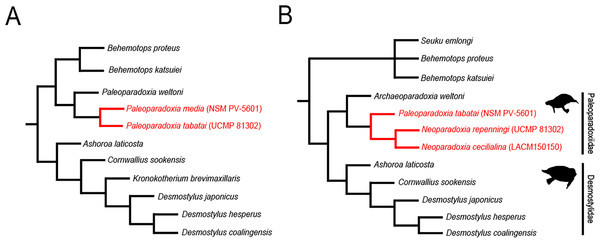
Previously, a complete skeleton of the species was unearthed on the west coast of the United States. Following this, the team at Okayama University of Science examined three skulls recovered between 1996 and 2000 from layers dated 15.9 to 14.9 million years ago in Akan. They suspect that two of the skulls belonged to the slightly smaller Paleoparadoxia, while the third, distinguished by its size and other anatomical features, was identified as Neoparadoxia. The findings came as a genuine surprise to many of those involved.
Yuma Asai, who conducted research during his studies at Okayama University of Science, commented, "The collected data point to Neoparadoxia. I was both delighted and astonished by this result."
 peerj.com
The research team from the university conducted a detailed re-examination of the fossil in collaboration with the Animal Fossil Museum (Ashoro, Hokkaidō). Neoparadoxia was a hippopotamus-like creature believed to have lived approximately 16 to 14 million years ago. Researchers estimate that it reached around 2.5 metres in length and likely inhabited coastal areas. Because so few Neoparadoxia fossils have been discovered, many questions about the species remain unanswered.
Previously, a complete skeleton of the species was unearthed on the west coast of the United States. Following this, the team at Okayama University of Science examined three skulls recovered between 1996 and 2000 from layers dated 15.9 to 14.9 million years ago in Akan. They suspect that two of the skulls belonged to the slightly smaller Paleoparadoxia, while the third, distinguished by its size and other anatomical features, was identified as Neoparadoxia. The findings came as a genuine surprise to many of those involved.
Yuma Asai, who conducted research during his studies at Okayama University of Science, commented, "The collected data point to Neoparadoxia. I was both delighted and astonished by this result."
New evidence for the co-occurrence of two genera of Paleoparadoxiidae (Mammalia, Desmostylia) from the Middle Miocene of Japan: insights into taxonomic status and paleodiversity in Desmostylia
Desmostylia, an extinct order of marine mammals, includes two major families: Paleoparadoxiidae and Desmostylidae. Within Paleoparadoxiidae, three genera—Archaeoparadoxia, Paleoparadoxia, and Neoparadoxia—have been identified, with Paleoparadoxia being the only genus found on both coasts of the...
peerj.com
Neoparadoxia was one of the more remarkable members of the desmostylians (束柱類), a now extinct order of marine mammals that once thrived along the coasts of the northern Pacific. Unlike today's whales or dolphins, these animals were herbivores that fed mainly on seagrasses and aquatic plants. Fossil evidence suggests that Neoparadoxia was a tremendous representative of its family, with some individuals estimated to have reached lengths of up to six metres and weighing several tonnes. This made it noticeably bigger than its close relative, Paleoparadoxia.
In appearance, Neoparadoxia would have looked unlike any living animal today. However, palaeontologists often compare it loosely to a cross between a hippo and a manatee. It had a massive, barrel-shaped body adapted to a semi-aquatic life, sturdy limbs that likely supported its weight on land for resting, and large, flat-topped teeth designed for grinding coarse vegetation in shallow coastal waters. Its skull and jaw were particularly distinctive, with protruding tusk-like incisors in both the upper and lower jaws. These features set desmostylians apart from all other marine mammals.
The seas where Neoparadoxia lived some 15 million years ago during the Miocene epoch would have been rich in kelp forests and seagrass beds, providing an abundant food source. Researchers believe the animal spent most of its time in shallow coastal lagoons and estuaries, using its powerful jaws to uproot plants from the seabed. Its lifestyle may have resembled that of modern-day sirenians (manatees and dugongs). However, its anatomy was more robust, reflecting its evolutionary ties to land mammals such as elephants.
The extinction of desmostylians, including Neoparadoxia, around 10 million years ago remains a mystery. Some scientists suggest that competition with emerging marine herbivores such as sirenians, combined with changes in climate and vegetation along the Pacific Rim, may have led to their disappearance. The fact that fossils have been found in both North America and Japan indicates that they once ranged widely across the northern Pacific, making them an essential piece of the puzzle in understanding marine ecosystems of the Miocene.
The confirmation that Neoparadoxia existed in Japan adds not just a geographical data point but also raises questions about how these animals migrated and adapted to different coastal environments. The Akan discovery highlights Hokkaidō as a potentially rich site for further desmostylian finds, which could help clarify the evolutionary pathway of these unusual creatures and shed light on why such a successful lineage ultimately vanished.


![-]5pace.pirat3]+](/data/avatars/s/10/10061.jpg?1412559883)
