News JAL airliner collides with Coast Guard plane at Haneda

thomas

Unswerving cyclist
Admin
Joined
14 Mar 2002
Messages
21,050
Reaction score
18,904
JAL flight 516, originating from Shin-Chitose in Hokkaido with 367 passengers on board, landing at Haneda, collided on the runway with an aircraft of the Japanese Coast Guard.


All 379 passengers and crew were safely evacuated. The fate of the Coast Guard crew is unclear. Haneda Airport is currently closed, and all incoming flights are being rerouted to Narita.


What a start of the year for Japan! 😟
 
Last edited:
Exactly my thoughts. :(

NHK just announced that the captain of the CG plane survived, but five other crew members are unaccounted for.


Last edited:
I'll guess the CG plane was lost/disoriented--thought they were still on a taxiway rather than an active runway.
 
I'll guess the CG plane was lost/disoriented--thought they were still on a taxiway rather than an active runway.

It was either a mistake of the CG pilots or the ATC. The other five crew members were reported dead. The CG plane was scheduled to deliver earthquake relief supplies to Niigata.
 
It was either a mistake of the CG pilots or the ATC. The other five crew members were reported dead. The CG plane was scheduled to deliver earthquake relief supplies to Niigata.
More earthquake casualties in a roundabout way. :( Miraculous that the whole passenger plane survived. The inferno started almost immediately it looked like.
 
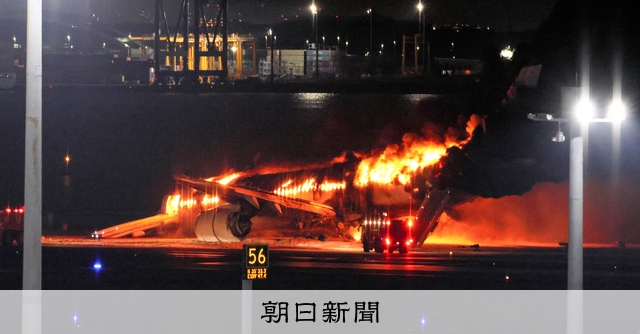
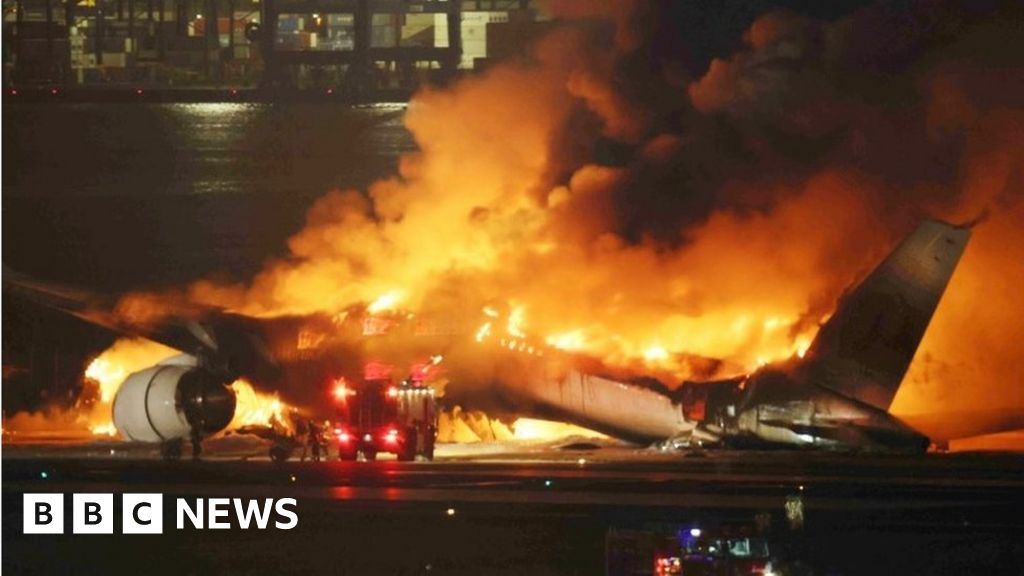
Here's a glimpse of the JAL Airbus from this morning. The aircraft burned out in just over an hour.

jal-airbus350-crash.webp

This is the only image of the Coast Guard airplane I could find. It is hard to believe that the pilot could escape.

cg-dehavilland.webp

Some witness accounts here:


While the JAL cabin crew did an excellent job evacuating all passengers, Stuff argues that modern aviation technology may have contributed to the outcome. Modern airliners are made of carbon fibre-reinforced plastic (B787: 50%, A350: 52%), a material that needs to meet strict safety standards that give passengers 90 seconds to escape in the event of a fire.


The evacuation of every passenger from the Japan Airlines aircraft that collided with a smaller plane on Tuesday seemed all the more miraculous as footage of the ensuing inferno emerged. However, instead of being down to luck, industry insiders believe the incident proves how modern materials and tough fire safety rules can protect passengers. The incident at Haneda Airport, Tokyo, marks the first time an Airbus A350 has been destroyed in an accident. The model is the first of the manufacturer's passenger jets to be built largely from carbon fibre composites. [...] "We saw many cases in the 1980s and the 90s where once an aircraft was affected by fire, it almost always spread quickly. But if you watch today, it took a surprisingly long time before the plane was on fire."

 
I saw an article today in the Washington Post that cited another factor that helped everyone get off the JAL flight safely: everyone left their belongings behind. Being a domestic flight, that was probably fairly easy for people to do. If it were international, on the other hand, how many people would have been okay leaving everything behind? I'm thinking purely in terms of people trying to make sure they have their passports.

At any rate, thank goodness that almost everyone involved in the accident made it out alive.
 
I saw an article today in the Washington Post that cited another factor that helped everyone get off the JAL flight safely: everyone left their belongings behind. Being a domestic flight, that was probably fairly easy for people to do. If it were international, on the other hand, how many people would have been okay leaving everything behind? I'm thinking purely in terms of people trying to make sure they have their passports.

At any rate, thank goodness that almost everyone involved in the accident made it out alive.
Yes. I might be prejudiced but I imagine with a plane full of Americans there'd be a few trying to get to the overhead compartments. On the other hand, when a plane is full of smoke and you're thinking you might die, that might be enough incentive to get the hell out of there.
 
They're just showing scenes from inside the aircraft on the news: while children started crying and shouting, there wasn't really panic on board. Hats off to the cabin crew!

Children cried, adults sensed looming death, and flight attendants shouted orders as flames and panic engulfed JAL Flight 516. But after the terrifying ordeal, all 379 passengers and crew members managed to escape the burning aircraft before it was too late. Several of them explained what they had just experienced. One passenger had filmed a video of a left side window tinted orange from flames after the Japan Airlines passenger jet hit a Japan Coast Guard aircraft on a runway at Haneda Airport in Tokyo on Jan. 2. The video captured people in the cabin screaming: "Get me out of here now. Please!" Flight attendants were shouting back, "Please cooperate!" The cabin announcement system did not work, and the flight crew had to yell out their instructions or use megaphones.

All passengers and crew members left their baggage and slid down the escape chutes within 20 minutes of the landing as smoke filled the cabin of the burning aircraft — an outcome praised by aviation experts. Videos posted by passengers showed people covering their mouths with handkerchiefs as they ducked down and moved toward the exits. Some passengers told news media they felt safe only after reaching a grassy area beyond the tarmac. "The entire cabin was filled with smoke within a few minutes. We threw ourselves down on the floor. Then the emergency doors were opened, and we threw ourselves at them," Swedish passenger Anton Deibe, 17, told Swedish newspaper Aftonbladet. "The smoke in the cabin stung like hell."


A communication transcript between traffic control and two aircraft showed that the Coast Guard plane wasn't cleared for takeoff.

The Transport Ministry released an air traffic control communication transcript of about 4 minutes and 27 seconds just before the crash. It showed no clear takeoff approval for the Coast Guard plane. According to the text, the Tokyo air control gave the JAL Airbus A350 permission to land on Runway C, noting that there was a departing plane, with the JAL pilot repeating the action. The Coast Guard plane said it was taxiing to the same runway, and the traffic control instructed it to proceed to the stop line ahead of the runway. The controller noted the Coast Guard gets the departure priority, and the pilot said he was moving to the stop line. Their communication ends there. Two minutes later, there was a three-second pause, apparently indicating the time of the collision.


The transcripts appear to contradict the coastguard plane's captain - the only one of the six crew to survive - who told investigators he had been given permission to enter the runway the JAL airliner was approaching. The BBC has also found information suggesting the series of lights at the relevant holding point may not have worked. However, experts point out other visual cues, like painted markings, showing where aircraft must stop short of the runway.

 
Of course congrats to JAL and the cabin crew for their training and superb performance.

Another part of the equation was the passengers on the plane. The same crew/accident/evacuation with 350 people from some other countries I can think of (instead of japanese) probably would not have gone so well.
 
Another part of the equation was the passengers on the plane. The same crew/accident/evacuation with 350 people from some other countries I can think of (instead of japanese) probably would not have gone so well.

I tend to agree. I still remember the days after the TEPCO reactor blew up in 2011. I was very impressed with most Japanese's stoic and level-headed reactions, while many of my foreign acquaintances and colleagues just upped and left within a couple of days. Apart from hoarding toilet paper, milk and instant noodles, there was no sign of panic.

More details:


Several pets perished in the JAL aircraft. If the pets are in the cabin, I wonder what the regulations are. I couldn't imagine leaving our dogs behind.
 
many of my foreign acquaintances and colleagues just upped and left

Yes, one of my biggest online arguments was with some guy who left Tokyo because he believed all the sensational online chatter about Tokyo becoming uninhabitable due to the radiation. One of those "wake up, sheeple!" dudes.

Sounds like some of those guys are now peddling man-made earthquake stories and HAARP conspiracies.
 
Last edited by a moderator:
While almost all of the remnants of the two aircraft were cleared from the runway yesterday, it is still unclear what caused the pilot of the JCG aircraft to enter the active runway. Aviation experts said that the fatal crash could have resulted from misunderstanding the air traffic controller's term "No. 1" in an unusual situation. An interaction between an air traffic controller and a Japan Coast Guard plane pilot at 5:45 p.m. on Jan. 2 has drawn the attention of several former pilots and air traffic controllers. This was shortly before a Japan Airlines passenger plane landing at the airport collided with the Coast Guard plane on a runway.


haneda-crash.jpg

Graphic by Asahi


According to communication records released by the transport ministry on Jan. 3, the air traffic controller instructed the Coast Guard aircraft: "Good evening. No. 1. Taxi to holding point C5." The Coast Guard plane responded: "Taxi to holding point C5. No. 1. Thank you." The C5 holding point is on the taxiway in front of the runway. But the experts said the problem stems from what "No. 1" meant. Hajime Naito, 71, a former captain at All Nippon Airways, said the Coast Guard pilot may not have been aware that the JAL plane had been given permission to land.[/quot]


Air traffic controllers at Tokyo's Haneda Airport did not notice the Japan Coast Guard aircraft entering the runway before Tuesday's deadly plane collision even though a warning system was in working order. Haneda's air traffic controllers have acknowledged that the Coast Guard cargo plane's entry into the runway escaped their notice, a source close to the investigation said. It is believed the aircraft idled on the runway for approximately 40 seconds before the crash with a Japan Airlines passenger plane, which was landing.


Paywall alert:
 
Yes. I might be prejudiced, but I imagine with a plane full of Americans, there'd be a few trying to get to the overhead compartments. On the other hand, when a plane is full of smoke and you're thinking you might die, that might be enough incentive to get the hell out of there.


This was also mentioned in a recent piece by CNN:

The question isn't only whether Americans could rapidly escape the cramped, dark, smoky, and chaotic cabin of a passenger jet when their lives depend on it, but whether shrunken seat sizes and new cabin hazards get in the way of safely evacuating, as the 379 people aboard the flight did Tuesday evening. [...] "I think if that happened in the United States, it would have been a very different scenario because of our attachment to our carry-on bags, our laptops, our phones, our things that we want to take with us," said CNN aviation analyst and former FAA official David Soucie. "I worry sometimes that might interfere with the ability to get everybody evacuated."


I wonder who the last person off was. If somebody did a sweep of the cabin before getting off that would truly heroic. Though by that time there may have been too much smoke to effectively check.

The captain, according to the news, 18 minutes after touchdown. On NHK, they showed live footage of the burning plane about 30 minutes after touchdown; at that time the rear cabin was already completely engulfed in flames.
 
A different accident/situation, but I seem to remember reading that Captain Sullenberger walked the plane to make sure everyone was out before leaving himself.
 
Nikkei Asia posted an excellent visual explainer of how the accident happened (sorry if you get the paywall):


Here's the infographics:

 
From another nikkei.com article about the accident:
Under international aircraft design standards, all passengers must be able to evacuate within 90 seconds after the emergency doors are opened and the evacuation slides inflated.
According to JAL, crews train once a year to be able to evacuate passengers within 90 seconds.

Employees role-play as passengers in the training under various scenarios, including with infants on board and with dark conditions inside or outside the plane, according to the public relations office.

"It is very dangerous to try to evacuate without knowing the cause or location of the trouble," said Sayori Kodama, a former flight attendant and specially appointed professor in the business administration department at Meisei University. "Properly gauging the situation may have been particularly difficult this time," she said.

Had the exits been opened randomly, flames could have entered the cabin. "The calm actions of the crew, based on their training, likely helped ensure the safety of the passengers," Kodama said.

Emergency evacuation guidance has been repeatedly revised based on lessons from past airplane accidents.
JAL and others will likely examine the details of Tuesday's evacuation and look for possible improvements.

I can only imagine the disaster this would have been on a inter-European Ryanair flight
 
The tragic collision at Haneda Airport earlier this year is set to be further illuminated as authorities are preparing to release the voice recorder transcript from the Japan Coast Guard aircraft involved.

Preliminary investigations conducted by the Japan Transport Safety Board indicate a fatal miscommunication between the aircraft crew and air traffic control. It appears that both the captain and co-pilot misinterpreted the instructions to proceed to the C5 taxiway as clearance for takeoff. While the controller intended the aircraft to halt at the designated taxiway, the crew misunderstood the command, believing they had been authorized to line up on the runway. This tragic misunderstanding led to the fatal accident on 2 January.


Neither the captain nor the co-pilot appears to have corrected this misunderstanding during their internal communication, even after confirming the order between them. According to communication records released shortly after the accident, the air-traffic controller instructed the Coast Guard aircraft: "Good evening. No. 1. Taxi to holding point C5." The Coast Guard co-pilot responded: "Taxi to holding point C5. No. 1. Thank you." The exchange was conducted in English, and the captain of the Coast Guard plane was also listening to it. After this, no further communication between the aircraft and the air traffic controller occurred before the collision. The Coast Guard plane continued past the C5 stop position, entering the runway and halting for about 40 seconds before a Japan Airlines passenger jet landing on the runway hit it.


Back
Top Bottom