


- 14 Mar 2002
- 21,053
- 18,907
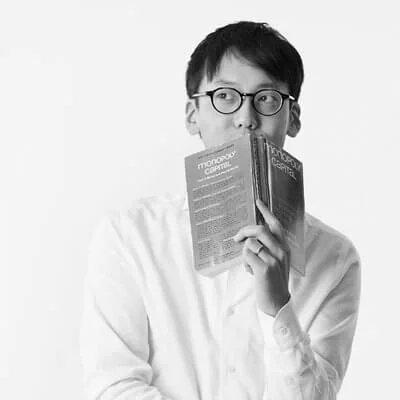
Saitō Kōhei (斎藤幸平, b. 1987), a Japanese philosopher and historian of economic thought, published a book entitled "Capital in the Anthropocene" that's become an unlikely hit among young Japanese. The Guardian explains why his theories, based on Marxism and environmentalism, have become so successful--to the great astonishment of even its author.

 www.theguardian.com
His book will be published in English next year by Cambridge University Press.

 ja.wikipedia.org

 www3.nhk.or.jp
The message from Kohei Saito, an associate professor at Tokyo University, is simple: capitalism's demand for unlimited profits is destroying the planet and only "degrowth" can repair the damage by slowing down social production and sharing wealth. In practical terms, that means an end to mass production and the mass consumption of wasteful goods such as fast fashion. In Capital in the Anthropocene, Saito also advocates decarbonisation through shorter working hours and prioritising essential "labour-intensive" work such as caregiving. Few would have expected Saito's Japanese-language solution to the climate crisis to have much appeal outside leftwing academia and politics. Instead, the book – which was inspired by Karl Marx's writings on the environment – has become an unlikely hit, selling more than half a million copies since it was published in September 2020.
‘A new way of life’: the Marxist, post-capitalist, green manifesto captivating Japan
Kohei Saito’s book Capital in the Anthropocene has become an unlikely hit among young people and is about to be translated into English
His book will be published in English next year by Cambridge University Press.
Links:
斎藤幸平 - Wikipedia
Japanese scholar looks to Marx's theory to explain pandemic, climate change | NHK WORLD-JAPAN News
A Japanese academic has penned a surprise bestseller that is prompting a new generation of readers to consider the ideas of German philosopher Karl Marx. Saito Kohei says Marx's ideas in his late years tell us about the kind of society we should forge in a post-coronavirus era.
www3.nhk.or.jp


