COVID-19 Coronavirus: situation in Japan

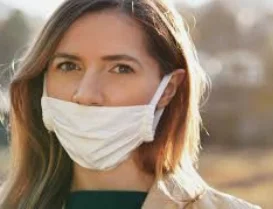
Properly-fitted. But how does it compare to other situations? :p
1614969647852.webp
1614969715667.webp


BTW this report supports double-masking.

Wearing a tight-fitting surgical mask, or doubling up on masks, can significantly reduce COVID-19 transmission and slow the spread of new, more contagious strains, according to a CDC report released Wednesday.

Researchers found that if two people are both wearing surgical masks that are knotted and tucked flush to the face -- or if both are wearing a cloth mask over a surgical mask -- exposure to viral particles is cut by more than 95%.

"The data in this report underscore the finding that good fit can increase overall mask efficiency," the authors wrote. "Multiple simple ways to improve fit have been demonstrated to be effective."

A "simulated breathing experiment" shows surgical masks on their own block 42% of COVID-19 particles for the wearer, and cloth masks block about 44% of particles. Wearing a cloth mask over a surgical mask increased protection for the person wearing the masks, blocking 83% of small particles.
 
Properly-fitted. But how does it compare to other situations? :p

View attachment 41190View attachment 41191

BTW this report supports double-masking.

Wearing a tight-fitting surgical mask, or doubling up on masks, can significantly reduce COVID-19 transmission and slow the spread of new, more contagious strains, according to a CDC report released Wednesday.

Researchers found that if two people are both wearing surgical masks that are knotted and tucked flush to the face -- or if both are wearing a cloth mask over a surgical mask -- exposure to viral particles is cut by more than 95%.

"The data in this report underscore the finding that good fit can increase overall mask efficiency," the authors wrote. "Multiple simple ways to improve fit have been demonstrated to be effective."

A "simulated breathing experiment" shows surgical masks on their own block 42% of COVID-19 particles for the wearer, and cloth masks block about 44% of particles. Wearing a cloth mask over a surgical mask increased protection for the person wearing the masks, blocking 83% of small particles.
It sure is getting a bit confusing these days.
 
It sure is getting a bit confusing these days.
The CDC seems a lot less confusing to me these days. Since they were able to return to being data based, rather than political ideology based, they've been consistent in their messages.
 
Has anyone bought the N95 mask.
Seems like I might be on a plane soon and wondering if I should buy one. Personally I think I should. The flight is less then 2 hours long.
 
I had two brand new ones when all this started. I found it super hard to breath through it. For under an hour , it was bearable , but long term , very uncomfortable. I'm a firm believer in hand washing and not touching the face at all keeps me safe. Also , there are a lot of fake N95's out there now for sale so finding real ones requires diligence.
 
Last week's numbers:


Nationwide infections:

03/03 (Wed)04/03 (Thu)05/03 (Fri)06/03 (Sat)07/03 (Son)08/03 (Mon)09/03 (Tue)
1,244​
1,170​
1,149​
1,054​
1,065​
600​
1,128​
[/CENTER]

Nationwide deaths - Seriously Ill:

03/03 (Wed)04/03 (Thu)05/03 (Fri)06/03 (Sat)07/03 (Son)08/03 (Mon)09/03 (Tue)
51 - 407​
68 - 398​
67 - 388​
59 - 373​
49 - 511​
26 - 380​
58 - 381​


Infections in selected prefectures:

03/03 (Wed)04/03 (Thu)05/03 (Fri)06/03 (Sat)07/03 (Son)08/03 (Mon)09/03 (Tue)
Tokyo
316​
279​
301​
293​
237​
116​
290​
Osaka
98​
81​
74​
82​
76​
38​
103​
Hokkaido
60​
66​
64​
47​
84​
63​
63​
Aichi
55​
68​
50​
35​
27​
8​
39​
Kanagawa
139​
138​
131​
113​
119​
59​
100​
Chiba
164​
107​
137​
109​
113​
73​
82​
Saitama
98​
123​
90​
114​
123​
65​
106​
Hyogo
40​
21​
36​
15​
41​
9​
41​
Okinawa
18​
28​
14​
29​
18​
7​
23​


As mentioned earlier, the government has extended the State of Emergency in Tokyo, Kanagawa, Saitama, and Chiba.

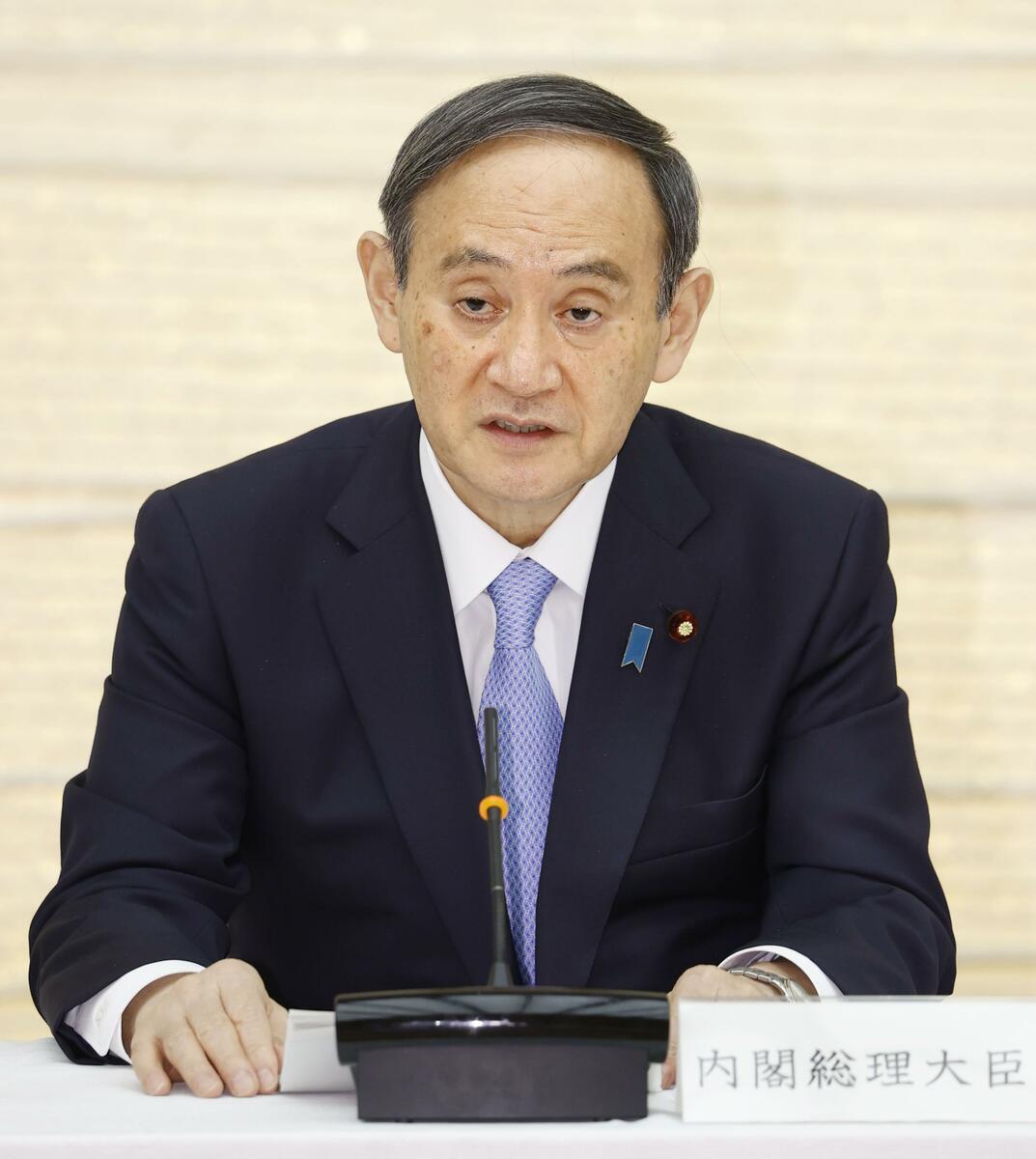
Infections are on the decline but the pace has slowed and there are "growing concerns of a rebound," Suga said at a press conference after announcing the decision at a meeting of the government's COVID-19 task force. "These two weeks are necessary to curb the spread of the coronavirus and to keep close watch on the situation," he said, calling on the public to refrain from dining in large groups especially as Japan enters the season for cherry blossom viewing parties and graduation celebrations. Under the state of emergency, residents of Tokyo and neighboring Kanagawa, Chiba and Saitama prefectures are being asked to refrain from unnecessarily leaving home, while restaurants and bars must close by 8 p.m. Firms are encouraged to adopt remote working and attendance at large events such as concerts and sports games is capped at 5,000. While the restrictions appear to have been successful in bringing down the number of infections, the pace of decline had bottomed out in recent weeks.


Uji-Tokushukai Medical Center in Uji, Kyoto Prefecture, reported that syringes usually used for diabetes patients can be used for 7 shots of the COVID-19 vaccine. The bureaucrats are cautious, however.

Taro Kono, a state minister who is in charge of the nation's vaccination program, welcomed the news, although health ministry officials were more cautious. "That is tremendous," Kono said at a news conference after a Cabinet meeting on March 9. "I want them to push it hard. I encourage more originality and ingenuity like this one." However, a health ministry official said, "We do not reject the method, but we do not recommend it, either." The central government in early February admitted that it did not secure enough of a special syringe needed to extract six doses from one vial of the vaccine and had no choice but to waste one dose for each vial. But the hospital in Kyoto said the total doses per vial increase by utilizing a syringe already in stock for diabetes patients.


A coronavirus cluster has been reported at the Tokyo Regional Immigration Bureau's detention centre. Forty per cent of the detainees and a few staff members tested positive for the coronavirus.

The manual stresses that there is a need to avoid the three C's of closed spaces, crowded places and close-contact settings and authorizes the temporary release of 400 to 500 individuals detained at the bureaus, among other measures, which brought the number of detainees at the facility down to 132. [...] According to a statement by Minister of Justice Yoko Kamikawa at a March 3 House of Councillors Budget Committee meeting and other sources, the infections began on the facility's third floor. While there were suspicions the virus may have spread through vents, an investigation found no issue with them. The chances of the virus having been brought into the facility by new detainees are reportedly also low, as they are isolated for two weeks. Detainees' movements were also restricted, and officials are probing whether immigration bureau staff spread the infections.


Japanese pharmaceutical companies have fallen behind other nations in the development of COVID-19 medicine:

In Japan, however, no applications for medicine specifically tailored to COVID-19 have been filed yet, as domestic pharmaceutical companies have not invested heavily enough in biomedicine development amid uncertainties over expected returns on investment. In addition, there's little academic-industry collaboration whereby university research is transferred to biotech and pharmaceutical companies for developing drugs.
Instead, the country has approved two existing drugs designed for treating other diseases. Last May, Japan authorized the use of Gilead Sciences Inc.'s antiviral drug remdesivir, originally developed as a medication for the Ebola virus, followed by approval of steroid drug dexamethasone two months later.

 
Another trend is that the drop in the number of cases has levelled off in Kanto.
 
I'm fully ready to take a vaccine and get back to something resembling normal. This has been a difficult year, fluctuating between counting my lucky stars that things never got too bad here or for me personally, and realizing how I've just gone stir crazy at home. In the summer, I went on a long bike ride a few times a week to stay sane, but winter has been really long. And there haven't been any of the usual events to break up the monotony.

Between the vaccine and the coming sunny weather, I feel optimistic, but my daily life isn't there yet.
 
While several European countries suspended AstraZeneca vaccinations, the Japanese pharmaceutical Daichi-Sankyo started producing the British vaccine in Saitama.

AstraZeneca, which filed for the Japanese health ministry's approval of its COVID-19 vaccine in early February, is set to provide to Japan 120 million doses, enough for about 60 million people, of the vaccine developed with the University of Oxford. Of the 120 million doses, 30 million will be manufactured by Daiichi Sankyo and another pharmaceutical firm, KM Biologics Co., while JCR Pharmaceuticals Co. will produce solutions for 90 million doses. The European Medicines Agency said Thursday it has started investigation of blood clot cases among people who received the AstraZeneca vaccine, including one death reported in Denmark. Some European countries have halted supplying shots of the British pharmaceutical giant's vaccine following reports of 30 cases of thromboembolic events among nearly 5 million people who have received it. Thailand also suspended the use of the AstraZeneca vaccine on Friday.


Meanwhile, it's been ruled out that Japanese athletes will receive Chinese vaccines before the Tokyo Olympic Games:


However, Japan will receive 100 million doses of the Phizer vaccine by June.

Prime Minister Yoshihide Suga has pledged to secure COVID-19 vaccines for Japan's population of 126 million within the first half of 2021. The vaccine developed by Pfizer and its partner BioNTech SE, the only one the health ministry has approved so far, consists of two shots, meaning 100 million doses will be enough for 50 million people. Kono said after negotiations with Pfizer, Japan expects to receive nearly 1.8 million vials, which could yield up to about 10.7 million doses using low dead space syringes, per week in May, with shipments to further increase in June. Japan is in the process of inoculating 4.8 million health care workers and plans to expand the vaccine rollout to people aged 65 or older, a group of about 36 million, in mid-April. People with underlying conditions such as diabetes and those working at elderly care facilities will follow.

 
A belated update on the weekly numbers. Sadly, Tokyo again exceeded 400 cases of new infections today.


Nationwide infections:

10/03 (Wed)11/03 (Thu)12/03 (Fri)13/03 (Sat)14/03 (Son)15/03 (Mon)16/03 (Tue)
1,316​
1,319​
1,271​
1,320​
989​
695​
1,134​

Nationwide deaths - Seriously Ill:

10/03 (Wed)11/03 (Thu)12/03 (Fri)13/03 (Sat)14/03 (Son)15/03 (Mon)16/03 (Tue)
54 - 364​
49 - 354​
49 - 354​
58 - 337​
51 - 328​
30 - 327​
32 - 337​

Infections in selected prefectures:

10/03 (Wed)11/03 (Thu)12/03 (Fri)13/03 (Sat)14/03 (Son)15/03 (Mon)16/03 (Tue)
Tokyo
340​
335​
304​
330​
239​
175​
300​
Osaka
84​
88​
111​
120​
92​
67​
86​
Hokkaido
65​
71​
53​
58​
45​
63​
69​
Aichi
44​
66​
52​
55​
24​
54​
30​
Kanagawa
124​
125​
107​
95​
109​
55​
91​
Chiba
106​
107​
105​
129​
106​
76​
76​
Saitama
135​
126​
155​
183​
77​
72​
96​
Hyogo
41​
58​
49​
54​
38​
33​
78​
Okinawa
28​
29​
38​
30​
23​
16​
28​


It is expected that the SoE will be lifted in Tokyo, Kanagawa, Chiba, and Saitama next Monday.

The end of the emergency reflects the administration's understanding that the declaration has taken a psychological toll on many people, many of whom are no longer following the government's request to avoid nonessential outings. But on the flip side, the cancellation could increase people's movements and drive up the number of new COVID-19 cases, which has mostly stabilized in the nation's capital. Amid fears of variants with stronger transmissibility becoming the main source of new infections, the administration is counting on a smooth vaccine rollout to avoid public anger and damage to its approval rate.


Another concern are new coronavirus mutations. Between 5 and 9 March, 77 cases of mutated strains have been confirmed in seven prefectures: 50 in Osaka, 10 in Kyoto, 7 in Kanagawa and 7 in Hiroshima, and 1 each in Saitama, Niigata, and Hyogo.


Kanagawa reported the first two deaths caused by variant strains of the coronavirus:

 
All the daily numbers are actual daily numbers? In my U.S. community they use 7-day daily average because we also have the same reporting spikes due to weekends, etc.
As you can see, they got a lot better at figuring out how to treat it after the initial outbreak. "Only" about one person/day is dying now. (This is a community of about 1.25M)

1615995544969.webp
1615995513998.webp
 
I know that the SoE was half-hearted at the best of times, but the government deciding to lift it is sending a massive signal that things are OK when they are not. Even if hospitals are under less pressure than a month ago, pressure on hospitals always lags behind the number of cases, which isnow rising. Japan should have learned from other countries and had a shorter and stricter SoE at the start of the year. The Covid policy in Japan now seems to be to cross your fingers and hope.
 
Last edited:
Well I think sadly the day has to come that we just have to thank whatever the risk are we got open the the front door of our house leave it and be responsible and enjoy life cuz that's what it's going to come down to
If you check flight 24. Com for China Airlines in the sky it is jam-packed so apparently China's got their act together and people are flying if there's no tomorrow in China
 
Well I think sadly the day has to come that we just have to thank whatever the risk are we got open the the front door of our house leave it and be responsible and enjoy life cuz that's what it's going to come down to
If you check flight 24. Com for China Airlines in the sky it is jam-packed so apparently China's got their act together and people are flying if there's no tomorrow in China
Looking at that site, there's plenty of air travel going on across the whole world not just China.
 
Looking at that site, there's plenty of air travel going on across the whole world not just China.

I haven't checked the numbers but I'm sure that global passenger numbers have significantly decreased. A lot of carriers have switched to hauling cargo and mail.

Back on topic: a little reminder of Mr Omi, the "Japanese Fauci", that we are still far away from normalization:

 
Given the int'l mail hassles and restrictions I've read about, that's kind of hard to understand.
Actually, the mail between the UK and Japan has run like clockwork over the last few months! The birthday presents and cards I was sent last month all arrived on time, sometimes within a few days of being sent.
 
The past week's numbers, as always. SoE or not, no respite in sight.


Nationwide infections:

17/03 (Wed)18/03 (Thu)19/03 (Fri)20/03 (Sat)21/03 (Son)22/03 (Mon)23/03 (Tue)
1,535​
1,499​
1,464​
1,517​
1,119​
822​
1,503​

Nationwide deaths - Seriously Ill:

17/03 (Wed)18/03 (Thu)19/03 (Fri)20/03 (Sat)21/03 (Son)22/03 (Mon)23/03 (Tue)
56 - 335​
39 - 325​
41 - 330​
32 - 332​
22 - 324​
23 - 324​
26 - 320​

Infections in selected prefectures:

17/03 (Wed)18/03 (Thu)19/03 (Fri)20/03 (Sat)21/03 (Son)22/03 (Mon)23/03 (Tue)
Tokyo
409​
323​
303​
342​
239​
187​
337​
Osaka
147​
141​
158​
153​
100​
79​
183​
Hokkaido
73​
96​
78​
51​
60​
50​
42​
Aichi
48​
38​
47​
55​
34​
31​
63​
Kanagawa
93​
160​
111​
107​
77​
56​
72​
Chiba
91​
122​
129​
99​
88​
97​
74​
Saitama
132​
115​
135​
133​
79​
60​
136​
Hyogo
74​
76​
49​
64​
46​
23​
84​
Okinawa
35​
43​
44​
66​
24​
18​
75​


In other news:

Tokyo reported 420 infections today, while Miyagi Prefecture has recently seen a surge in cases and imposed restrictions in Sendai.

Miyagi Prefecture has reached the most serious stage in some indicators concerning the spread of the novel coronavirus, but the central government is reluctant to apply stricter measures to improve the situation there. One official said the hesitancy stems in part from the vagueness of the requirements to take such steps. The concentrated measures listed under the revised special measures law to deal with the COVID-19 pandemic can be put in place to prevent the spread of the virus from forcing the government to declare a state of emergency in a given area. The number of new virus infections has surged in Miyagi, a prefecture in the northern Tohoku region, particularly in the capital of Sendai. The crisis has forced the prefecture to issue a local state of emergency and to renew its anti-virus measures, such as asking drinking establishments to close early from March 25. Miyagi Governor Yoshihiro Murai said he would see how the prefecture handles the situation before he considers asking the central government for help.


While the SoE ended last Sunday, the governors of Tokyo, Chiba, Kanagawa and Saitama prefectures agreed to ask establishments such as restaurants to close by 9 p.m. until 21 April.

They will also keep asking foodservice operators to stop serving alcohol by 8 p.m. [...] The number of daily infections in Tokyo has been gradually trending upward since mid-March, with the rolling seven-day average of new cases persisting high at around 300. The three other prefectures have also seen their daily cases at three-digit figures multiple times in the past week. "At this rate, there is a strong concern that (infections) will rebound," Toshio Nakagawa, head of the Japan Medical Association, said during a news conference Wednesday. He added that strong anti-virus measures should be in place ahead of a potential "fourth wave."


Two-thirds of Japanese believe that the vaccine roll-out in Japan is slow. According to Nikkei, hope has turned into frustration.


I don't have any helpful suggestions unfortunately, but I don't think that shifting the closing times of restaurants and bars back and forth is really getting to the heart of the problem.
 
Just a little update on vaccinations in Japan (the topic came up in this thread):
  • vaccinations started on 17 February
  • the first group were healthcare workers
  • vaccinations for those over 65 years of age will start in the second half of April
  • the proportions of vaccinations are Japan is much smaller than those in other OECD nations (that includes countries with lower rates of infection than Japan, such as South Korea, Australia, and New Zealand; surprisingly, it is also lower compared to nations like India, Bangladesh, Nepal, and Indonesia).
As of last week, 350,000 healthcare workers were vaccinated. See the daily numbers below; it is obvious that the daily count is plummeting (from about 70,000 daily to 33,000 yesterday) and increasing to 47,000 today:

 
Japan is bracing for the fourth wave, and the hanami season with densely packed gardens and parks will likely contribute. Apart from clusters in Yamagata and Miyagi, the numbers of new cases in Osaka yesterday exceeded those in Tokyo.

The government is especially concerned over a surge in COVID-19 cases in Miyagi Prefecture and the Kansai region. Infections in Miyagi started climbing this month, hitting a daily record of 171 on Wednesday. The Tohoku prefecture had been posting under 50 daily cases for nearly two months until mid-March when the sharp spike began. Some experts blame the resumed sale of meal vouchers under the prefecture's Go To Eat program in late February. The program was halted again on March 16. In terms of new cases, Miyagi's situation is equivalent to Stage 4, the highest alert level and sufficient to require a state of emergency. In neighbouring Yamagata Prefecture, new cases hit a record 49 on Thursday. In Kansai, Osaka Prefecture reported 386 new cases and Hyogo Prefecture 164 new cases on Saturday, both the highest since the government lifted a COVID-19 state emergency there at the end of February. That marked a sharp rise from two weeks earlier when new cases in both prefectures were hovering below 100.

 
The weekly updates with all numbers on the rise.


Nationwide infections:

24/03 (Wed)25/03 (Thu)26/03 (Fri)27/03 (Sat)28/03 (Son)29/03 (Mon)30/03 (Tue)
1,918​
1,917​
2,026​
2,073​
1,785​
1,345​
2,087​

Nationwide deaths - Seriously Ill:

24/03 (Wed)25/03 (Thu)26/03 (Fri)27/03 (Sat)28/03 (Son)29/03 (Mon)30/03 (Tue)
47 - 328​
30 - 325​
29 - 323​
31 - 331​
32 - 341​
29 - 342​
25 - 368​

Infections in selected prefectures:

24/03 (Wed)25/03 (Thu)26/03 (Fri)27/03 (Sat)28/03 (Son)29/03 (Mon)30/03 (Tue)
Tokyo
420​
394​
376​
430​
313​
234​
364​
Osaka
262​
266​
300​
386​
323​
213​
432​
Hokkaido
81​
67​
69​
62​
74​
46​
56​
Aichi
74​
79​
64​
58​
86​
39​
56​
Kanagawa
128​
121​
117​
102​
64​
93​
96​
Chiba
108​
98​
135​
99​
92​
110​
81​
Saitama
121​
113​
135​
97​
114​
102​
107​
Hyogo
118​
100​
116​
164​
93​
70​
176​
Okinawa
68​
77​
89​
98​
68​
42​
87​


Today, Osaka eclipsed Tokyo (599 vs 414 new cases) which some blame on the fast spread of new virus variants in Western Japan; new clusters reported in Yamagata, Tottori, and Ehime.


Osaka prefecture reported 599 new cases, a jump from 432 on Tuesday and close to the all-time high of 654 on Jan. 8. "I expect that the number of infections in Osaka will soon exceed the previous record," Gov Hirofumi Yoshimura said in a televised briefing on Wednesday. "The mutant strains seem to be having an influence, but it's difficult to say scientifically and objectively what the extent is." Osaka and 10 other prefectures declared a state of emergency (SOE) in January amid Japan's third and most-deadly wave of infections to date. The four prefectures that make up greater Tokyo lifted the measures early in February as cases, and hospitals' burden subsided. An earlier lifting of the state of emergency is the most likely "reason for the recent surge of cases in Osaka," Kyoto University professor Yuki Furuse said, stressing that he had not done a thorough investigation of the data yet.

 
Hi all, I work in epidemiology and disease modelling and have been involved in some work on European COVID data over the past 8 months or so. The short summary of that is that the various national data sets are a massive mess and pretty much incomparable.

Out of personal interest I have a few specific questions about how various aspects of Japan's testing regime are carried out. Considering Japan's rate of testing remains extremely low compared to Europe and the USA what are the criteria for receiving a test currently in Japan? Do all/any Japanese prefectures pool tests? What is the PCR protocol in Japan? Is it centrally set or can individual providers tailor their own? What is the criteria for a COVID death in Japan? What PCR primers are currently used?

Any pointers are much appreciated - even just links etc (Japanese language is fine). Also! If you don't think any of this information is publicly available, that's appreciated too.
 
Back
Top Bottom