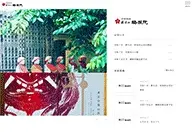
Araiyakushi Baishōin Temple (新井薬師 梅照院) is located in Nakano, Tōkyō. Baishōin belongs to the Shingon sect and is commonly known as Arai Yakushi (新井薬師). Its mountain name is Araiyama (新井山). It was founded in 1586 and is said to have the power to cure eye ailments and help with raising children.
It is one of the most famous in Tokyo, serving as the namesake for a station on the Seibu Shinjuku Line. The area from the station to the temple's main gate is a bustling shopping street, and the temple has long been affectionately known to locals as "Arai Yakushi." It belongs to the same Shingon sect (Toyoyama school) as Nishi-Arai Daishi Temple in Adachi Ward. Takaosan Yakuoin, Hinata Yakushi, and Mine no Yakushi are among the "Four Great Yakushi of Buso."
Founded in 1586 by the monk Gyoshun (行春), the temple's main deities are a statue of Yakushi Nyorai (薬師如来, the Medicine Buddha) and a statue of Nyoirin Kannon (a wish-fulfilling Kannon), both of which are said to be works by Kukai (Kobo Daishi). These two deities are believed to be a two-in-one statue, with Yakushi Nyorai on the front and Nyoirin Kannon on the back. This statue is a hidden Buddha and is only displayed to the public once every twelve years, during the Year of the Tiger. The temple gained particular fame for its benefits in healing eye diseases after Lady Kazuko (和子, also known as 東福門院 Tōkufukumon-in), the fifth daughter of the second Tokugawa shogun Hidetada and consort of Emperor Go-Mizuno, prayed to the temple's Yakushi Nyorai for the healing of an eye ailment, which was said to have been quickly cured. It is also believed to provide benefits in childcare and other areas. The main and Fudo halls are on the temple's spacious grounds. The well water (白龍権現水, White Dragon God Water) is open to the public, and many people come to draw this water for drinking. A fair is held on the 8th, 18th, and 28th of each month, with many stalls lining the grounds, creating a lively atmosphere. The temple grounds also include the burial site of the Kubodera clan, who had their base in this area during the Nanbokucho period and sided with the Southern Court (Nitta Yoshisada). The north side of the temple grounds is a park (Arai Yakushi Park).
It is one of the most famous in Tokyo, serving as the namesake for a station on the Seibu Shinjuku Line. The area from the station to the temple's main gate is a bustling shopping street, and the temple has long been affectionately known to locals as "Arai Yakushi." It belongs to the same Shingon sect (Toyoyama school) as Nishi-Arai Daishi Temple in Adachi Ward. Takaosan Yakuoin, Hinata Yakushi, and Mine no Yakushi are among the "Four Great Yakushi of Buso."
Founded in 1586 by the monk Gyoshun (行春), the temple's main deities are a statue of Yakushi Nyorai (薬師如来, the Medicine Buddha) and a statue of Nyoirin Kannon (a wish-fulfilling Kannon), both of which are said to be works by Kukai (Kobo Daishi). These two deities are believed to be a two-in-one statue, with Yakushi Nyorai on the front and Nyoirin Kannon on the back. This statue is a hidden Buddha and is only displayed to the public once every twelve years, during the Year of the Tiger. The temple gained particular fame for its benefits in healing eye diseases after Lady Kazuko (和子, also known as 東福門院 Tōkufukumon-in), the fifth daughter of the second Tokugawa shogun Hidetada and consort of Emperor Go-Mizuno, prayed to the temple's Yakushi Nyorai for the healing of an eye ailment, which was said to have been quickly cured. It is also believed to provide benefits in childcare and other areas. The main and Fudo halls are on the temple's spacious grounds. The well water (白龍権現水, White Dragon God Water) is open to the public, and many people come to draw this water for drinking. A fair is held on the 8th, 18th, and 28th of each month, with many stalls lining the grounds, creating a lively atmosphere. The temple grounds also include the burial site of the Kubodera clan, who had their base in this area during the Nanbokucho period and sided with the Southern Court (Nitta Yoshisada). The north side of the temple grounds is a park (Arai Yakushi Park).