- 14 Mar 2002
- 21,050
- 18,903
Probably you too have stumbled across the image below, posted all over Facebook these days (click to enlarge). I admit it did make me giggle.
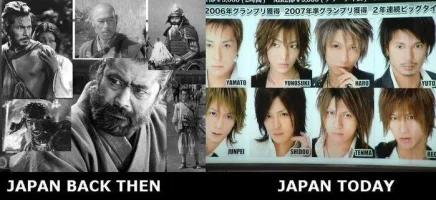
The reversal of stereotypical gender roles is a hot topic in Japan: "girlish" metrosexual young men called 草食系男子 (soushoku-kei-danshi, "herbivores") vs. empowered and ever more assertive young ladies, 肉食系女子 (nikushoku-kei-jyoshi, "carnivorous females).
Even CNN reported on the issue:
Japan's 'herbivore men' -- less interested in sex, money
While I have given up shaking my head over youngsters who pull out a mirror on the train in order to check their groomed eyebrows or dyed strands, I wonder if this is a purely Japanese phenomenon or also 'virulent' in other cultures.
Perhaps I'm old-fashioned, but while I wholeheartedly welcome male participation in households and education as well as female empowerment (there's a lot of Japanese women now in typical "male jobs', like police officers, taxi and truck drivers, etc.) I am irritated by male cosmetics and fashion craze.
What are your views on this?
More on the topic:
From carnivores to herbivores: how men are defined in Japan
Blurring the boundaries
In Japan, 'Herbivore' Boys Subvert Ideas Of Manhood
The reversal of stereotypical gender roles is a hot topic in Japan: "girlish" metrosexual young men called 草食系男子 (soushoku-kei-danshi, "herbivores") vs. empowered and ever more assertive young ladies, 肉食系女子 (nikushoku-kei-jyoshi, "carnivorous females).
Even CNN reported on the issue:
Japan's 'herbivore men' -- less interested in sex, money
They are young, earn little and spend little, and take a keen interest in fashion and personal appearance -- meet the "herbivore men" of Japan. Author and pop culture columnist Maki Fukasawa coined the term in 2006 in a series of articles on marketing to a younger generation of Japanese men. She used it to describe some men who she said were changing the country's ideas about just what is -- and isn't -- masculine. "In Japan, sex is translated as 'relationship in flesh,'" she said, "so I named those boys 'herbivorous boys' since they are not interested in flesh." Typically, "herbivore men" are in their 20s and 30s, and believe that friendship without sex can exist between men and women, Fukasawa said.
While I have given up shaking my head over youngsters who pull out a mirror on the train in order to check their groomed eyebrows or dyed strands, I wonder if this is a purely Japanese phenomenon or also 'virulent' in other cultures.
Perhaps I'm old-fashioned, but while I wholeheartedly welcome male participation in households and education as well as female empowerment (there's a lot of Japanese women now in typical "male jobs', like police officers, taxi and truck drivers, etc.) I am irritated by male cosmetics and fashion craze.
What are your views on this?
More on the topic:
From carnivores to herbivores: how men are defined in Japan
Blurring the boundaries
In Japan, 'Herbivore' Boys Subvert Ideas Of Manhood