


- 14 Mar 2002
- 21,050
- 18,903
Mainichi featured the former "Kawamura Photo Studio" (河村写真館 Kawamura Shashinkan), a Meiji-era structure designated a tangible cultural property by Yamaguchi Prefecture in 2006.

 mainichi.jp

 jl-db.nfaj.go.jp
河村写真館
山口県/観光スポーツ文化部文化振興課/文化財・山口県の文化財
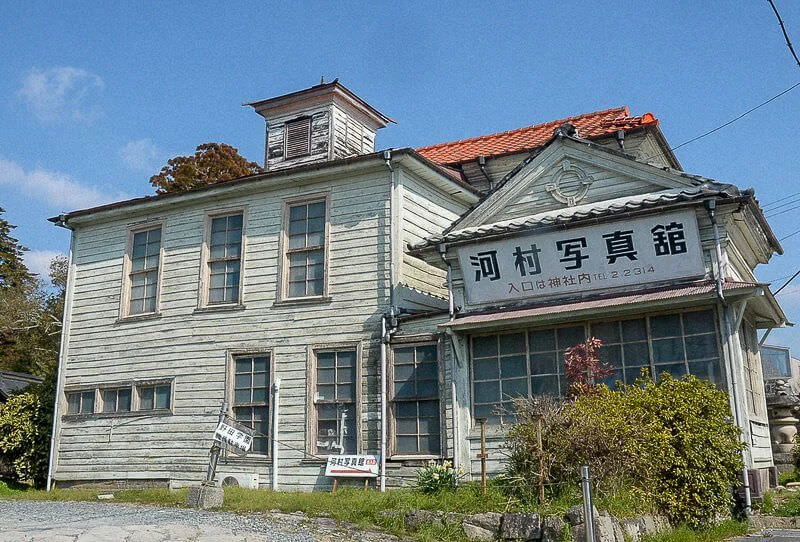
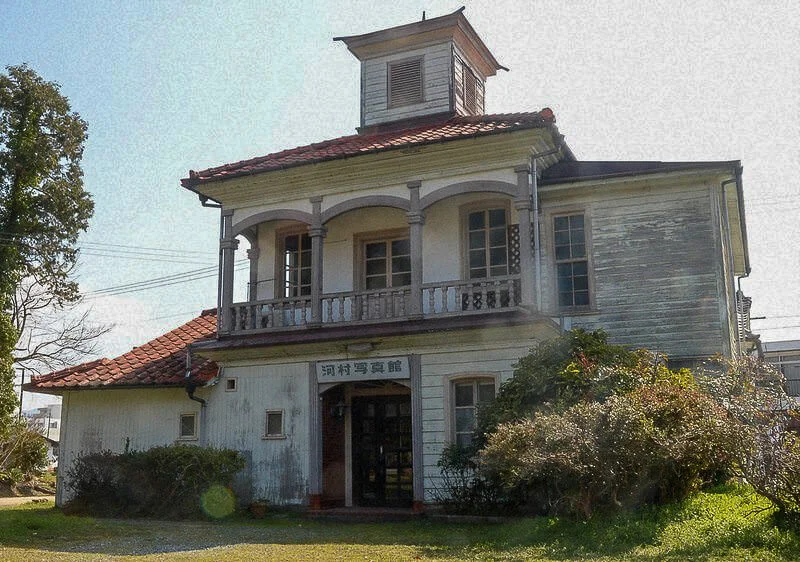
In Tatekōji, a district of Yamaguchi where traces of its medieval past remain, a weathered two-storey wooden building stands out among low houses. Built about 140 years ago, the former Kawamura Photo Studio (河村写真館) retains the look of early Western-style architecture adapted with Japanese methods.
The exterior still shows faint pale green paint on its wooden siding. Vermilion roof tiles, now mottled with moss, sit above a structure that has begun to tilt. On the west side, three upstairs window frames lean slightly, likely due to foundation damage. Along the north side, a balcony runs beneath three connected arches, topped by a small tower.
The building measures 11.65 metres in length and 6.1 metres in width. It was constructed before Western techniques were fully established in Japan and is classed as giyōfū kenchiku (擬洋風建築), or pseudo-Western architecture. Yamaguchi Prefecture designated it a tangible cultural property (有形文化財) in 2006.
It is believed to date to around 1887, when former samurai Matsubara Shigeru opened a studio here under the name Matsubara Photo Studio. Photography had spread quickly in Japan after the Meiji Restoration , becoming part of urban life even in regional centres. The building continued to operate as a photo studio for roughly 120 years under four successive owners, an unusually long span for such a business. After the fourth owner died in 2010, it closed and stood vacant. The family later offered it to the city, and ownership was transferred in August 2024.
A recent survey found that the vermilion roof is made of cement tiles typical of the Shōwa period, suggesting that the original roofing has been replaced. The city plans to repair the structure with specialist advice and decide on its future use in consultation with residents.
The site sits near ground once occupied by the Ōuchi clan (大内氏), powerful military governors who shaped Yamaguchi in the Muromachi period (1336–1573) in imitation of Kyōto , giving the city its long-standing nickname as the "Kyōto of the west." About 800 metres to the north-west stands the five-storey pagoda of Rurikōji (瑠璃光寺五重塔), built in 1442 and designated a national treasure.
The exterior still shows faint pale green paint on its wooden siding. Vermilion roof tiles, now mottled with moss, sit above a structure that has begun to tilt. On the west side, three upstairs window frames lean slightly, likely due to foundation damage. Along the north side, a balcony runs beneath three connected arches, topped by a small tower.
The building measures 11.65 metres in length and 6.1 metres in width. It was constructed before Western techniques were fully established in Japan and is classed as giyōfū kenchiku (擬洋風建築), or pseudo-Western architecture. Yamaguchi Prefecture designated it a tangible cultural property (有形文化財) in 2006.
It is believed to date to around 1887, when former samurai Matsubara Shigeru opened a studio here under the name Matsubara Photo Studio. Photography had spread quickly in Japan after the Meiji Restoration , becoming part of urban life even in regional centres. The building continued to operate as a photo studio for roughly 120 years under four successive owners, an unusually long span for such a business. After the fourth owner died in 2010, it closed and stood vacant. The family later offered it to the city, and ownership was transferred in August 2024.
A recent survey found that the vermilion roof is made of cement tiles typical of the Shōwa period, suggesting that the original roofing has been replaced. The city plans to repair the structure with specialist advice and decide on its future use in consultation with residents.
The site sits near ground once occupied by the Ōuchi clan (大内氏), powerful military governors who shaped Yamaguchi in the Muromachi period (1336–1573) in imitation of Kyōto , giving the city its long-standing nickname as the "Kyōto of the west." About 800 metres to the north-west stands the five-storey pagoda of Rurikōji (瑠璃光寺五重塔), built in 1442 and designated a national treasure.
140-yr-old ex-photo studio in west Japan's Yamaguchi evokes Ghibli medieval charm - The Mainichi
YAMAGUCHI -- In the Tatekoji district of this western Japan city where traces of its medieval past still linger, stands a Western-style, two-story woo
Links:
Kawamura Photo Studio(Yamaguchi) | Japan Location Database
jl-db.nfaj.go.jp
河村写真館
山口県/観光スポーツ文化部文化振興課/文化財・山口県の文化財


