


- 14 Mar 2002
- 21,050
- 18,903
According to Asahi, the Roppongi Police Box, built 59 years ago, is the oldest among the 825 that dot the capital. The MPD was founded 150 years ago on January 15, 1874. The Koban system started the same year. In those days, officers went from a police station to a specific location and took turns standing guard there.
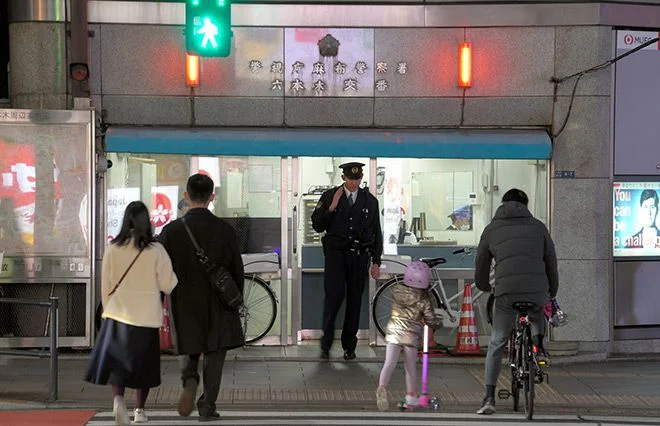
Photo credit: Tabito Fukutomi
More on the Kōban system here:
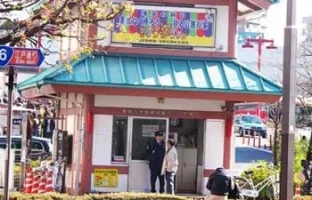
And to correct the Asahi Shinbun, the oldest operational kōban in Tokyo is not the one in Roppongi, but a small one in Tsukishima dating back to 1921. We mentioned it here.
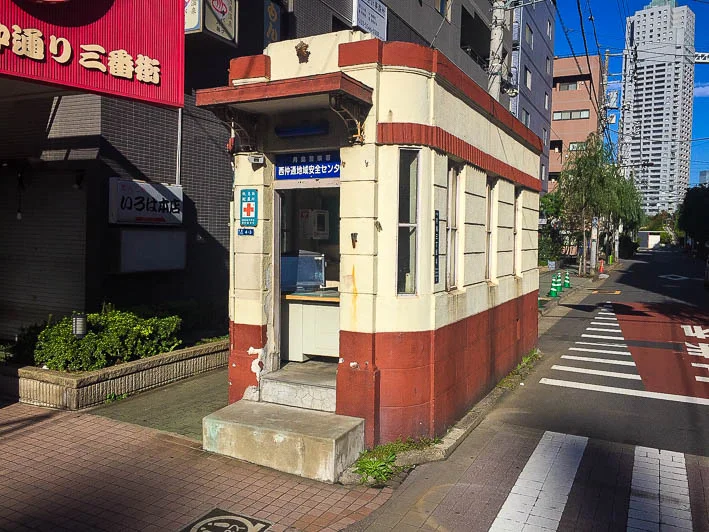
Photo credit: Tabito Fukutomi
To accommodate an increasing number of foreigners in the capital, the MPD introduced a sign with koban in the alphabet in 1995. Japan has also exported the koban system to help other countries protect public safety. Singapore opened its first koban in 1983, and the Sao Paulo state police in Brazil adopted the police box system in 1997 to improve security in slum areas. Indonesia and Cambodia have also introduced the system, according to the Japan International Cooperation Agency.
More on the Kōban system here:
It is often stated that the kōban system was inspired by the Continental European model of policing that aimed at extending the government's reach "into every town, village and hamlet", a system that required a high-level of dispersion of police forces. The Prussian model drew the attention of the Meiji oligarchs. The Prussian Police official Heinrich Friedrich Wilhelm Höhn was an adviser to the Japanese Home Ministry from 1885-91. After his inspections of local jurisdictions from Aomori to Kagoshima, he recommended an increased diffusion of police forces to allow for more effective surveillance of the urban and rural population. The residential police stations (chūzaisho) were to serve as "snail feelers" (蝸牛の触角 katatsumuri no shokkaku), always alert and ready to react to a potentially unruly populace.
Society Koban - Japanese police boxes
Kōban (交番), Japanese "police boxes", are the ubiquitous urban police stations of Japan.
Kōban are next to train stations, shopping centres, busy intersections, and residential districts. Called initially hashutsusho (派出所, "despatch station" or "local police station") in urban areas and chūzaisho...
- JREF
- 5.00 star(s) 1 ratings
- Reviews: 1
- Category: Culture & Society
And to correct the Asahi Shinbun, the oldest operational kōban in Tokyo is not the one in Roppongi, but a small one in Tsukishima dating back to 1921. We mentioned it here.


