

Navigation
Install the app
How to install the app on iOS
Follow along with the video below to see how to install our site as a web app on your home screen.
Note: This feature may not be available in some browsers.
More options
Style variation
System
Light
Dark
You are using an out of date browser. It may not display this or other websites correctly.
You should upgrade or use an alternative browser.
You should upgrade or use an alternative browser.
News Former PM Abe assassinated during campaign speech in Nara
- Thread starter thomas
- Start date

- 14 Mar 2002
- 21,050
- 18,904
- Thread starter
- #27
Tomihiro Tanaka, the head of Unification Church Japan, confirmed today that the mother of Abe's shooter was a follower but declined to comment on the specifics of her donations, saying a police investigation is underway. He said Yamagami's mother joined the church in the late 1990s and has been participating in church events about once a month lately. He said there were years in between during which she did not come at all.
Source

 japantoday.com
While Abe was neither a follower nor an adviser, he did record a video message of congratulations for another Unification Church event held on 12 September 2021.
More on the relationship between the Kishi/Abe family and the Unification Church:
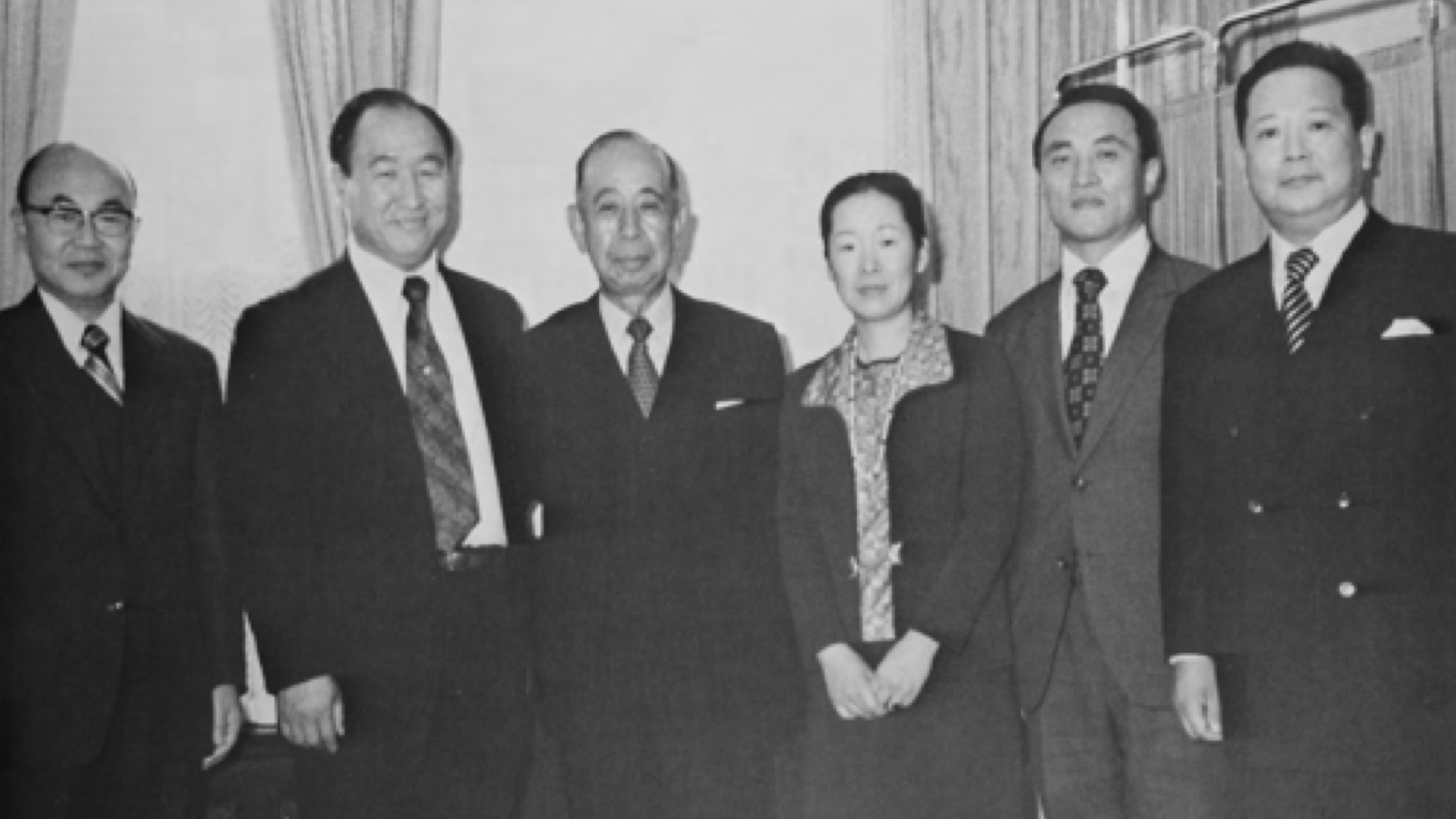
 shingetsunewsagency.com
Source
Neither Abe nor the man arrested for his shooting were members of the church, Tanaka said. Nor was Abe an adviser to the church, Tanaka said, adding that it would cooperate with police on the investigation if asked to do so.
Unification Church says Abe shooter's mother is follower
The mother of the man arrested for the killing of former Japanese Prime Minister Shinzo Abe is a member of the Unification Church, the head of its Japanese arm said on Monday. Tetsuya Yamagami, an unemployed 41-year-old, has been identified by police as the suspect who approached Abe and opened…
japantoday.com
While Abe was neither a follower nor an adviser, he did record a video message of congratulations for another Unification Church event held on 12 September 2021.
More on the relationship between the Kishi/Abe family and the Unification Church:
The Crime That Killed Shinzo Abe - SNA Japan
When former Prime Minister Nobusuke Kishi formed a bond in the mid-1960s with Unification Church founder Sun Myung Moon over their shared anti-communist views, little did he know that he was sowing the seeds that would eventually take the life of his beloved grandson, Shinzo Abe.
shingetsunewsagency.com
- 14 Mar 2002
- 21,050
- 18,904
- Thread starter
- #28
Just a few updates:
More updates to follow.
- Last Tuesday, Japan bid farewell to former PM Abe at Tokyo's Zojoji temple. Hundreds of people lined the streets and paid their respects at the temple. The wake was private and attended only by family, friends and several politicians. Following the ceremony, the hearse proceeded through downtown Tokyo, stopping at the Diet and the PM's Office.
- On Monday, Abe was awarded Japan's highest decoration, the Collar of the Supreme Order of the Chrysanthemum.
- PM Kishida promised to push Abe's dream of revising the Constitution, but I reckon this is more lip service to the extreme right wing of the LDP. As the FT reports, Abe's death gives the PM a chance to make his mark. In the future, we'll likely see more presence of liberal LDP proponents, such as Kono and Abe's eternal opponent, Ishiba.
But the assassination of the country's longest-serving prime minister has left a profound void in the governing Liberal Democratic party — and created an extraordinary opportunity for Kishida to stamp his own mark on Japanese politics. Abe's death leaves leaderless his 94-member LDP faction, the largest in the party, while Kishida's political base has been strengthened by a landslide victory in Sunday's elections to the upper house of parliament. [...] Abe's faction is already on the hunt for a new leader. But Abe, who maintained his influence after he had stepped down as prime minister in 2020, had failed to groom a successor powerful enough to lead the giant group and become the new face of his rightwing policies. Over the next three years, analysts say there is likely to be a gradual purge of Abe's supporters, leading to a weakening of hardline conservative voices within the LDP.
- Abe's assassination highlights the links between Japanese politicians and the Unification Church.
Tetsuya Yamagami has confessed to killing the former Japanese prime minister during a campaign speech on Friday. He blamed the global religious movement – whose members are often referred to as Moonies – for bankrupting his family, and believed that Abe had championed its activities in Japan. The Japan branch of the church has confirmed that Yamagami's mother is a member, but declined to comment on the suspect's claims that she had made a "huge donation" more than 20 years ago that left the family struggling financially. The branch's president, Tomihiro Tanaka, told a press conference that Yamagami's mother became a follower in the late 1990s, adding that the family had suffered financial ruin around 2002.
- Jake Adelstein in the Daily Beast believes that Abe's authoritarian legacy will live on for decades. To counterbalance the ongoing "canonization" (Arudou Debito) of the former PM, Adelstein reminds us of what Abe did and represented:
[Abe] leaves behind a legacy that may have forever changed Japan. He reduced it to a perpetual one-party democracy that seems unlikely to change. Abe certainly seems to have had a playbook that was similar to Donald Trump's. He was a populist who tapped into racism and fears of change to stoke his base and consolidate power. During his exile from power, Abe and his cabinet members allied with anti-Korean and other xenophobic groups. Abe drummed up anti-Korean sentiment to bolster his support, and made sure his allies did the dog-whistles while he kept his hands clean. While Trump portrayed immigrants as the boogeyman threatening Japan; Abe latched onto deep-rooted anti-Korean sentiment, towards both the Korean residents of Japan who stayed after the war and citizens of South and North Korea, former colonies of Japan. He appointed Eriko Yamatani, a woman closely associated with the flamingly anti-Korean group Zaitoku-Kai, to be the head of the National Public Safety Commission that oversees the National Police Agency. He also embraced Nippon Kaigi, a conservative Shinto cult and political lobby. You could aptly compare his alliance with them to Trump's absorption of The Tea Party and other far-right elements of the Republican Party.
More updates to follow.
- 14 Mar 2002
- 21,050
- 18,904
- Thread starter
- #29
More details emerged on why the Abe shooter held a grudge against the Unification Church: a relative reported that the mother of Yamagami Tetsuya, who shot Mr Abe last Friday, donated 100m JPY (720,000 USD) to the church, including 50m JPY from a life insurance policy taken on her husband, as well as proceeds from property sales. Subsequently, she had to declare bankruptcy in 2002. According to a representative of the Japanese chapter of the Unification Church, some 50m JPY was returned to her between 2005 and 2015.

Mansoor
Sempai
- 4 Mar 2016
- 834
- 615
Such mad shootings and assassinations are from insanity, and such insanity is from extremity and persistence in a blind personal belief or revenge.
I believe the shooter's action was because of madness, but it is not an excuse for his horrible assassination.
Now, The murderer is responsible for his felony. Now, the life of the killer is in the hand of Mr.Abe's family. They can appeal the law to execute the murderer (I prefer he to be shot instead of hanging because it is a more comfortable execution and the criminal die immediately) or forgive him.
So, the killer's life or death is depending on the decision of the family of Mr.Abe, not curt itself.
If the murderer is executed, it will be justice, and if he is forgiven (by the victim's family), it is called forgiveness.
Of course, this type of murder is a political and national terror and is more sensitive than a usual assassination.
If the Japanese judiciary system sentences the killer to death, it is better he is shot with the same handmade gun that he shot Mr. Abe to taste the same bearish bullet.
I believe the shooter's action was because of madness, but it is not an excuse for his horrible assassination.
Now, The murderer is responsible for his felony. Now, the life of the killer is in the hand of Mr.Abe's family. They can appeal the law to execute the murderer (I prefer he to be shot instead of hanging because it is a more comfortable execution and the criminal die immediately) or forgive him.
So, the killer's life or death is depending on the decision of the family of Mr.Abe, not curt itself.
If the murderer is executed, it will be justice, and if he is forgiven (by the victim's family), it is called forgiveness.
Of course, this type of murder is a political and national terror and is more sensitive than a usual assassination.
If the Japanese judiciary system sentences the killer to death, it is better he is shot with the same handmade gun that he shot Mr. Abe to taste the same bearish bullet.

- 6 Mar 2003
- 9,317
- 9,444
Does the family really have that much say in what the prosecution does?Such mad shootings and assassinations are from insanity, and such insanity is from extremity and persistence in a blind personal belief or revenge.
I believe the shooter's action was because of madness, but it is not an excuse for his horrible assassination.
Now, The murderer is responsible for his felony. Now, the life of the killer is in the hand of Mr.Abe's family. They can appeal the law to execute the murderer (I prefer he to be shot instead of hanging because it is a more comfortable execution and the criminal die immediately) or forgive him.
So, the killer's life or death is depending on the decision of the family of Mr.Abe, not curt itself.
If the murderer is executed, it will be justice, and if he is forgiven (by the victim's family), it is called forgiveness.
Of course, this type of murder is a political and national terror and is more sensitive than a usual assassination.
If the Japanese judiciary system sentences the killer to death, it is better he is shot with the same handmade gun that he shot Mr. Abe to taste the same bearish bullet.
- 14 Mar 2002
- 21,050
- 18,904
- Thread starter
- #32
Does the family really have that much say in what the prosecution does?
Only in Islamic law: they can forgive the perpetrator or insist on capital punishment.
Back to the original topic:
The government has decided to hold a state funeral for former PM Abe.
A state funeral for a national leader is rare. The last time Japan held such a memorial was in 1967 for Shigeru Yoshida, who served as prime minister as the country rose from the ashes of World War II. The decision was made by then Prime Minister Eisaku Sato's Cabinet. [...] The likeliest venue is Nippon Budokan in Tokyo, the same as for Yoshida, a source at the Prime Minister's Office said. The government is expected to set up an office at the Cabinet Office soon to start arranging the funeral. [...] Kishida said Abe was deserving of a state funeral because of his significant contributions to Japan, including leading efforts to recover from the March 2011 earthquake and tsunami, which triggered the worst nuclear accident since Chernobyl, reviving the Japanese economy and pursuing diplomacy based on the Japan-U.S. alliance.

Japan to hold state funeral this fall for slain ex-PM Abe - The Mainichi
TOKYO (Kyodo) -- Japan will hold a state funeral this fall for former Prime Minister Shinzo Abe, who was fatally shot last week on the campaign trail,
A police officer charged with protecting the area behind former PM Abe has told investigators he did not notice the suspected murderer because he was distracted by bicycles on the road.
According to investigators, the 67-year-old Abe was giving his speech in a spot surrounded by guardrails in front of Kintetsu Railway's Yamato-Saidaiji Station. Four officers, including security police dispatched from the Metropolitan Police Department, were inside the guardrail, one of whom was guarding the rear. When the suspect approached Abe, this officer was reportedly watching bicycles and other vehicles passing by on the road and did not notice the armed suspect until the first shot was fired. In addition to the security detachment, dozens of Nara Prefectural Police officers were on hand to provide security, but most of them were watching the area in front of Abe, where most of the audience was gathered.

Policeman guarding Japan ex-PM Abe distracted by bicycles and missed suspect: source - The Mainichi
TOKYO -- A police officer charged with protecting the area behind former Prime Minister Shinzo Abe the day he was assassinated has told investigators

- 8 Aug 2005
- 7,316
- 3,727
If you're going to blame insanity, you can't assign responsibility to the person you say is mad. Not sure if Japan allows for insanity pleas or how that works. I'm also not sure how much weight is given to the victim's family in sentencing there.Such mad shootings and assassinations are from insanity, and such insanity is from extremity and persistence in a blind personal belief or revenge.
I believe the shooter's action was because of madness, but it is not an excuse for his horrible assassination.
Now, The murderer is responsible for his felony. Now, the life of the killer is in the hand of Mr.Abe's family. They can appeal the law to execute the murderer (I prefer he to be shot instead of hanging because it is a more comfortable execution and the criminal die immediately) or forgive him.
So, the killer's life or death is depending on the decision of the family of Mr.Abe, not curt itself.
If the murderer is executed, it will be justice, and if he is forgiven (by the victim's family), it is called forgiveness.
Of course, this type of murder is a political and national terror and is more sensitive than a usual assassination.
If the Japanese judiciary system sentences the killer to death, it is better he is shot with the same handmade gun that he shot Mr. Abe to taste the same bearish bullet.
In the American system, it seems likely he'd be found able to stand trial. Although it seems like he was consumed by his anger and desire for revenge, he dedicated a lot of time and effort into his plan, far beyond what could fall under any "temporary insanity" plea. He had the motive, means, and method, and malice of forethought necessary to determine mens rea. You'd be hard pressed to claim temporary insanity when the defendant spent months or perhaps years prototyping their own weapons to carry out the attack.
In Japan, I suspect it's even more cut and dry. He was caught red handed on the scene, and there's no doubt of his guilt, just questions around his motives. Just my hunch, but unless something really surprising comes to light, my guess is he'll get the death penalty, or spend the rest of his life in prison... or both, more or less, as the death penalty is a hanging sentence; the inmate will stay in prison waiting for the day they're told will be their last. So they could serve years or decades before the sentence is carried out.
Mansoor
Sempai
- 4 Mar 2016
- 834
- 615
Yes, in general, the court is not the owner of the killed one's blood, except in the situation the victim has no family. The owner of the person's blood who was killed deliberately is his family.Does the family really have that much say in what the prosecution does?
Even in Involuntary manslaughter, they are the close families of the killed person who should be paid compensation.
The court, prosecutor, and judges only follow the demand of the killed one's family. So, the law is not rightful to do something, unlike the family's appeal.
If the families forgive the killer, the law can not punish the doer and have to release him, and if the families appeal death for the killer, the law can not change the demand.
Of course, about murder, the family can request compensation (instead of executing the murderer). In this condition, if the killer pays that compensation, the law is obligated to release the killer.
But in organized murders like what terrorists do in a country versus the national security, the judge is government, regardless of the appeal of the victims' families.
- 14 Mar 2002
- 21,050
- 18,904
- Thread starter
- #35
The Unification Church has now come under severe criticism. As I am typing these lines, TBS airs a feature on their aggressive recruitment and donation drives in Japan. Last Tuesday, a group of lawyers accused the cult of extorting donations from its followers.

 mainichi.jp
The National Network of Lawyers Against Spiritual Sales, which is working on compensation for damages, stressed that the Unification Church's "explanation that there is no coercion of donations is a lie." The lawyers said there has been a string of civil court rulings in recent years pointing out the illegality of the donations to the religious group and ordering refunds to former followers. [...] In response, lawyer Hiroshi Yamaguchi, who serves as a representative of the lawyers' group, emphasized at a news conference on July 12 that the Unification Church "is still being pointed out by the judiciary for its illegal activities." Yamaguchi cited a February 2020 ruling by the Tokyo District Court in a lawsuit filed by a former follower demanding the return of donations she had made between 2012 and 2015, which ordered the religious group to refund approximately 4.7 million yen (about $34,200) on the grounds that "the demand for donations was made through an unfair method of stirring up anxiety and fear." The ruling was later finalized after the Supreme Court dismissed a final appeal. The lawyers also released a statement urging politicians to refrain from any actions that express support for the religious group.
Lawyers in Japan say Unification Church lying about not extorting donations from followers - The Mainichi
TOKYO -- A group of lawyers in Japan revealed on July 12 that it is still receiving consultations regarding the Family Federation for World Peace and
- 8 Aug 2005
- 7,316
- 3,727
@Mansoor, I'm assuming you're speaking to your own country's laws, but your wording sounds like you're speaking definitively about Japan. Perhaps instead of "In general," you should say "in my country." Their legal systems are not the same.Yes, in general, the court is not the owner of the killed one's blood, except in the situation the victim has no family. The owner of the person's blood who was killed deliberately is his family.
Even in Involuntary manslaughter, they are the close families of the killed person who should be paid compensation.
The court, prosecutor, and judges only follow the demand of the killed one's family. So, the law is not rightful to do something, unlike the family's appeal.
If the families forgive the killer, the law can not punish the doer and have to release him, and if the families appeal death for the killer, the law can not change the demand.
Of course, about murder, the family can request compensation (instead of executing the murderer). In this condition, if the killer pays that compensation, the law is obligated to release the killer.
But in organized murders like what terrorists do in a country versus the national security, the judge is government, regardless of the appeal of the victims' families.
Good, I abhor cults.The Unification Church has now come under severe criticism. As I am typing these lines, TBS airs a feature on their aggressive recruitment and donation drives in Japan. Last Tuesday, a group of lawyers accused the cult of extorting donations from its followers.
Lawyers in Japan say Unification Church lying about not extorting donations from followers - The Mainichi
TOKYO -- A group of lawyers in Japan revealed on July 12 that it is still receiving consultations regarding the Family Federation for World Peace and
- 14 Mar 2002
- 21,050
- 18,904
- Thread starter
- #37
A week after Mr Abe's assassination, Dr Hidetada Fukushima, head of Nara Medical University Hospital's emergency medical centre, described his medical team's challenges in attempting to save the former PM's life. Upon hearing the news on TV, Dr Fukushima had summoned a team of 10 doctors before any official request for admission came in.

 www.japantimes.co.jp
An interesting piece by Bill Emmott, former editor in chief of The Economist (1993-2006), on why Mr Abe is more highly praised abroad than in Japan. In short, his domestic policies were much less significant, or at least much less noticeable, than his achievements abroad.
Unfortunately, his "Abenomics" stopped short of implementing any significant structural change and never trickled down to the workforce. Abenomics was a huge flop. I hope PM Kishida will succeed more with his "new capitalism".
 mainichi.jp
Fukushima said that Abe was in an especially bad condition, compared with any other patient he had treated. Still, he said that he treated Abe as he would do any other patient. "Lifesaving procedures are set in stone. All I had to do was follow the procedures," Fukushima said. The number of his team increased to 41 in the end, but the treatment remained extremely difficult. As Abe was in a state of cardiopulmonary arrest, Fukushima and others conducted open-chest surgery without anesthesia. Abe's body temperature was lower than normal, and the injuries he had suffered in the shooting had reached his heart. Fukushima said that although his team was able to control blood vessels near the aorta, the bleeding did not stop as the blood did not coagulate. The team transfused into Abe around 13 liters of blood, equivalent to the combined amount of blood in two to three adults. As the hospital did not have enough blood, it asked a Japanese Red Cross Society blood center in the Nara city of Yamatokoriyama for additional blood. Despite the team's efforts, Abe's heart and lung functions failed to resume.
Doctor recalls grim situation as team fought to save Abe
The team transfused into Abe around 13 liters of blood, equivalent to the combined amount of blood in two to three adults.
An interesting piece by Bill Emmott, former editor in chief of The Economist (1993-2006), on why Mr Abe is more highly praised abroad than in Japan. In short, his domestic policies were much less significant, or at least much less noticeable, than his achievements abroad.
Unfortunately, his "Abenomics" stopped short of implementing any significant structural change and never trickled down to the workforce. Abenomics was a huge flop. I hope PM Kishida will succeed more with his "new capitalism".
In foreign and security policy, Mr. Abe and his team of ministers and officials will be counted by historians as having been genuinely transformative. In domestic policy, especially economic but also social policy, historians will see the Abe era as one that is largely of continuity, with the changes made being incremental rather than radical. What is also true, however, is that it was in foreign and security policy where Mr. Abe's longevity in office was really able to count. The merits of consistency of personnel and leadership are much clearer in diplomacy and in the slow but important task of building regional institutions and relationships, than they are in domestic affairs.
OPINION: Why former Japan PM Abe is much more highly praised abroad - The Mainichi
TOKYO (Kyodo) -- Views held about the influence and contribution made by Shinzo Abe during his lifetime in politics, and especially his more than eigh
- 14 Mar 2002
- 21,050
- 18,904
- Thread starter
- #38
PM Kishida's decision to hold a state funeral for Mr Abe in autumn has triggered mixed reactions. In recent years, expenses for funerals of former prime ministers have usually been split between the Cabinet and the LDP, and even in those cases, there has been criticism of using taxpayer money. For state funerals, the government hosts and shoulders all expenses.
It's reassuring to see critical voices who do not jump on the bandwagon of mystification and glorification.
 www.japantimes.co.jp
It's reassuring to see critical voices who do not jump on the bandwagon of mystification and glorification.
Considering his accomplishments and international activities, he deserves a national funeral," said former LDP Diet chief Hiroshi Moriyama. Public opinion of the government's decision, however, is divided. Despite this, one source close to the prime minister said that he had "made his decision assuming that there would be some criticism." Japanese Communist Party leader Kazuo Shii said in a statement Friday that his party is opposed to a state funeral, as the public remains divided over Abe's political achievements. To hold a state funeral would "provide full approval of Mr. Abe's political position as a state, and praise and glorify it," Shii said. Another opposition party executive decried the move as being even more overtly political.
Decision to hold state funeral for Abe ignites debate over taxpayer funding
The government’s decision to hold a state funeral for former Prime Minister Shinzo Abe, who was assassinated July 8, is a stark break from recent funerals for former leaders.
- 14 Mar 2002
- 21,050
- 18,904
- Thread starter
- #39
Yesterday, the former Korean chairman of the Unification Church confirmed the close ties between his cult and Mr Abe's grandfather, Kishi Nobusuke, who invited them to establish churches in Japan.
 mainichi.jp
Tetsuya Yamagami, the Abe shooter, seems to cooperate with law enforcement, judging by the number of new details emerging daily. It's amazing what you can learn only from watching Youtube.
And the failure of Abe's security detail becomes more and more evident. Security experts pointed out that five agents rushed to apprehend the shooter but left the former PM to his fate.

 www.vice.com

 www.abc.net.au
Kwak said political leaders in Japan during the 1960s to 1970s were concerned about left-leaning movements in the country. Around that time, Moon released his anti-communism theory which impressed the Japanese political leaders, the former chairman said.
Unification Church founder was close to former PM Abe's grandfather: ex-chair - The Mainichi
SEOUL, NARA, Japan (Kyodo) -- The former chairman of the Unification Church said Tuesday that its founder had a close relationship with both the gran
Tetsuya Yamagami, the Abe shooter, seems to cooperate with law enforcement, judging by the number of new details emerging daily. It's amazing what you can learn only from watching Youtube.
Nara prefectural police believe the suspect, Tetsuya Yamagami, blended a mixture of chemical compounds by trial and error to create the bang he needed for the gun cartridges he used in his homemade guns. The mixtures were stored in 20 or so containers separated from ones that were usable from those that weren't. Yamagami, 41, told investigators he kept the unusable materials because they were difficult to dispose of, the sources said. He used different types of containers depending on the explosive force of the homemade gunpowder, the sources added. Police also seized an electronic scale, a blender, industrial tools and at least five handmade guns as well as receipts for products Yamagami purchased online, such as empty cartridge cases and plastic containers for ammunition.
And the failure of Abe's security detail becomes more and more evident. Security experts pointed out that five agents rushed to apprehend the shooter but left the former PM to his fate.
How Shinzo Abe’s Security Detail Failed Him
At least 10 men were guarding the former prime minister, yet the assassin managed a second, fatal shot.
www.vice.com
Former Japanese leader Shinzo Abe's death 'could have been avoided', eight security experts say
Eight security experts reviewing the assassination of former Japanese leader, Shinzo Abe, say his bodyguards could have saved his life.
www.abc.net.au
- 14 Mar 2002
- 21,050
- 18,904
- Thread starter
- #40
Japan seems pretty much split up on whether to hold a state funeral for Abe or not. It's interesting to see that it's those over 60 who oppose the idea most.

 japantoday.com
Statement of former PM Hatoyama:
Akagi Toshio was an employee of the Finance Ministry who took his life after claiming he was forced to falsify ministry documents in the Moritomo scandal.
An opinion poll conducted at the weekend by public broadcaster NHK found 49% of respondents in favor of the idea and 38% against. Those aged 18-39 were most in favor, at 61%, while those in their 60s were most against at 51%.
Japan likely to hold state funeral for Abe at Budokan on Sept 27
Japan plans a state funeral on Sept 27 for former Prime Minister Shinzo Abe who was shot to death at a campaign rally this month, a government official and leading ruling party source said on Wednesday. An official decision will be made at a cabinet meeting on Friday, they added.…
japantoday.com
Statement of former PM Hatoyama:
"People mourned the shocking death of former PM Abe, but that's not the same as a state funeral. The LDP wants to make political use of his death. What do they think about [Toshio] Akagi, whom he forced into death? The LDP needs some humility."
Akagi Toshio was an employee of the Finance Ministry who took his life after claiming he was forced to falsify ministry documents in the Moritomo scandal.
- 14 Mar 2002
- 21,050
- 18,904
- Thread starter
- #42
PM Kishida is paying a high price for his premature reaction to holding a state funeral: his cabinet's approval rating plummeted to 51%.

 english.kyodonews.net
The approval rating for Japanese Prime Minister Fumio Kishida's Cabinet has dropped to a worst-ever 51.0 percent from a record high of 63.2 percent just weeks ago amid controversy over the proposed state funeral for former leader Shinzo Abe and lawmakers' possible ties to the Unification Church, a Kyodo News survey showed Sunday. The survey found 53.3 percent of respondents opposed the state funeral, while 61.9% said a parliamentary debate on holding the event is necessary.
Japan Cabinet support sags to record low 51% after Abe funeral plan
The approval rating for Japanese Prime Minister Fumio Kishida's Cabinet has dropped to a worst-ever 51.0 percent from a record high of 63.2 percent just weeks ago, following his government's decision to hold a state funeral for slain former leader Shinzo Abe, a Kyodo News survey shows.
- 14 Mar 2002
- 21,050
- 18,904
- Thread starter
- #43
An NPA investigation into the circumstances surrounding the fatal shooting of Abe on 8 July found that last-minute changes in a police officer's location and the man's failure to notify a superior the spot was now unguarded are believed to be the main factors that left former Prime Minister Shinzo Abe vulnerable to an attack from his back.
The police officer in question was initially tasked with keeping an eye out for suspicious characters in the area behind where Abe was to give his speech. Not only did the change leave Abe unguarded from the rear, but it was not reported to the commanding officer. [...] Prior to 11:30 a.m. when Abe began his speech on July 8, three police officers were standing guard within the designated area marked off by a guard rail. A fourth officer initially stood outside the area and was tasked with keeping a watch on suspicious movements in the rear. But just before Abe began speaking, the fourth officer moved to within the guard rail area at the instruction of another officer. The crowd gathered to Abe's right had increased in size and the fourth officer was told to keep an eye on the people. That meant there was no officer watching out for Abe's back.

- 26 Sep 2015
- 2,612
- 3,543
Mansoor - As you say, you have no evidence to offer your theory. In that case, you shouldn't post your theory. And a cursory read of Japanese history will tell you that it's been anything but peaceful. I'm sorry to be blunt, but you are showing your ignorance of Japan in your recent posts.
- 14 Mar 2002
- 21,050
- 18,904
- Thread starter
- #45
Although most Japanese disagree, the Cabinet today approved 250 million JPY (taken from taxpayers' pockets) to hold a state funeral for former PM Abe. The allocated budget does not include security expenses around the venue, so the actual cost will likely double.
There are several petitions on Change.org to have Abe's state funeral cancelled. I have signed two of them.
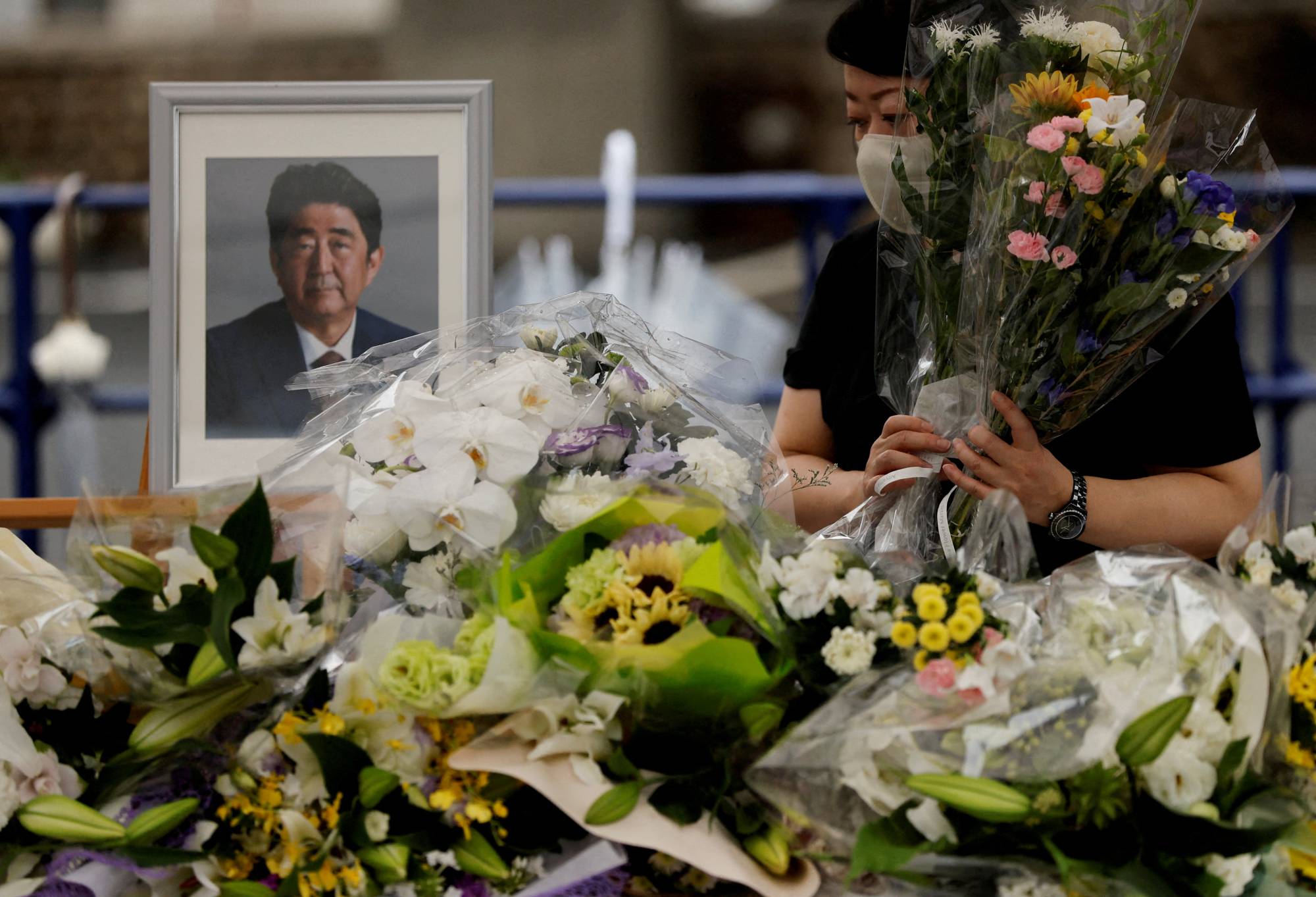
 www.japantimes.co.jp
Yesterday, the head of the National Police Agency, Nakamura Itaru, resigned to take responsibility for security lapses leading up to the shooting.

 www.theguardian.com
Opposition parties are likely to scrutinize the spending as it is significantly higher than when the government spent some ¥96 million on a 2020 funeral for former Prime Minister Yasuhiro Nakasone that was hosted jointly by the Cabinet and the ruling Liberal Democratic Party. Public opinion has been divided on holding the state funeral for Abe. [..] The government, which is expected to compile the outline of the event, plans to invite up to 6,400 people — exceeding the around 6,000 people who took part in the most recent state funeral, held in 1967 for former Prime Minister Shigeru Yoshida. The funeral for Yoshida, who led Japan as it rose from the ashes of World War II, is the only state funeral held so far in postwar Japan. Past funeral services for former prime ministers who belonged to the LDP were jointly hosted by the government and the party.
There are several petitions on Change.org to have Abe's state funeral cancelled. I have signed two of them.
State funeral for slain former Prime Minister Shinzo Abe to cost ¥250 million
Public opinion has been divided on holding a state funeral for Abe. The most recent state funeral in the nation was held in 1967 for former Prime Minister Shigeru Yoshida.
Yesterday, the head of the National Police Agency, Nakamura Itaru, resigned to take responsibility for security lapses leading up to the shooting.
Japan’s police chief to resign after fatal shooting of Shinzo Abe
Itaru Nakamura says fresh start needed after assassination ‘to ensure this never happens again’

- 3 Aug 2007
- 1,290
- 1,611
Gee, its almost like the government doesn't represent the people....Although most Japanese disagree, the Cabinet today approved 250 million JPY (taken from taxpayers' pockets) to hold a state funeral for former PM Abe.
- 14 Mar 2002
- 21,050
- 18,904
- Thread starter
- #47
The Japanese police face the dilemma of closing a legal loophole to add an additional charge of illegal weapon use on Tatsuo Yamagami, who shot former PM Abe with a handmade gun last July.
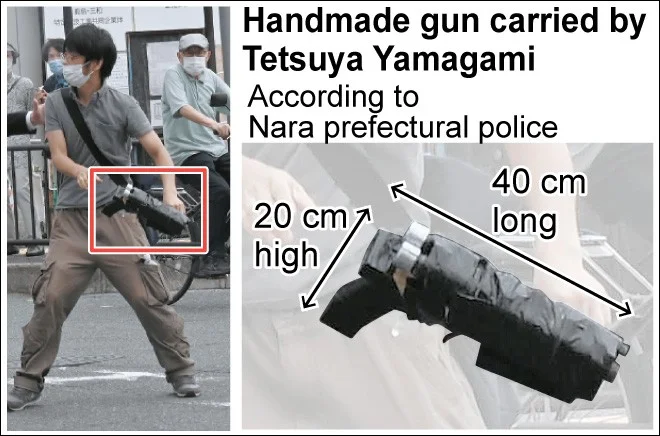
Although Yamagami has been indicted for murder, police are also looking into whether he should face an additional charge of violating the firearms law by discharging a gun in public. The law prohibits the possession of seven types of firearms. It also has a provision banning the use of four types of firearms in public. The penalty for firing the weapon is heavier than for simple possession. But until July, there had never been a case in Japan of a homemade gun being used in public and killing someone, the investigative sources said. While homemade guns are not defined as firearms under the categories of possession and use, experts said the weapon fashioned by Yamagami could be considered a pistol or a gun, both of which are covered under the firing provision.
Mansoor
Sempai
- 4 Mar 2016
- 834
- 615
That damn paramilitary person shaped the gun similar to a photographer camera to seem like a camera from distance. This could give him an opportunity in a short time to take the gun out from his bag and shoot, before police, Abe's guard or the citizens realize he was aiming Abe with a gun and was not taking photo!
How devilish plan!
How devilish plan!
- 14 Mar 2002
- 21,050
- 18,904
- Thread starter
- #49
Nara City has begun dismantling the guardrail where former PM Abe was shot last July.
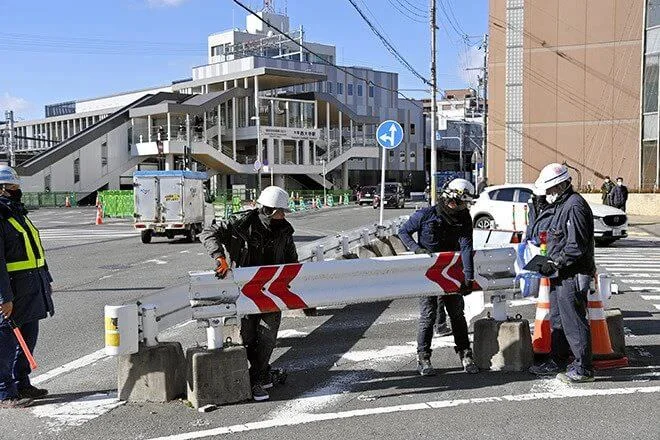
I am glad that the City of Nara prioritised traffic safety over creating a place of worship and martyrdom.
The guardrails were set up in the middle of a T-junction on the north side of Kintetsu Railway's Yamato-Saidaiji Station in Nara as if it was an urban "sandbar." The Nara city government has been working on a redevelopment project in the area since before the shooting. Removing the guardrails is part of that project. After removing the guardrails, the city will temporarily set up barricades. The redevelopment project is expected to be completed by the end of fiscal 2022. The "sandbar" area will be a road in April of next year. The sidewalks are expected to be widened as well. Giving priority to traffic safety, the city will set up flowerbeds nearby.
I am glad that the City of Nara prioritised traffic safety over creating a place of worship and martyrdom.
- 3 Aug 2007
- 1,290
- 1,611
Nara City has begun dismantling the guard rail where former PM Abe was shot last July.
I am glad that the City of Nara prioritised traffic safety over creating a place of worship and martyrdom.
I don't see what removing that will do for anyone honestly. There is not a road on the other side, so the only options are a right or left turn anyway. Unless they are also changing the other side. That crosswalk is a bit scary though, people whip into and out of it and I always have crossed further down the road where there is more visibility to drivers and people in the crosswalk.
Similar threads

- Replies
- 3
- Views
- 9K

